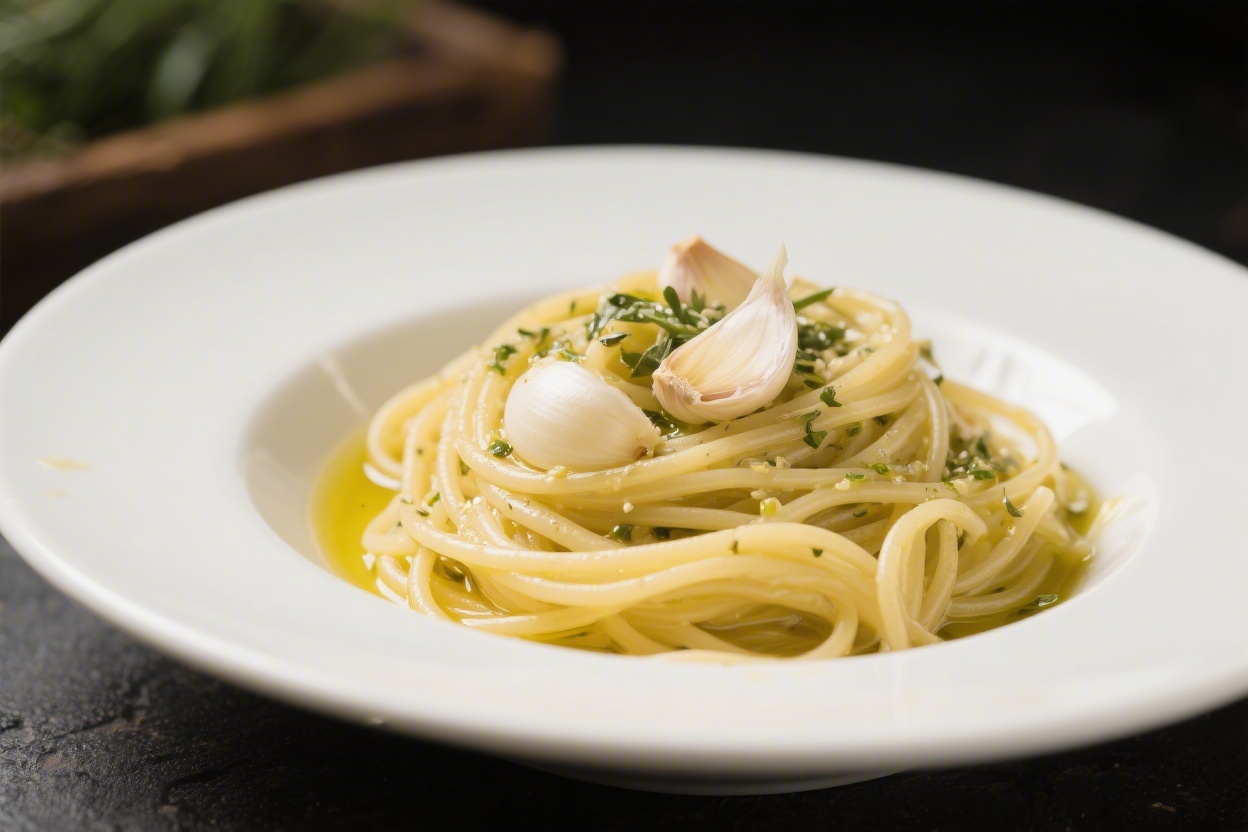
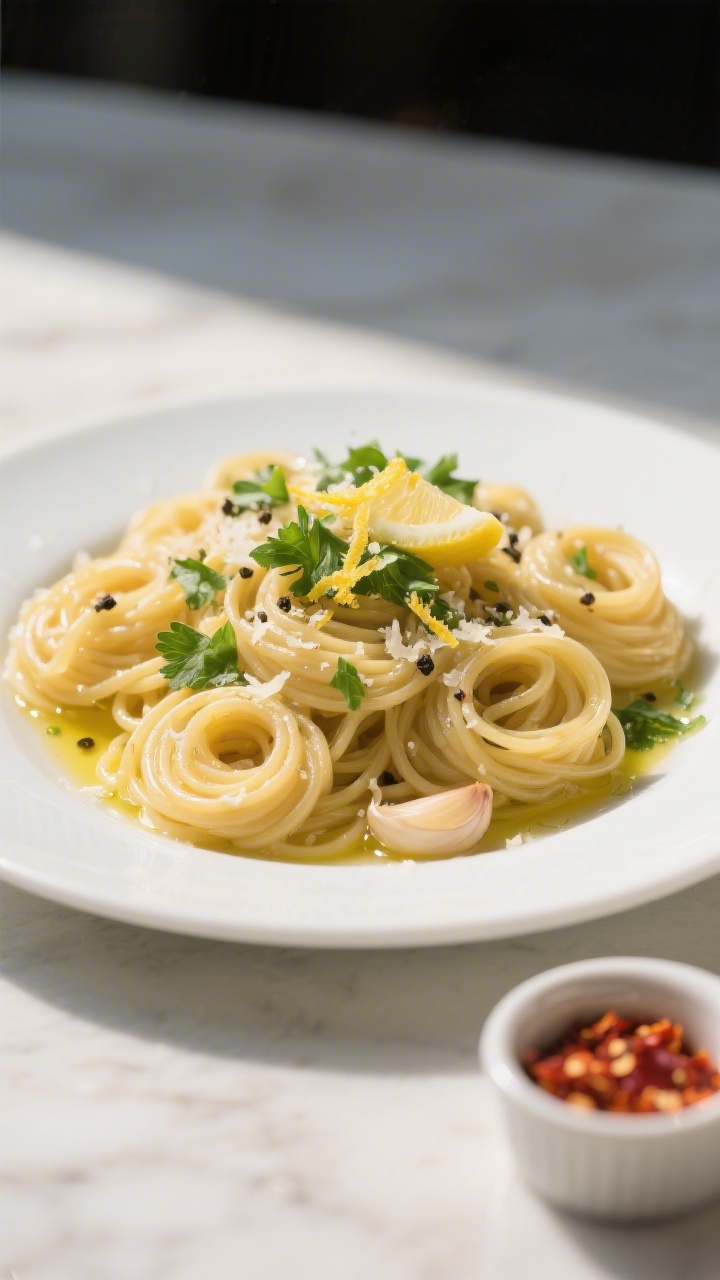
This is the kind of pasta you make when you want real flavor without fuss. Aglio e olio is all about garlic, good olive oil, and a touch of chili heat. It’s quick, budget-friendly, and tastes like something you’d get in a tiny Italian trattoria.
With just a handful of ingredients, every detail matters—how you slice the garlic, the heat level, and when you add the pasta water. Once you learn the rhythm, you’ll make it from memory.
Contents
- 1 Why This Recipe Works
- 2 Shopping List
- 3 Step-by-Step Instructions
- 4 Storage Instructions
- 5 Why This is Good for You
- 6 What Not to Do
- 7 Alternatives
- 8 FAQ
- 8.1 Can I use pre-minced garlic?
- 8.2 What’s the best olive oil for this recipe?
- 8.3 How do I prevent the garlic from burning?
- 8.4 Do I have to use cheese?
- 8.5 What kind of pasta works best?
- 8.6 Can I make it less spicy?
- 8.7 Why is my pasta oily instead of saucy?
- 8.8 Is lemon traditional?
- 8.9 Can I make this for a crowd?
- 8.10 How salty should the pasta water be?
- 9 Final Thoughts
Why This Recipe Works
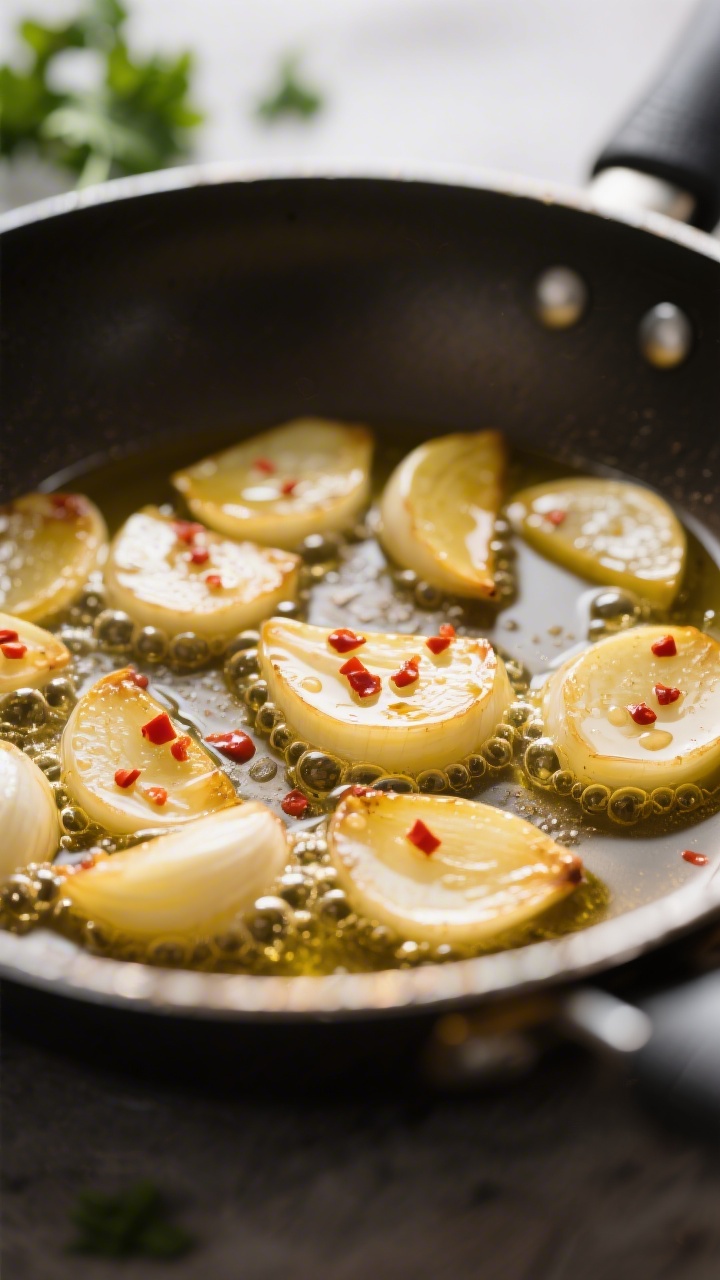
Aglio e olio succeeds because it treats simple ingredients with care. Gently toasting garlic in olive oil brings out a nutty sweetness without burning.
Red pepper flakes add warmth, not fire, and starchy pasta water pulls everything together into a glossy sauce. Finishing with parsley and lemon perks up the richness and keeps the dish bright. It’s straightforward, fast, and deeply satisfying.
Shopping List
- Spaghetti (or linguine), 12 ounces
- Extra-virgin olive oil, 1/3 to 1/2 cup (use good quality)
- Garlic, 6–8 large cloves, thinly sliced
- Red pepper flakes, 1/2 to 1 teaspoon (to taste)
- Fresh parsley, a small bunch, chopped (about 1/3 cup)
- Lemon, 1 (zest and a squeeze of juice, optional but recommended)
- Salt, for pasta water and seasoning
- Black pepper, freshly ground
- Parmesan or Pecorino Romano, finely grated, for serving (optional but popular)
Step-by-Step Instructions
- Boil the pasta water. Fill a large pot with water, add a generous handful of salt (it should taste like the sea), and bring it to a rolling boil.Salty water is your first seasoning layer.
- Slice the garlic thinly and evenly. Aim for uniform slices so they cook at the same rate. Avoid mincing; thin slices toast better and are less likely to burn.
- Start the oil and garlic low and slow. In a large skillet or sauté pan, add the olive oil and garlic. Set over medium-low heat.Let the garlic gently sizzle until lightly golden around the edges, about 3–5 minutes. Stir often. If it darkens too fast, lower the heat immediately.
- Add the chili flakes. Sprinkle in red pepper flakes and stir for 20–30 seconds to bloom their flavor.The oil should smell fragrant, not acrid.
- Cook the pasta to just shy of al dente. Drop the spaghetti into the boiling water and cook according to package directions, minus 1 minute. Reserve 1 cup of the starchy cooking water before draining.
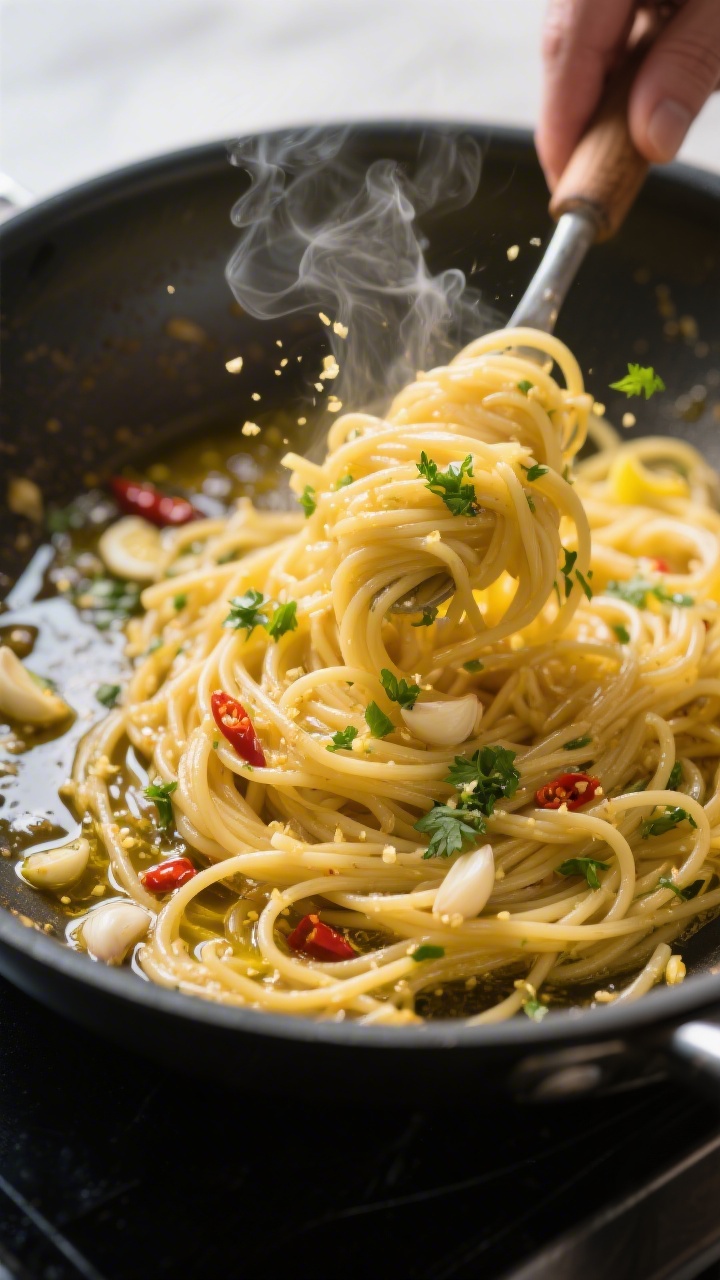
- Marry the pasta and oil. Transfer the drained pasta to the skillet with the garlic-chili oil. Toss to coat over medium heat. Add a splash of reserved pasta water—start with 1/4 cup—and toss until glossy.The starch will help form a silky emulsion.
- Season and finish. Add chopped parsley, lemon zest, and a small squeeze of lemon juice. Season with salt and black pepper. If it looks dry, add another splash of pasta water and toss again until it shimmers.
- Serve immediately. Plate the pasta hot.Top with more parsley and, if you like, a light shower of Parmesan or Pecorino. A drizzle of your best olive oil right before serving is a nice touch.
Storage Instructions
Aglio e olio is best eaten fresh, when the oil is glossy and the garlic is fragrant. If you have leftovers, store them in an airtight container in the fridge for up to 2 days.
To reheat, add a splash of water or olive oil to a skillet over medium heat, then toss the pasta until warm and revived. Avoid microwaving if possible—it can make the pasta greasy and the garlic harsh.
Why This is Good for You
- Heart-friendly fats: Extra-virgin olive oil provides monounsaturated fats and antioxidants.
- Garlic benefits: Garlic contains compounds like allicin, linked to support for cardiovascular health and immune function.
- Balanced energy: Pasta offers steady carbohydrates for fuel; pair with a side salad or protein to round out the meal.
- Light but satisfying:</-strong> There’s no heavy cream or butter here—just clean, bold flavors that leave you feeling good.
What Not to Do
- Don’t burn the garlic. Once garlic turns deep brown, it tastes bitter. Keep the heat moderate and pull the pan if it colors too quickly.
- Don’t skip salting the pasta water. It’s your main seasoning.Under-salted water leads to flat-tasting pasta.
- Don’t add cheese to the pan too early. Cheese can clump and dull the emulsion. Add it at the table or after the sauce is glossy.
- Don’t drain all the pasta water. The starchy water is your sauce helper—keep at least a cup on standby.
- Don’t overcook the pasta.</-strong> Slightly under al dente is key; it finishes in the pan and soaks up flavor.
Alternatives
- Breadcrumb crunch: Toast fresh breadcrumbs in olive oil with a pinch of salt until golden. Sprinkle over the pasta for texture.
- Citrus twist: Use orange zest instead of lemon for a softer, floral brightness.
- Herb swap: Try basil or chives if you’re out of parsley, or a mix for added freshness.
- Protein add-ins: Fold in sautéed shrimp, canned tuna in olive oil, or grilled chicken.Keep portions modest so the pasta stays the star.
- Veg boost: Add thinly sliced zucchini, cherry tomatoes, or spinach to the pan right after blooming the chili flakes.
- Gluten-free: Use a good-quality gluten-free spaghetti. Save plenty of pasta water—GF pasta releases different starch, so adjust as needed.
- Extra heat: Use Calabrian chili paste or a pinch of Aleppo pepper for warmth without harshness.
FAQ
Can I use pre-minced garlic?
You can, but it won’t taste the same. Pre-minced garlic tends to be sharper and can burn quickly.
Freshly sliced cloves give you better texture and a sweeter, more rounded flavor.
What’s the best olive oil for this recipe?
Use a good extra-virgin olive oil with a clean, peppery finish. It doesn’t have to be the most expensive bottle, but since the oil is the backbone of the sauce, quality matters.
How do I prevent the garlic from burning?
Start the garlic in cool oil and bring it up gently over medium-low heat. Stir often, watch the color, and lower the heat if it darkens too fast.
Pull the pan off the burner for a moment if needed.
Do I have to use cheese?
No. Traditional versions skip cheese entirely, and it’s delicious without it. If you enjoy cheese, add a light sprinkle at the end rather than cooking it into the sauce.
What kind of pasta works best?
Spaghetti is classic, but linguine or spaghettini also work well.
Long shapes help the glossy sauce coat evenly. Short shapes can work in a pinch, but you’ll lose some of the classic feel.
Can I make it less spicy?
Yes. Reduce the red pepper flakes to a pinch or skip them.
You can always add a touch of chili oil at the table so everyone adjusts to taste.
Why is my pasta oily instead of saucy?
You likely skipped or skimped on the pasta water. The starch in that water helps the oil cling to the noodles and turn glossy. Add water a little at a time and toss vigorously.
Is lemon traditional?
Not strictly, but it’s a popular modern touch.
A bit of zest and a squeeze of juice brighten the dish without overpowering the garlic and oil.
Can I make this for a crowd?
Yes, but cook in batches. Overcrowding the pan makes it hard to emulsify the sauce. Toss each batch with pasta water until silky, then combine in a warm serving bowl.
How salty should the pasta water be?
Think seawater—noticeably salty.
A rough guide is 1 to 1.5 tablespoons of kosher salt per quart of water, but adjust to your taste and salt type.
Final Thoughts
Aglio e olio proves that simple cooking can be exciting. With care and good ingredients, a few pantry staples become a silky, fragrant bowl of comfort. Make it on a weeknight, dress it up for guests, or use it as a base for your favorite add-ins.
Once you nail the garlic and the emulsion, you’ll have a reliable, craveable classic in your back pocket.
Printable Recipe Card
Want just the essential recipe details without scrolling through the article? Get our printable recipe card with just the ingredients and instructions.