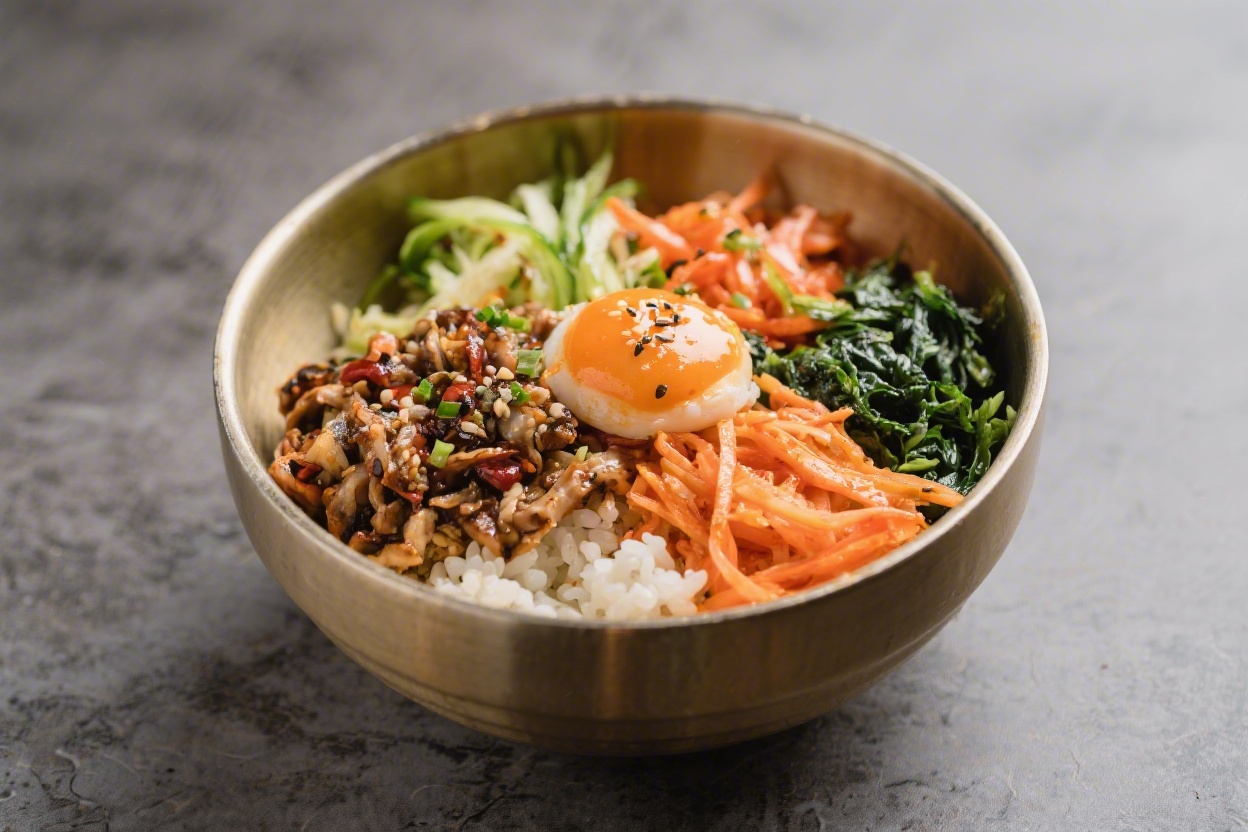
Bibimbap is one of those meals that feels just right any day of the week. It’s a warm bowl of rice topped with a rainbow of vegetables, a protein of your choice, and a bold, slightly spicy sauce. Everything gets mixed together at the table, so every bite is balanced and full of flavor.
It’s easy to customize, budget-friendly, and surprisingly quick once you’ve prepped the toppings. Think of it as a nourishing, hands-on meal that’s as fun to eat as it is to assemble.
Contents
Why This Recipe Works
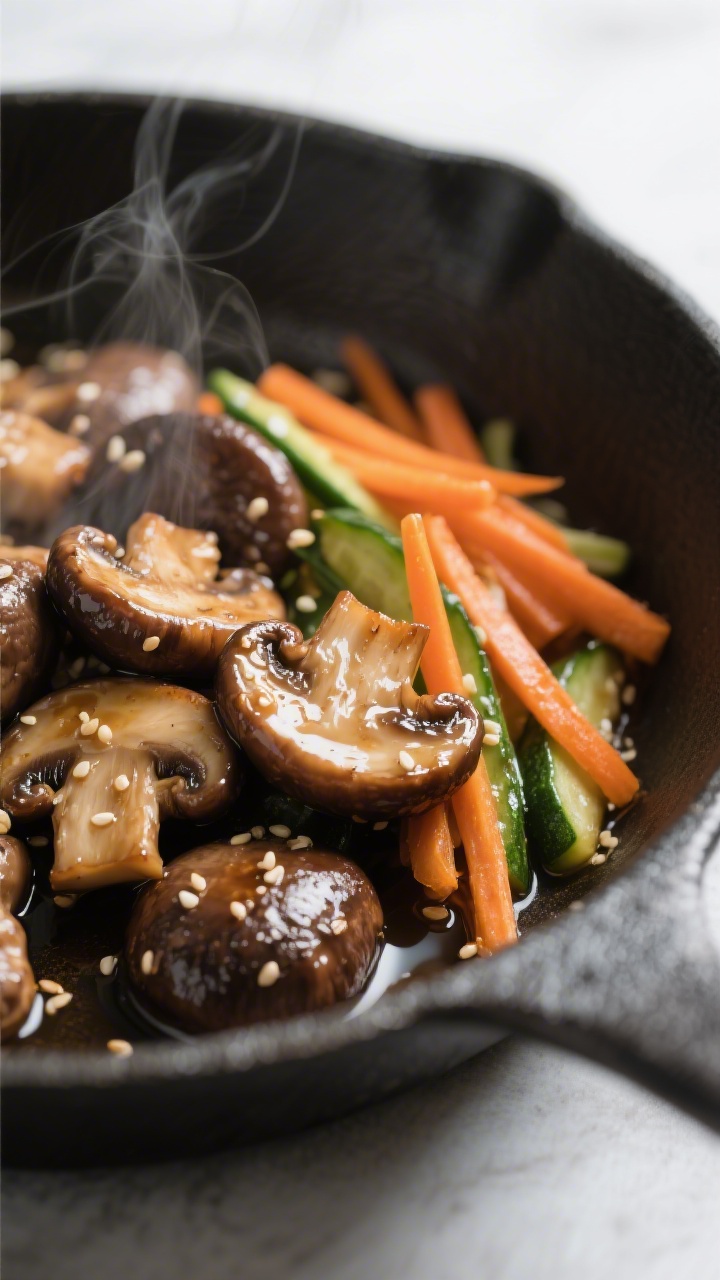
At its core, bibimbap is about balance—warm rice, crisp veggies, savory protein, and a punchy sauce. The quick sauté on the vegetables keeps them bright and tender-crisp, so they don’t get soggy.
The gochujang-based sauce ties everything together with heat, sweetness, and umami. You can cook components ahead of time and assemble in minutes, which makes this a great weeknight option. Plus, it’s naturally adaptable to different diets and tastes.
Shopping List
- Rice: Short-grain white rice (traditional) or brown rice for extra fiber
- Vegetables: Carrots, zucchini, baby spinach, bean sprouts, mushrooms (shiitake or cremini), cucumber (for fresh crunch), and kimchi (optional)
- Protein: Eggs (fried or soft-boiled), ground beef or sliced steak, chicken breast or thighs, firm tofu or tempeh (for a vegetarian/vegan option)
- Gochujang Sauce: Gochujang (Korean red pepper paste), low-sodium soy sauce or tamari, sesame oil, rice vinegar, honey or maple syrup, minced garlic
- Seasonings & Oils: Neutral oil (like canola or avocado), sesame oil, soy sauce or tamari, garlic, salt, pepper
- Garnishes: Toasted sesame seeds, sliced scallions, nori strips (optional)
Instructions
- Cook the rice: Rinse 1 cup of short-grain rice until the water runs clear.Cook according to package directions. Keep warm; warm rice helps the flavors meld.
- Make the sauce: In a small bowl, whisk 2 tablespoons gochujang, 1 tablespoon soy sauce, 1 teaspoon sesame oil, 1 teaspoon rice vinegar, 1 to 2 teaspoons honey, and 1 minced garlic clove. Adjust sweetness and spice to taste.
- Prep the vegetables: Julienne carrots and zucchini.Slice mushrooms. Rinse spinach and bean sprouts. Slice cucumber thin for a fresh, raw topping.
- Sauté the mushrooms: Heat 1 teaspoon oil in a pan over medium-high.Cook mushrooms with a pinch of salt until browned, 3–4 minutes. Finish with a few drops of soy sauce and a drizzle of sesame oil. Set aside.
- Sauté the carrots and zucchini: Add a little oil to the same pan.Cook carrots for 2–3 minutes until just tender. Repeat with zucchini, 2 minutes, keeping both crisp-tender. Season lightly with salt.
- Wilt the spinach: Add spinach to the pan with a splash of water and a pinch of salt.Cook 30–60 seconds until wilted. Squeeze out excess moisture if needed. Toss with a few drops of sesame oil.
- Blanch the bean sprouts (optional): Dip sprouts in boiling water for 30 seconds, drain, and toss with a pinch of salt and a few drops of sesame oil.Or quickly sauté instead.
- Cook the protein:
- Beef or chicken: Season with salt, pepper, and a splash of soy sauce. Sauté until cooked through and slightly caramelized.
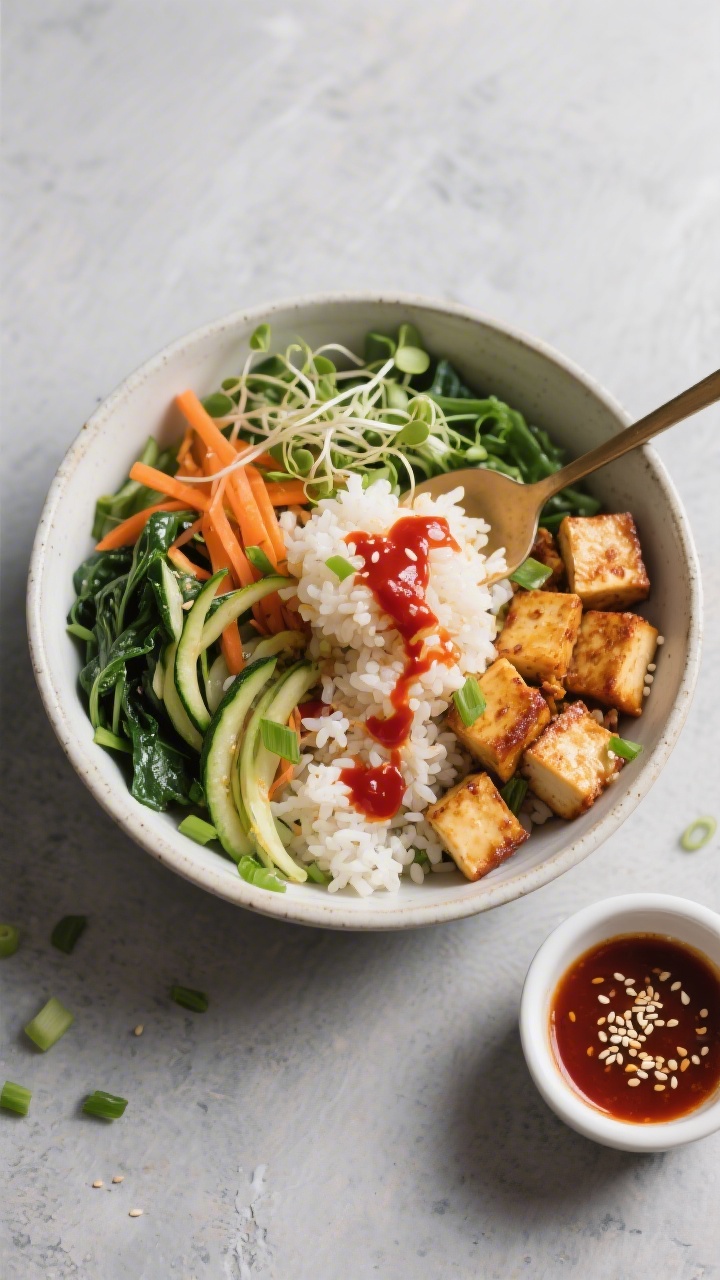
- Tofu: Press, cube, and pan-sear until golden. Season with soy sauce and a touch of sesame oil.
- Eggs: Fry sunny-side up or over-easy so the yolk stays runny; it acts like a sauce.
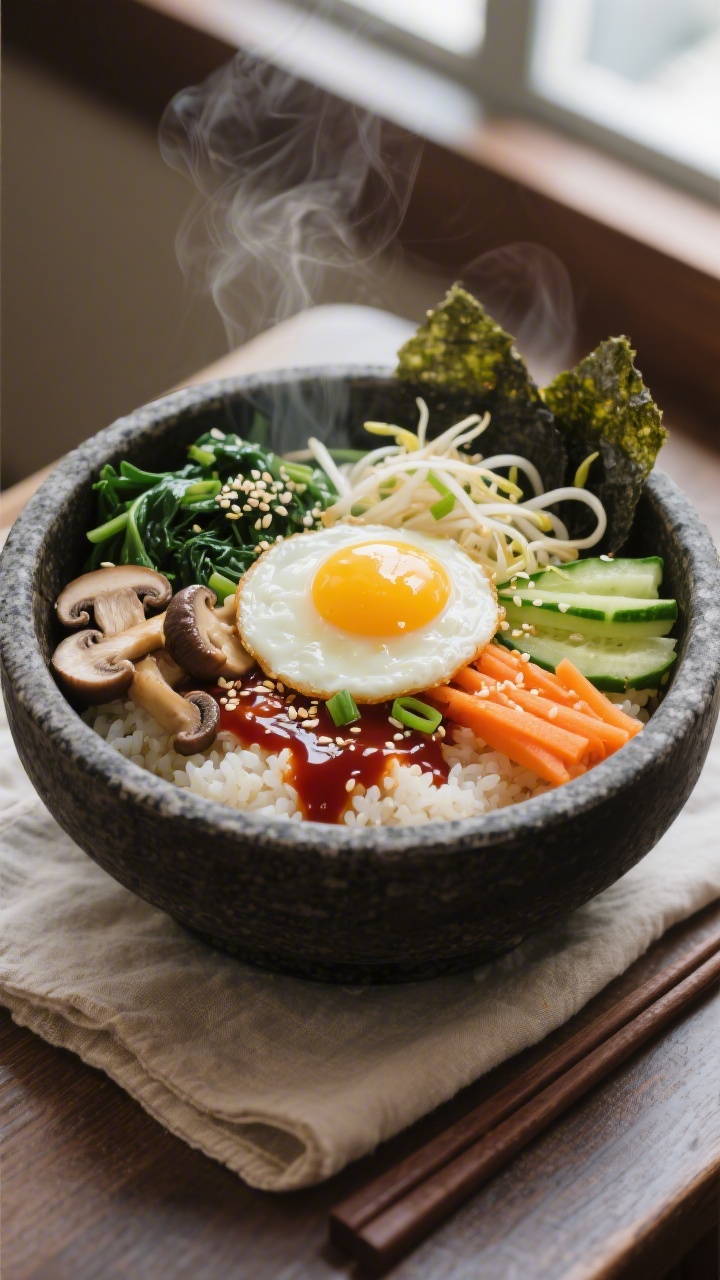
- Assemble the bowls: Spoon warm rice into bowls.Arrange vegetables and protein in neat sections on top. Add cucumber and kimchi if using.
- Sauce and garnish: Drizzle with gochujang sauce. Sprinkle with sesame seeds and scallions.Serve extra sauce on the side.
- Mix and eat: At the table, mix everything together so the sauce and egg yolk coat the rice and toppings evenly.
Keeping It Fresh
Cook the vegetables briefly so they keep a little bite. This prevents a soggy bowl and keeps colors vibrant. Store each component separately in airtight containers for 3 to 4 days.
Reheat rice and proteins; keep cucumbers and kimchi cold for contrast. If packing for lunch, add the sauce just before eating to avoid watered-down flavors.
Why This is Good for You
- Balanced macronutrients: You get complex carbs from rice, lean protein from meat, tofu, or egg, and healthy fats from sesame oil.
- High in fiber: A variety of vegetables plus brown rice (if you choose it) support digestion and steady energy.
- Micronutrient-rich: Spinach, mushrooms, and carrots bring iron, B vitamins, beta carotene, and potassium.
- Customizable sodium and spice: Using low-sodium soy sauce and adjusting gochujang lets you keep flavors bold without overdoing salt or heat.
Common Mistakes to Avoid
- Overcooking the vegetables: Soft, mushy veggies make the bowl flat. Quick cooks keep texture and color.
- Skipping seasoning: A pinch of salt and a touch of soy sauce on each component builds deep, layered flavor.
- Cold, clumpy rice: Use warm, freshly cooked rice or gently reheat leftovers with a splash of water so it’s fluffy.
- Too much sauce at once: Start with a small drizzle and add more as you mix.Gochujang is potent.
- Forgetting contrast: Include something fresh and crisp (cucumber or kimchi) to brighten the bowl.
Alternatives
- Grains: Try brown rice, quinoa, or cauliflower rice for lower carbs.
- Protein swaps: Ground turkey, shrimp, baked salmon, or marinated tempeh all work well.
- Sauce options: Mix gochujang with Greek yogurt for a creamy, milder sauce. For non-spicy, use a sesame-soy dressing with a squeeze of lime.
- Vegetable variations: Add bell peppers, kale, snap peas, or roasted sweet potato for sweetness and color.
- Crispy element: Top with roasted seaweed, toasted nuts, or a sprinkle of furikake for crunch.
FAQ
What if I can’t find gochujang?
Use a mix of miso paste and a mild chili sauce, or blend tomato paste with a bit of soy sauce, honey, and chili flakes. It won’t be the same, but it gives umami, sweetness, and heat.
Can I make this gluten-free?
Yes.
Use tamari or coconut aminos instead of soy sauce, and check that your gochujang is labeled gluten-free. Serve with rice or quinoa.
How do I make it vegetarian or vegan?
Use tofu or tempeh for protein and skip the egg (or use a vegan egg alternative). Make sure your gochujang and sweetener are vegan-friendly.
Add extra mushrooms for savory depth.
What’s the best rice for bibimbap?
Short-grain white rice is traditional because it’s sticky and holds the mix well. Brown short-grain is great for extra fiber. If you prefer a lighter base, try cauliflower rice.
How spicy is this dish?
It’s as spicy as you make it.
Start with less gochujang and taste. You can always add more sauce at the table.
Can I meal prep bibimbap?
Absolutely. Cook rice, vegetables, and protein ahead.
Store separately and assemble when ready to eat. Keep sauce and fresh toppings separate until serving.
Do I need a stone bowl (dolsot)?
No. A regular bowl works fine.
If you want crispy rice, heat a nonstick pan with a little oil, press in cooked rice until the bottom crisps, then transfer to your bowl and add toppings.
Final Thoughts
Bibimbap is a flexible, colorful bowl that turns simple ingredients into something special. Once you’ve prepped a few toppings, the rest is easy: warm rice, a quick sauce, and a mix at the table. Keep the vegetables crisp, the sauce balanced, and the assembly relaxed.
You’ll end up with a healthy, satisfying meal that never gets boring—and always tastes like comfort.
Printable Recipe Card
Want just the essential recipe details without scrolling through the article? Get our printable recipe card with just the ingredients and instructions.