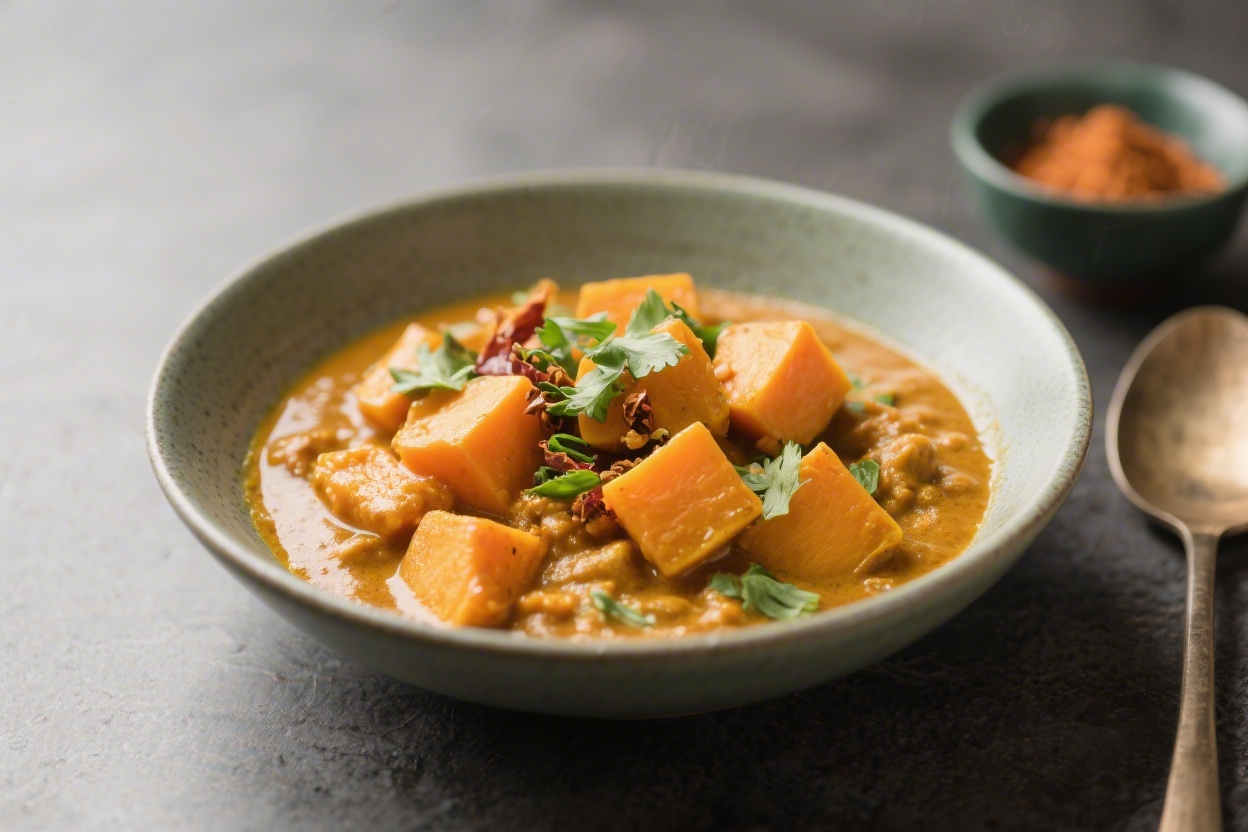
This butternut squash curry is the kind of meal you want on a chilly evening: warm, gently spiced, and deeply satisfying. It’s creamy without any dairy, naturally sweet from the squash, and brightened with lime and fresh herbs. You get a beautiful balance of savory, sweet, and tangy in every spoonful.
It’s also a simple, weeknight-friendly recipe that feels special without being fussy. Serve it over fluffy rice or scoop it up with warm flatbread, and you’re set.
Contents
What Makes This Recipe So Good
- Cozy and comforting: The natural sweetness of butternut squash pairs perfectly with warm spices like cumin, coriander, and turmeric.
- Creamy without dairy: Coconut milk adds richness and a silky texture while keeping it fully vegan.
- Balanced flavor: A splash of lime juice and a bit of chili bring brightness and heat that round out the dish.
- Meal prep friendly: Tastes even better the next day as the flavors meld.
- Flexible: Easy to customize with different veggies, proteins, or spice levels.
What You’ll Need
- Butternut squash: About 1 medium squash (2.5–3 pounds), peeled, seeded, and cut into 1-inch cubes.
- Onion: 1 large yellow onion, finely chopped.
- Garlic: 3–4 cloves, minced.
- Ginger: 1 tablespoon fresh, grated.
- Tomato paste: 2 tablespoons, for body and depth.
- Diced tomatoes: 1 can (14.5 ounces), with juices.
- Coconut milk: 1 can (13.5–14 ounces) full-fat for creaminess, or light if you prefer.
- Vegetable broth: 1 to 1.5 cups, as needed to thin.
- Cooking oil: 2 tablespoons (coconut, avocado, or olive oil).
- Spices:
- 2 teaspoons ground cumin
- 2 teaspoons ground coriander
- 1 teaspoon turmeric
- 1 teaspoon garam masala (plus more to finish)
- 1/2 to 1 teaspoon red chili flakes or cayenne (adjust to taste)
- 1 teaspoon mustard seeds or 1/2 teaspoon ground mustard (optional)
- Salt and black pepper to taste
- Lime: 1 lime, juiced, plus extra wedges for serving.
- Fresh herbs: Cilantro or parsley for garnish.
- Optional add-ins: 1 can chickpeas (drained and rinsed), 2 cups baby spinach, or 1 cup frozen peas.
- To serve: Cooked basmati rice, brown rice, or warm flatbread.
How to Make It
- Prep the squash: Peel, seed, and cube the butternut squash into roughly 1-inch pieces so they cook evenly.
- Sauté aromatics: Warm oil in a large pot over medium heat. Add onion with a pinch of salt and cook 5–7 minutes until soft and lightly golden.Stir in garlic and ginger and cook 1 minute until fragrant.
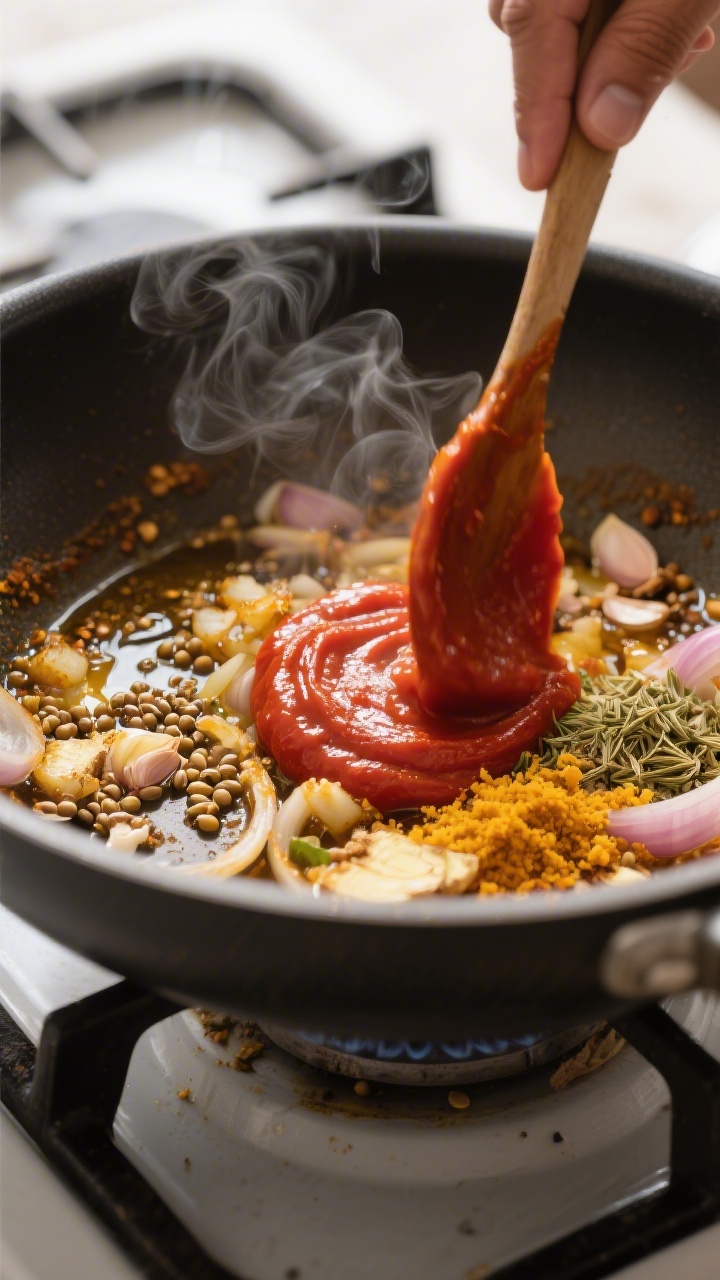
- Bloom the spices: Add cumin, coriander, turmeric, garam masala, chili flakes, and mustard seeds if using. Cook 30–45 seconds, stirring constantly, until the spices smell toasty.
- Build the base: Stir in tomato paste and cook 1 minute to caramelize slightly. Add the diced tomatoes with their juices and scrape up any bits from the bottom of the pot.
- Add squash and liquids: Tip in the squash, then pour in coconut milk and 1 cup vegetable broth.Stir to combine and bring to a gentle simmer.
- Simmer until tender: Cover partially and cook 18–25 minutes, stirring occasionally, until the squash is tender but not falling apart. Add more broth if the curry gets too thick.
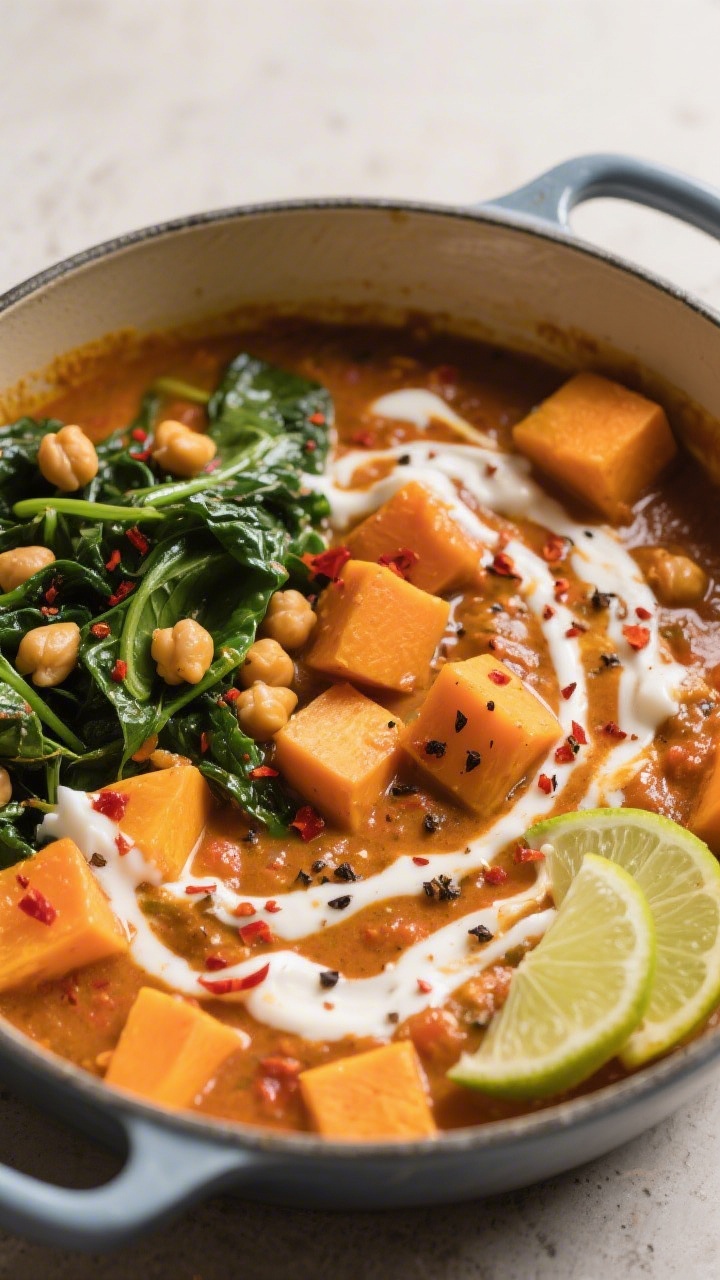
- Finish the curry: Stir in lime juice and adjust seasoning with salt and pepper. If using chickpeas, spinach, or peas, add them now.Simmer 3–5 minutes more until heated through and greens wilt.
- Taste and balance: Add a pinch more garam masala for warmth, extra lime for brightness, and more chili for heat, if desired.
- Serve: Ladle over rice or serve with flatbread. Sprinkle with chopped cilantro or parsley and add lime wedges on the side.
How to Store
- Refrigerator: Store in an airtight container for up to 4 days. The flavors improve after a night in the fridge.
- Freezer: Freeze in portions for up to 3 months.Thaw in the fridge overnight and reheat gently on the stovetop with a splash of broth if needed.
- Reheating: Warm over medium-low heat, stirring occasionally. Avoid high heat to prevent the coconut milk from separating.

Health Benefits
- Rich in vitamins: Butternut squash is high in vitamins A and C, which support eye health and immunity.
- Fiber-forward: The squash, tomatoes, and optional chickpeas add fiber to support digestion and steady energy.
- Anti-inflammatory spices: Turmeric, ginger, and garlic have compounds linked to anti-inflammatory and antioxidant effects.
- Heart-healthy fats: Coconut milk provides satisfying fats that help with nutrient absorption and satiety.
- Balanced meal: Pair with rice or add chickpeas for a complete, plant-based protein profile.
Pitfalls to Watch Out For
- Uneven squash cubes: Different sizes lead to some pieces turning mushy while others stay firm. Aim for even 1-inch cubes.
- Skipping the spice bloom: Not toasting the spices can leave the curry tasting flat.Give them 30–45 seconds in oil.
- Boiling too hard: A rolling boil can break down the squash and split the coconut milk. Keep it at a gentle simmer.
- Under-seasoning: Coconut milk and squash are naturally sweet and mellow. Salt thoughtfully and finish with acid (lime) for balance.
- Overcrowding add-ins: Too many extras can dilute flavor.Add 1–2 optional ingredients and adjust spices if needed.
Variations You Can Try
- Thai-inspired twist: Swap garam masala and coriander for 1–2 tablespoons red curry paste and add kaffir lime leaves. Finish with Thai basil.
- Lentil boost: Stir in 1 cup cooked red or brown lentils for extra protein and texture.
- Greens galore: Use kale or Swiss chard instead of spinach. Add them earlier so they soften fully.
- Roasted squash: Roast the squash cubes at 425°F (220°C) with oil and salt for 20–25 minutes, then add to the curry for extra caramelized flavor.
- Nutty finish: Stir in 1–2 tablespoons almond butter or cashew butter for extra body and richness.
- Low-heat, kid-friendly: Skip the chili and use mild curry powder instead of garam masala.
FAQ
Can I use frozen butternut squash?
Yes.
Frozen squash works well and saves time. Add it straight from the freezer and simmer a few extra minutes until tender. Be gentle when stirring to avoid breaking it up.
What can I substitute for coconut milk?
You can use unsweetened cashew cream or oat cream.
If using a thinner plant milk, add 1–2 tablespoons nut butter to help thicken and enrich the sauce.
How spicy is this curry?
It’s mildly spicy as written. Adjust the chili flakes or cayenne to your preference, or serve chili oil on the side so everyone can tailor their heat level.
Do I have to peel the squash?
For this curry, peeling is best for a velvety texture. If you’re short on time, you can leave the peel on and simmer a bit longer, but the skin will remain slightly firm.
What should I serve with it?
Basmati rice, jasmine rice, or quinoa are great.
Warm naan-style flatbread or roti is also perfect for scooping up the sauce. Add a quick cucumber salad for a cool contrast.
Can I make it in a slow cooker?
Yes. Sauté the onion, garlic, ginger, and spices on the stovetop first, then transfer everything to the slow cooker with squash, tomatoes, and coconut milk.
Cook on low 6–7 hours or high 3–4 hours, adding lime juice at the end.
How can I thicken the curry if it’s too thin?
Simmer uncovered for a few minutes to reduce, or mash a few squash cubes into the sauce. A small spoonful of almond butter can also add body.
Is this recipe gluten-free?
Yes, the curry itself is naturally gluten-free. Just pair it with gluten-free sides like rice or certified gluten-free flatbread.
Final Thoughts
This butternut squash curry is the kind of simple comfort food that still feels vibrant and nourishing.
The warm spices, creamy coconut, and bright lime create a balanced bowl that never gets boring. It’s reliable on busy nights, yet cozy enough for a relaxed weekend dinner. Make a big pot, enjoy it tonight, and look forward to the leftovers tomorrow.