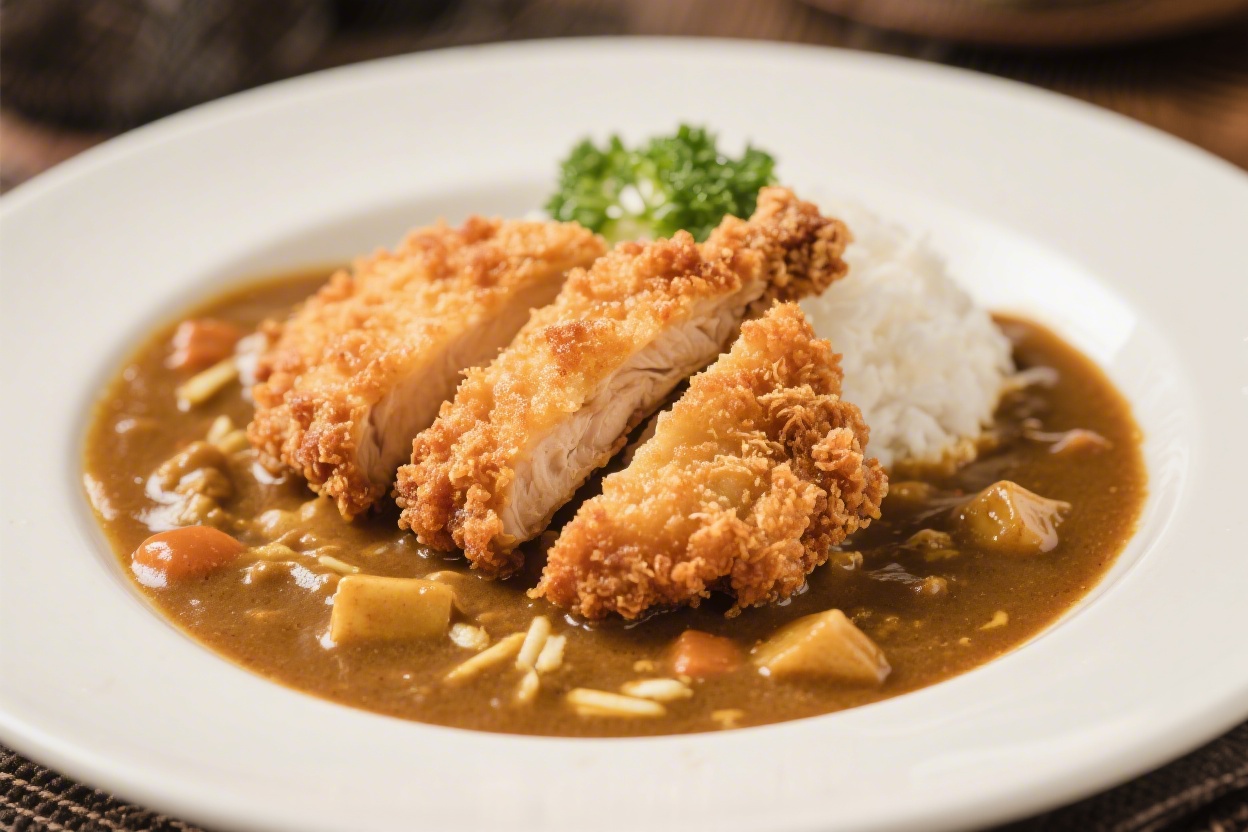
Chicken katsu curry is the kind of meal you crave on a chilly evening or after a long day. It’s simple at heart: crispy breaded chicken, a mellow Japanese curry sauce, and steamed rice. The textures do the heavy lifting—crunchy cutlets against a silky, gently spiced gravy.
It feels indulgent but still balanced, with carrots and onions lending sweetness. Best of all, it’s weeknight-friendly and customizable, whether you like it mild, medium, or with a little kick.
Contents
- 1 Why This Recipe Works
- 2 What You’ll Need
- 3 How to Make It
- 4 Keeping It Fresh
- 5 Why This is Good for You
- 6 Pitfalls to Watch Out For
- 7 Variations You Can Try
- 8 FAQ
- 8.1 Can I make the curry sauce without store-bought roux?
- 8.2 What’s the best rice to serve with katsu curry?
- 8.3 How do I keep the panko from falling off?
- 8.4 Can I bake instead of fry?
- 8.5 Is the curry spicy?
- 8.6 What oil is best for frying?
- 8.7 Can I use chicken thighs?
- 8.8 What if my sauce is too thin?
- 8.9 How do I reheat leftovers without losing crunch?
- 8.10 Can I make it vegetarian?
- 9 Final Thoughts
Why This Recipe Works
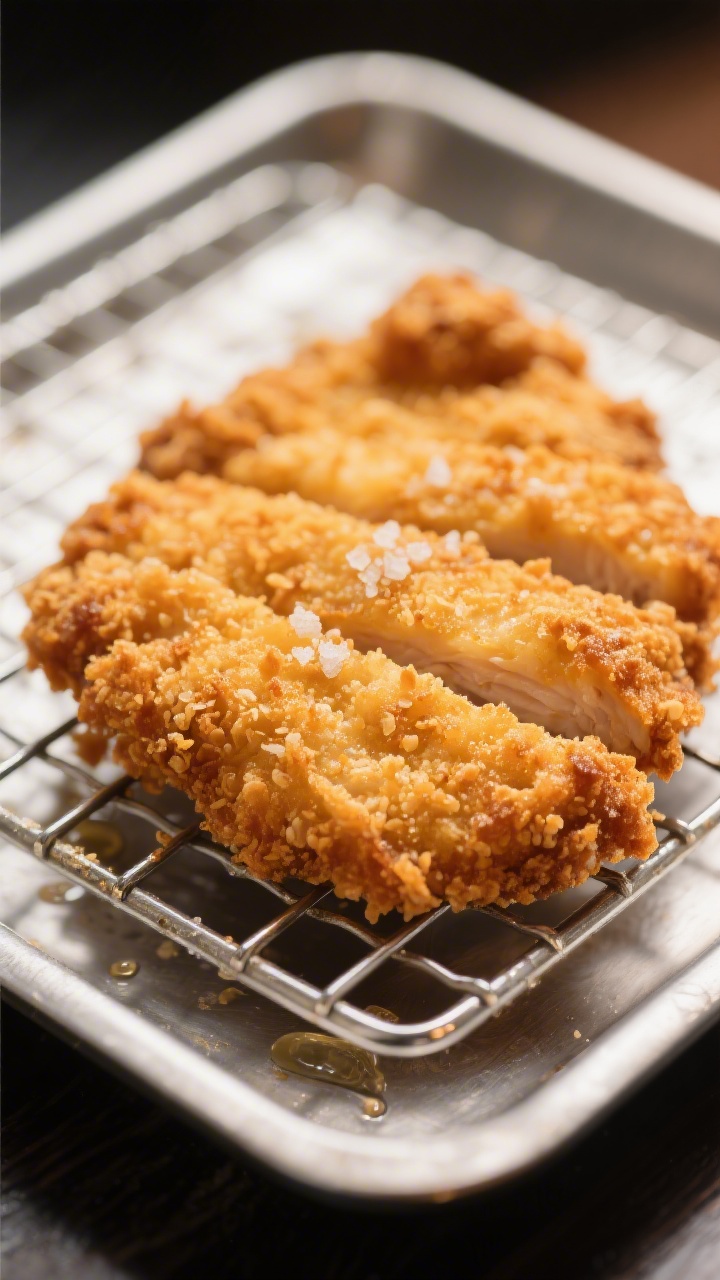
This version leans on a few smart moves to deliver big comfort with minimal stress.
- Ultra-crisp cutlet: Panko breadcrumbs fry up light and crunchy, staying crisp even under sauce.
- Foolproof curry base: Using Japanese curry roux blocks gives consistent flavor and a silky texture without guesswork.
- Balanced sweetness: Onions, carrots, and a splash of apple or honey temper the spices without making it sugary.
- Quick but from-scratch feel: Lightly toasting spices and blooming curry paste (or roux) deepens flavor fast.
- Make-ahead friendly: Sauce keeps well, so you can fry the chicken fresh and reheat the curry for speed.
What You’ll Need
- Chicken: 2 boneless, skinless chicken breasts (or 4 cutlets)
- Seasoning: Salt, black pepper
- Breading setup: 1/2 cup all-purpose flour, 2 large eggs (beaten), 1.5 cups panko breadcrumbs
- Oil for frying: Neutral oil (canola, vegetable, or peanut)
- For the curry sauce:
- 1 large onion, thinly sliced
- 2 medium carrots, cut into half-moons
- 2 cloves garlic, minced
- 1-inch piece fresh ginger, grated
- 2 cups low-sodium chicken or vegetable stock
- 2–3 blocks Japanese curry roux (mild, medium, or hot), about 3–4 ounces total
- 1 tablespoon soy sauce
- 1 teaspoon honey or grated apple (optional, for sweetness)
- 1 teaspoon curry powder (optional, to boost flavor)
- To serve: Steamed short-grain rice, chopped scallions or parsley, and optional fukujinzuke (Japanese pickles)
How to Make It
- Prep the chicken: Slice each chicken breast horizontally to make 2 thinner cutlets, or pound to an even 1/2-inch thickness. Pat dry.Season both sides with salt and pepper.
- Set up breading station: Place flour, beaten eggs, and panko in separate shallow dishes. Dredge chicken in flour (shake off excess), dip in egg, then press into panko until fully coated.
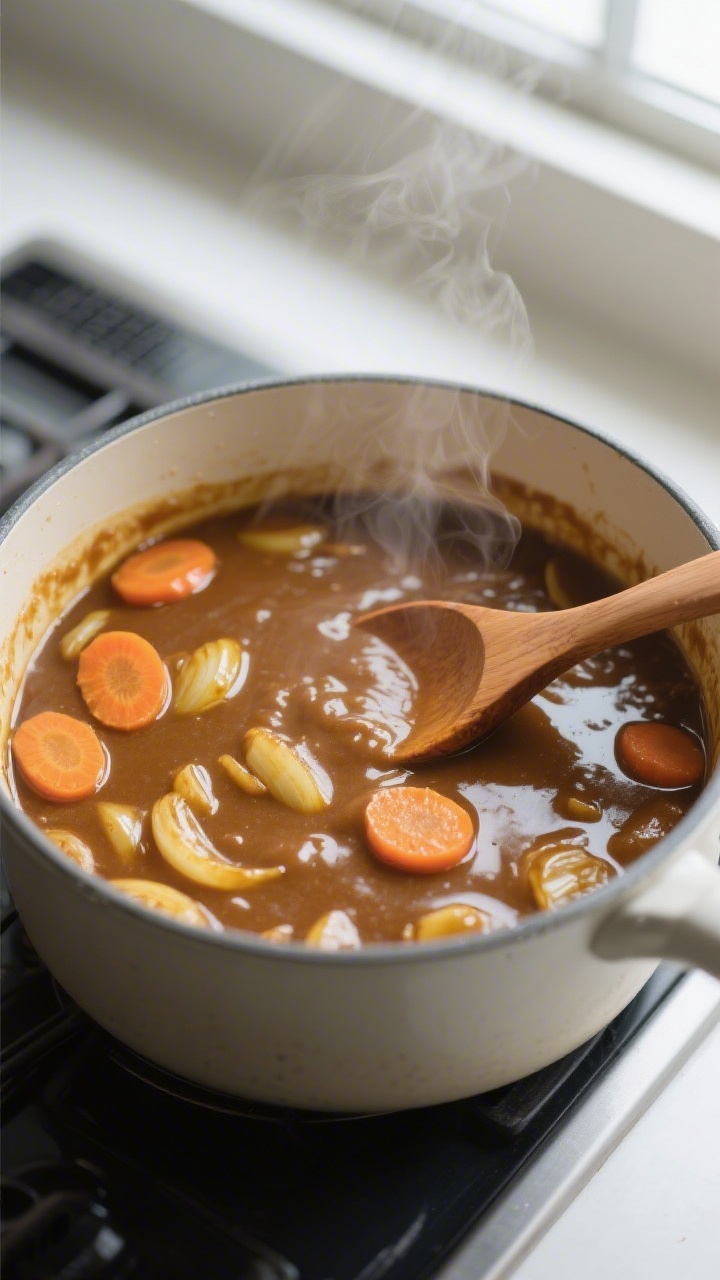
- Start the curry base: In a medium pot over medium heat, add 1 tablespoon oil. Cook onions with a pinch of salt until soft and lightly golden, about 8–10 minutes.Add carrots, garlic, and ginger; cook 1–2 minutes until fragrant.
- Simmer the sauce: Pour in stock. Bring to a gentle simmer and cook until carrots are tender, 10–12 minutes. Stir in soy sauce and optional honey or grated apple.
- Add roux: Turn heat to low.Stir in curry roux blocks until melted and smooth. If you want extra warmth, add the optional curry powder. Simmer 3–5 minutes to thicken.
Adjust with a splash of water if too thick. Taste and season as needed.
- Fry the katsu: In a large skillet, heat 1/2 inch of neutral oil to 350°F (175°C). Fry cutlets 2–3 minutes per side until deep golden and cooked through.Transfer to a rack and rest 3 minutes. For oven alternative, bake at 425°F (220°C) for 15–18 minutes after spraying with oil, flipping halfway.
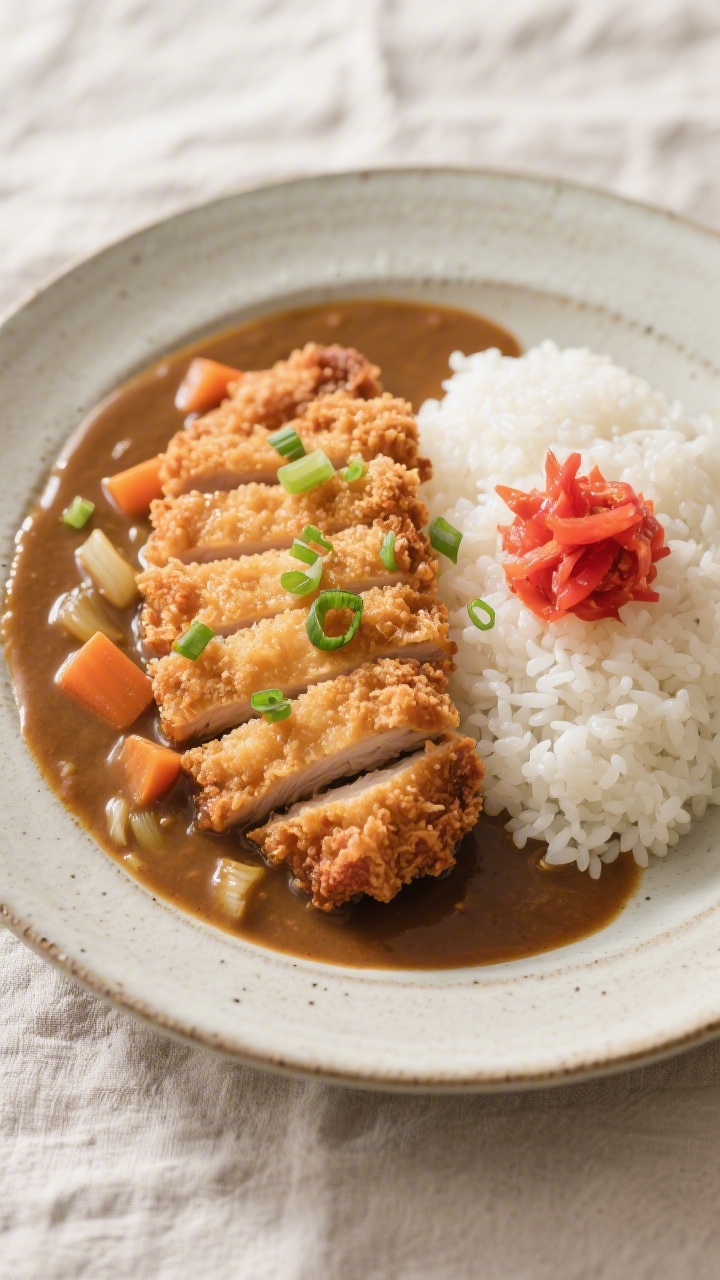
- Slice and plate: Slice chicken crosswise into strips. Spoon curry sauce over a bed of steamed rice and top with chicken.Garnish with scallions or parsley and serve with pickles if you like.
Keeping It Fresh
- Store separately: Keep curry sauce and katsu in separate containers so the chicken stays crisp.
- Fridge: Curry keeps 3–4 days; chicken 1–2 days. Reheat sauce gently on the stove; re-crisp chicken in a 375°F (190°C) oven or air fryer for 5–8 minutes.
- Freeze: Curry sauce freezes well for up to 2 months. Freeze cutlets after frying and cooling; reheat from frozen in a hot oven or air fryer.
- Meal prep tip: Make a double batch of curry sauce on the weekend and fry fresh chicken the day you want to serve.
Why This is Good for You
- Balanced meal: You get protein from the chicken, carbs from rice, and fiber from onions and carrots.
- Gentle spices: Japanese curry is milder than many curries, which can be easier on sensitive stomachs while still offering antioxidants from spices.
- Customizable: Swap in brown rice, add more veggies, or use an air fryer to reduce oil while keeping crunch.
Pitfalls to Watch Out For
- Soggy crust: Don’t add sauce to the chicken directly if you want it crispy.Ladle sauce around or under the katsu.
- Uneven cooking: If the cutlet is too thick, the crust can brown before the center cooks. Pound to an even thickness.
- Greasy results: Fry at the right temperature. Too cool and the chicken absorbs oil; too hot and it burns.Aim for 350°F (175°C).
- Gummy sauce: Add roux off a gentle simmer and whisk until smooth. If it’s too thick, loosen with stock or water a little at a time.
- Underseasoning: Taste the curry after adding roux. A dash more soy or a pinch of salt can wake it up.
Variations You Can Try
- Pork katsu curry: Use pork loin cutlets (tonkatsu) and follow the same breading and frying method.
- Air fryer katsu: Spray panko-coated chicken with oil and air fry at 390°F (200°C) for 10–14 minutes, flipping once.
- Extra veg: Add potatoes, peas, or mushrooms to the curry for more body and texture.
- Spice lift: Stir in a pinch of cayenne or garam masala at the end for a warmer finish.
- Gluten-light option: Use gluten-free panko and a gluten-free curry roux if needed.
- Egg-free breading: Swap egg for a thin slurry of cornstarch and water to help panko stick.
FAQ
Can I make the curry sauce without store-bought roux?
Yes.
Make a quick roux by toasting 2 tablespoons butter with 2 tablespoons flour until light brown. Stir in 1–2 teaspoons curry powder, 1/2 teaspoon garam masala, and a pinch of turmeric. Whisk into the simmering stock and veg until thickened, then season with soy and a touch of honey.
What’s the best rice to serve with katsu curry?
Japanese short-grain white rice is the classic choice because it’s slightly sticky and holds sauce well.
If you prefer whole grains, short-grain brown rice works nicely, though it takes longer to cook.
How do I keep the panko from falling off?
Pat the chicken dry, press the panko firmly, and let the breaded cutlets rest 5–10 minutes before frying. Fry in oil that’s properly preheated, and avoid moving the chicken too much in the first minute.
Can I bake instead of fry?
Yes. Brush or spray the breaded cutlets with oil, place on a wire rack over a sheet pan, and bake at 425°F (220°C) for 15–18 minutes, flipping once.
They won’t be quite as shatter-crisp but still very good.
Is the curry spicy?
Japanese curry is generally mild. Choose mild, medium, or hot roux to match your preference, and add a pinch of chili if you want more heat.
What oil is best for frying?
Use a neutral, high-heat oil like canola, vegetable, peanut, or rice bran oil. Avoid olive oil for deep frying as it can smoke at higher temperatures.
Can I use chicken thighs?
Absolutely.
Boneless, skinless thighs make juicy katsu. Pound to even thickness and cook a little longer if needed.
What if my sauce is too thin?
Simmer a few more minutes to reduce, or melt in a small additional piece of curry roux. You can also whisk a teaspoon of cornstarch with water and stir it in while simmering.
How do I reheat leftovers without losing crunch?
Warm the sauce on the stove and re-crisp chicken in a hot oven or air fryer until the crust is crunchy and the center is hot.
Keep them separate until serving.
Can I make it vegetarian?
Yes. Use vegetable stock, swap chicken for crispy tofu or breaded eggplant, and ensure your curry roux is vegetarian-friendly.
Final Thoughts
Chicken katsu curry brings restaurant comfort to your kitchen with straightforward steps and pantry-friendly ingredients. The crispy cutlet, mellow curry, and fluffy rice make a combo that never gets old.
Once you master the basics, you can tweak the spice, add veggies, or switch proteins without losing the soul of the dish. Keep the sauce ready, fry the katsu fresh, and you’ll have a reliable, cozy favorite any night of the week.