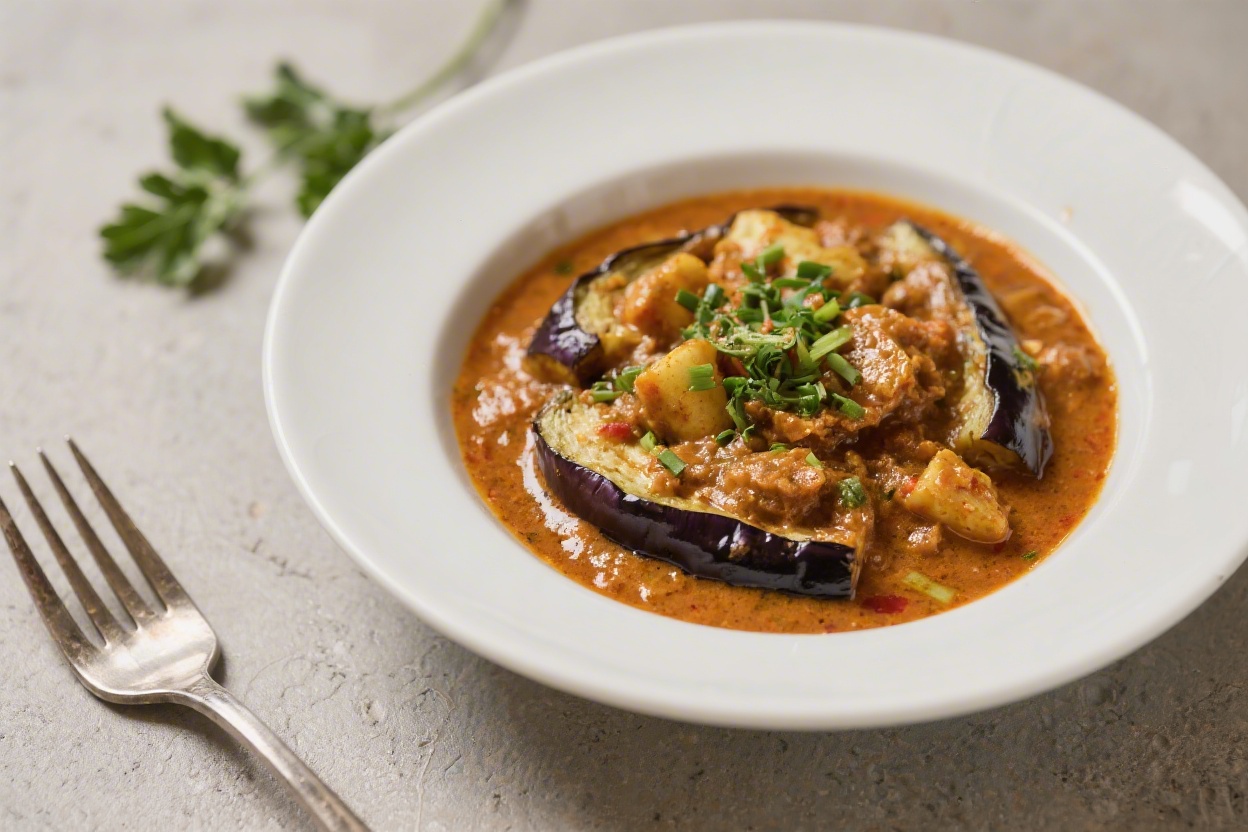
This eggplant curry is the kind of bowl that feels cozy from the first spoonful. Tender cubes of eggplant soak up a creamy tomato-coconut sauce, while warm spices make the kitchen smell amazing. It’s a simple, plant-based meal that still tastes indulgent and deeply satisfying.
No complicated techniques, just a few smart steps and everyday ingredients. Serve it with rice, naan, or quinoa and you’ve got a full, hearty dinner that checks all the boxes.
Contents
- 1 What Makes This Special
- 2 What You’ll Need
- 3 Instructions
- 4 Storage Instructions
- 5 Why This is Good for You
- 6 Pitfalls to Watch Out For
- 7 Variations You Can Try
- 8 FAQ
- 8.1 Do I need to peel the eggplant?
- 8.2 Can I make this without coconut milk?
- 8.3 How do I keep the eggplant from getting soggy?
- 8.4 What can I serve with eggplant curry?
- 8.5 Is this curry spicy?
- 8.6 Can I make it ahead?
- 8.7 What type of eggplant works best?
- 8.8 Can I add other vegetables?
- 8.9 How do I prevent bitterness?
- 8.10 How can I thicken the sauce?
- 9 In Conclusion
What Makes This Special
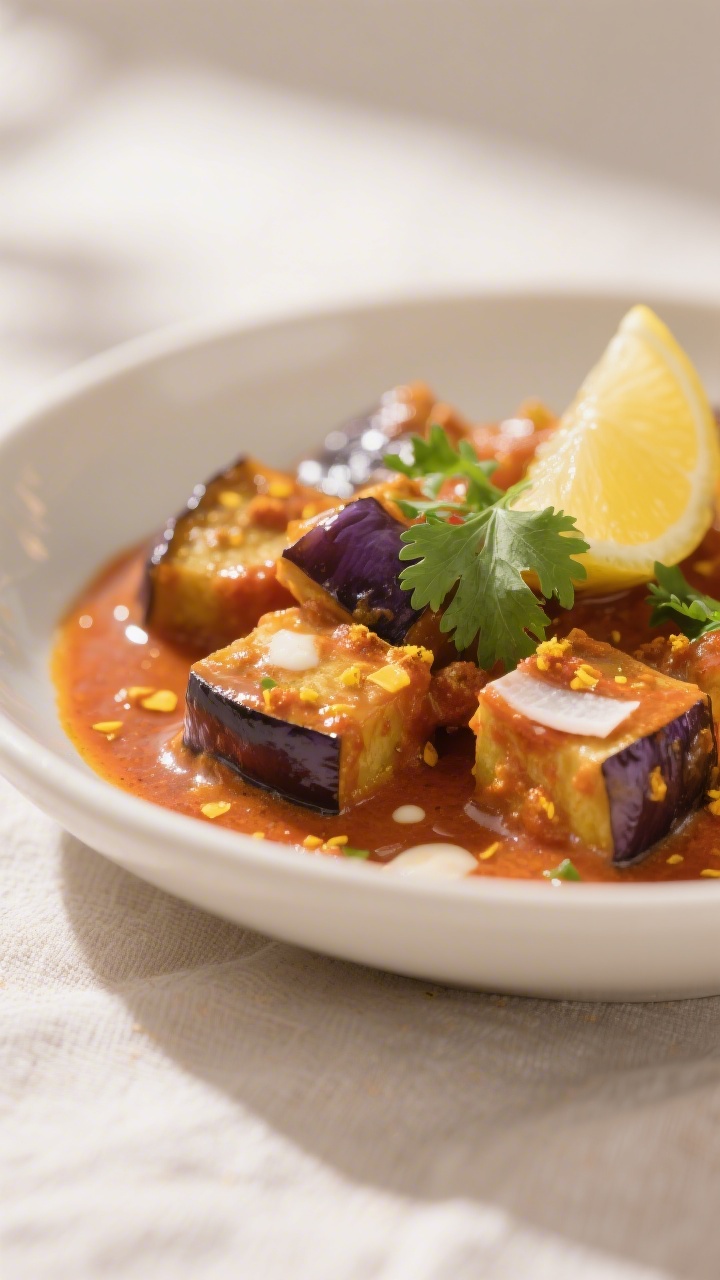
This curry leans on eggplant’s natural ability to absorb flavor, turning a humble vegetable into something rich and silky. The sauce balances gentle heat, tangy tomato, and creamy coconut so every bite is layered and rounded.
It’s also flexible: you can keep it mild or turn up the spice, add greens or chickpeas, and it still works beautifully. Best of all, it’s weeknight-friendly, but nice enough to serve to guests.
What You’ll Need
- 2 medium eggplants (about 1.5–2 pounds), cut into 1-inch cubes
- 2 tablespoons neutral oil (such as avocado, canola, or light olive oil)
- 1 large onion, finely chopped
- 4 garlic cloves, minced
- 1 tablespoon fresh ginger, minced or grated
- 2 teaspoons ground coriander
- 1 teaspoon ground cumin
- 1 teaspoon turmeric
- 1–2 teaspoons garam masala (to taste)
- 1/2–1 teaspoon red chili flakes or cayenne (optional, to taste)
- 1 can (14–15 oz) crushed tomatoes or tomato puree
- 1 can (13–14 oz) full-fat coconut milk
- 1/2 cup vegetable broth (or water), as needed
- 1 teaspoon sugar or maple syrup (optional, to balance acidity)
- 1–1.5 teaspoons fine sea salt, plus more to taste
- Freshly ground black pepper, to taste
- Juice of 1/2 lemon (or 1–2 teaspoons apple cider vinegar)
- Fresh cilantro, chopped, for garnish
- Cooked basmati rice, naan, or quinoa, for serving
Instructions
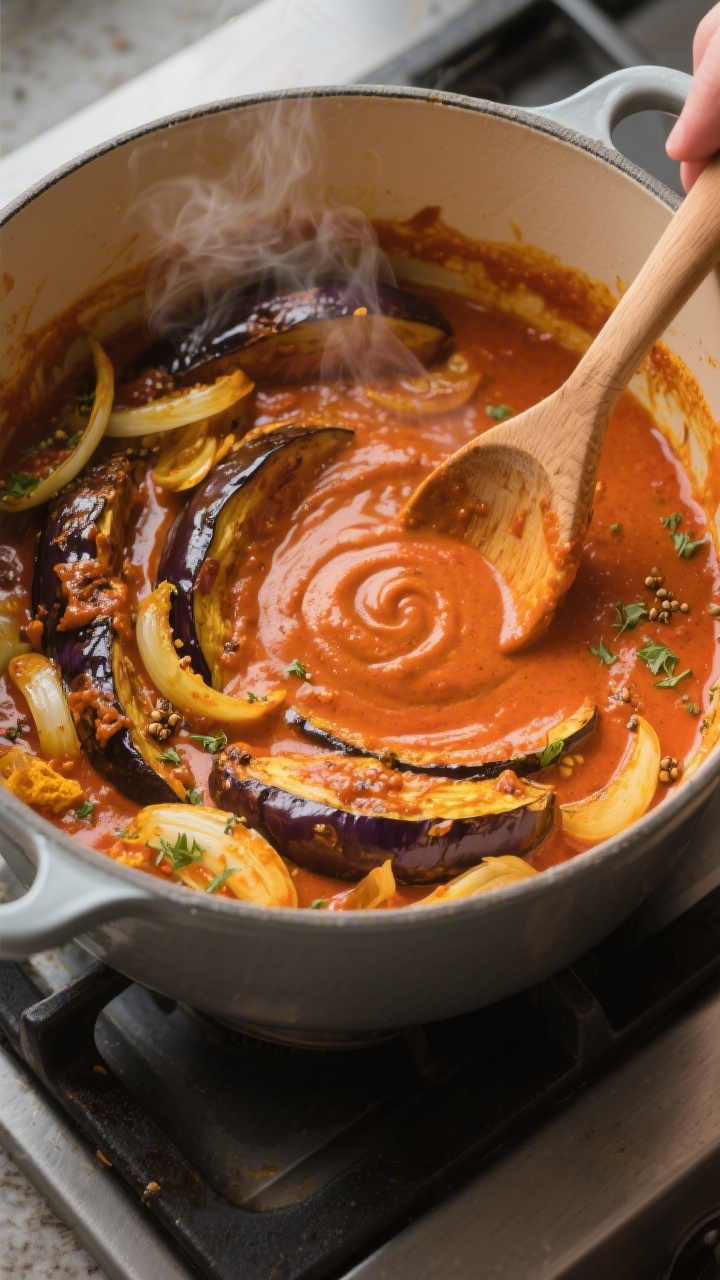
- Prep the eggplant. Cut into 1-inch cubes. Sprinkle with 1 teaspoon salt and toss.Let sit in a colander for 15–20 minutes to draw out excess moisture and any bitterness. Pat dry with paper towels.
- Brown the eggplant. Heat 1 tablespoon oil in a large skillet or Dutch oven over medium-high. Add half the eggplant and cook 6–8 minutes, stirring occasionally, until browned on most sides and slightly tender.Remove to a plate and repeat with the remaining oil and eggplant. This step builds rich flavor.
- Soften aromatics. In the same pot over medium heat, add the onion. If the pan is dry, add a splash of oil or water.Cook 5–7 minutes until translucent and lightly golden. Add garlic and ginger; cook 1 minute until fragrant.
- Bloom the spices. Stir in coriander, cumin, turmeric, garam masala, and chili flakes (if using). Cook 30–60 seconds, stirring, until the spices smell toasty. Don’t skip this: blooming deepens the flavor.
- Add tomatoes. Pour in the crushed tomatoes.Simmer 3–4 minutes to reduce the raw acidity. If the sauce thickens too fast, add a splash of broth.
- Create the sauce. Stir in coconut milk and 1/4 cup broth. Bring to a gentle simmer.Add sugar (if using), 1 teaspoon salt, and a few grinds of black pepper.
- Simmer with eggplant. Return the browned eggplant to the pot. Stir to coat, then reduce heat to low and cover. Simmer 12–15 minutes, stirring occasionally, until the eggplant is fully tender and silky.Add more broth if it gets too thick.
- Finish and balance. Taste and adjust salt. Add lemon juice to brighten the sauce. If it needs more warmth, sprinkle in a pinch of garam masala.The curry should taste creamy, tangy, and gently spiced.
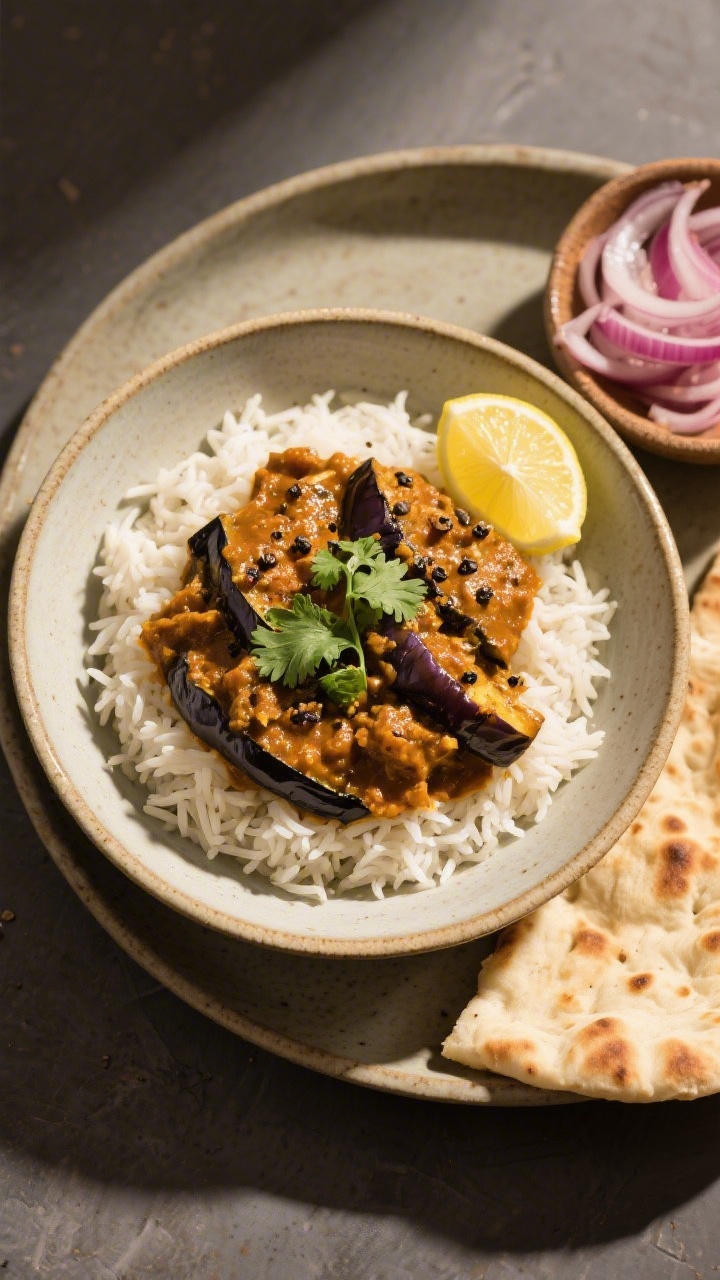
- Serve. Ladle over hot basmati rice or with warm naan. Garnish with chopped cilantro and a squeeze of lemon if you like.
Storage Instructions
Let the curry cool to room temperature, then transfer to an airtight container. It keeps well in the refrigerator for up to 4 days.
The flavors deepen by the next day, so leftovers are excellent. For longer storage, freeze for up to 3 months. Thaw overnight in the fridge and reheat gently on the stove with a splash of water to loosen the sauce.
Why This is Good for You
- Plant-powered. Eggplant provides fiber and antioxidants, while the sauce is packed with aromatics like garlic and ginger.
- Healthy fats. Coconut milk brings satisfying richness and helps you feel full.
- Spice benefits. Turmeric, cumin, and coriander are known for anti-inflammatory and digestive-supportive properties.
- Optional add-ins. Toss in chickpeas or spinach for extra protein, iron, and micronutrients.
Pitfalls to Watch Out For
- Skipping the browning step. If you don’t brown the eggplant, the curry can taste flat and the texture may be mushy instead of silky.
- Watery sauce. Add broth gradually.Simmer uncovered near the end to reduce if it feels thin.
- Under-seasoning. Eggplant needs salt. Taste at the finish and adjust with salt, pepper, and lemon for balance.
- Burning spices. Bloom spices over medium heat for less than a minute. If they scorch, they’ll turn bitter.
- Using low heat to brown. You need medium-high heat to get color on the eggplant without steaming it.
Variations You Can Try
- Chickpea boost. Add a drained can of chickpeas with the coconut milk for extra protein and texture.
- Spinach swirl. Stir in 3–4 cups baby spinach during the last 2 minutes for an easy green lift.
- Smoky twist. Add 1/2 teaspoon smoked paprika or a dash of liquid smoke for subtle depth.
- Thai-inspired. Swap garam masala for 1–2 tablespoons red curry paste and add lime juice and basil at the end.
- Roasted eggplant. Roast cubes at 425°F (220°C) for 20–25 minutes until browned, then add to the sauce.This frees up stovetop space and concentrates flavor.
- Lighter version. Use light coconut milk and finish with a teaspoon of olive oil for sheen.
FAQ
Do I need to peel the eggplant?
No. The skin softens as it cooks and helps the cubes hold their shape. If your eggplant is very large or older with tough skin, you can peel stripes or remove it entirely.
Can I make this without coconut milk?
Yes.
Use cashew cream (blend 1/2 cup soaked cashews with 3/4 cup water) or a thick oat cream. Add gradually until you get the desired richness.
How do I keep the eggplant from getting soggy?
Salt it first, pat it dry, and brown it over medium-high heat. Don’t overcrowd the pan.
These steps create a light crust that holds up in the sauce.
What can I serve with eggplant curry?
Basmati rice, brown rice, quinoa, or warm naan are all great. Add a simple cucumber-tomato salad or pickled onions for freshness and crunch.
Is this curry spicy?
It’s naturally mild. The heat comes from chili flakes or cayenne, which you can increase or skip.
The base flavors stay balanced either way.
Can I make it ahead?
Absolutely. The curry tastes even better the next day. Reheat gently and adjust the consistency with a splash of water if needed.
What type of eggplant works best?
Globe (American) eggplant is reliable and meaty.
Japanese or Chinese eggplants are also excellent; they’re thinner-skinned and cook a bit faster.
Can I add other vegetables?
Yes. Cauliflower florets, bell peppers, green beans, or peas work well. Add firmer vegetables earlier and delicate ones near the end.
How do I prevent bitterness?
Choose firm, glossy eggplants with smooth skin.
Salting and draining helps too. Balancing the sauce with lemon juice and a small pinch of sugar rounds out any bitter edges.
How can I thicken the sauce?
Simmer uncovered for a few minutes to reduce. You can also mash a few eggplant pieces into the sauce or add a spoonful of tomato paste.
In Conclusion
This eggplant curry proves that vegan cooking can be rich, bold, and deeply comforting.
With a handful of pantry spices and a smart technique or two, you’ll get a silky, flavorful sauce that clings to tender eggplant. Keep it simple for weeknights or dress it up with add-ins for company. Either way, it’s a recipe you’ll come back to whenever you want dependable, feel-good flavor in one pot.
Printable Recipe Card
Want just the essential recipe details without scrolling through the article? Get our printable recipe card with just the ingredients and instructions.