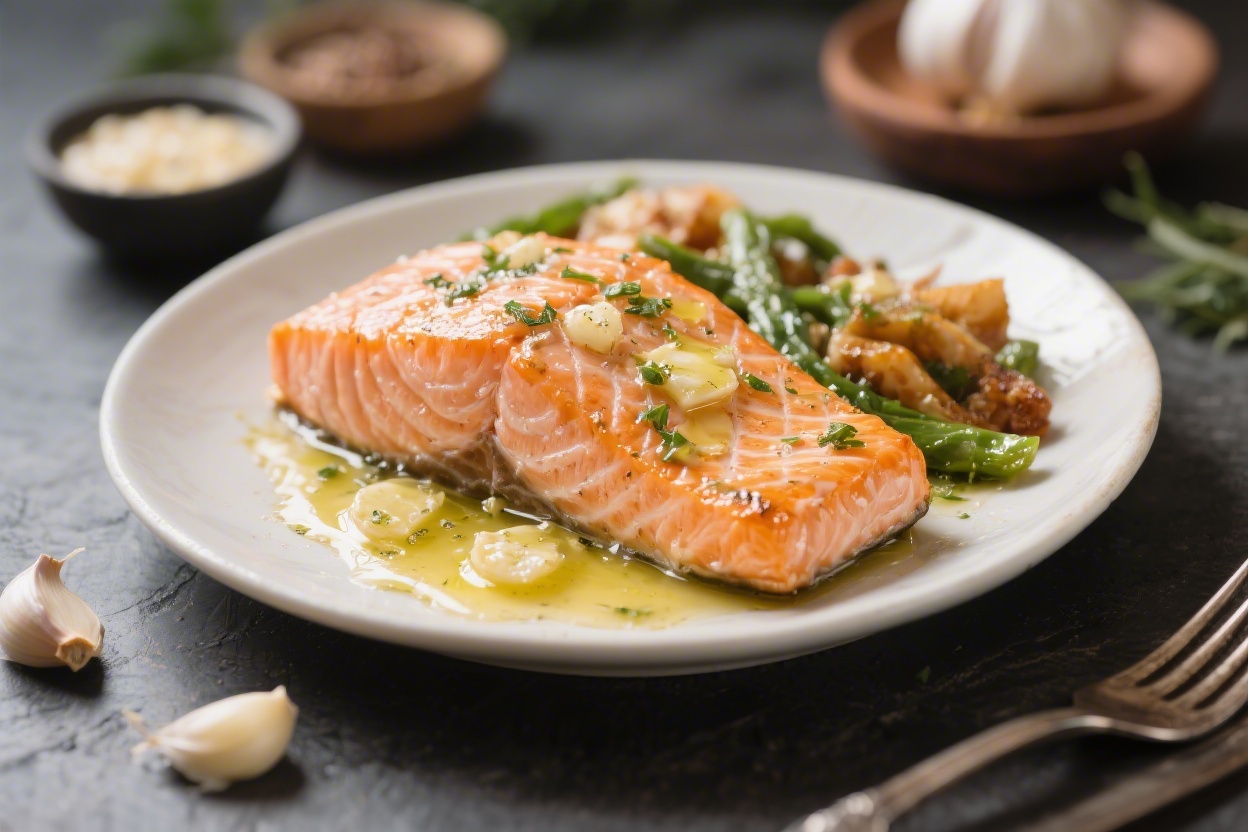
This Garlic Butter Salmon is a weeknight lifesaver. It’s fast, rich with flavor, and tastes like something you’d get at a nice restaurant. You only need one pan, a handful of ingredients, and about 15 minutes.
The garlic butter melts into the salmon, creating a glossy sauce that’s perfect for spooning over rice, veggies, or mashed potatoes. If you’re short on time but want a satisfying dinner, this is the recipe to keep on repeat.
Contents
- 1 Why This Recipe Works
- 2 What You’ll Need
- 3 How to Make It
- 4 Storage Instructions
- 5 Health Benefits
- 6 What Not to Do
- 7 Alternatives
- 8 FAQ
- 8.1 How do I know when salmon is done?
- 8.2 Can I use frozen salmon?
- 8.3 Should I cook salmon with the skin on or off?
- 8.4 What pan works best?
- 8.5 Can I make this dairy-free?
- 8.6 What sides go well with garlic butter salmon?
- 8.7 Why did my garlic burn?
- 8.8 How can I prevent the fish from sticking?
- 8.9 Can I make this ahead?
- 8.10 Is this recipe kid-friendly?
- 9 In Conclusion
Why This Recipe Works
Pan-searing locks in moisture. A hot pan gives salmon a crisp edge and tender interior, no drying out. The quick sear means the fish stays juicy.
Garlic butter builds instant flavor. Butter carries garlic, lemon, and herbs beautifully, creating a silky pan sauce in minutes.
It tastes luxurious with almost no effort.
Minimal ingredients, big payoff. You don’t need fancy tools or special seasoning blends. Salt, pepper, garlic, butter, and lemon do the heavy lifting.
Flexible and forgiving. Works with skin-on or skinless fillets, fresh or frozen (thawed). You can also scale the recipe up or down easily.
What You’ll Need
- Salmon fillets: 2–4 pieces (about 6 oz each), skin-on or skinless
- Salt and black pepper: To season the fish
- Garlic: 3–4 cloves, finely minced
- Butter: 3–4 tablespoons (unsalted preferred)
- Olive oil: 1 tablespoon, for searing
- Lemon: Zest and juice of 1/2 to 1 lemon
- Fresh parsley or dill: 2 tablespoons, chopped (optional but recommended)
- Red pepper flakes: Pinch, for heat (optional)
- Paprika or smoked paprika: 1/2 teaspoon (optional, for color and depth)
- Lemon wedges: For serving
How to Make It
- Pat the salmon dry. Use paper towels to remove surface moisture so you get a better sear.Season both sides with salt, pepper, and paprika if using.
- Preheat your pan. Set a large skillet (stainless steel or nonstick) over medium-high heat and add olive oil. When the oil shimmers, the pan is ready.
- Place salmon in the pan. If using skin-on, cook skin-side down first. Press lightly with a spatula for 5–10 seconds to prevent curling.
- Sear without moving. Cook 3–4 minutes until the edges turn opaque and the skin crisps.Don’t poke or flip too soon.
- Lower heat and flip. Reduce to medium. Flip the salmon and cook 2–3 minutes more, depending on thickness. Aim for slightly translucent in the center.
- Add butter and garlic. Scoot the salmon to one side.Add butter to the empty side. When melted and foamy, stir in minced garlic and a pinch of red pepper flakes.
- Baste. Tilt the pan and spoon the garlic butter over the salmon for 30–60 seconds. This infuses flavor without overcooking.
- Add lemon. Turn off the heat.Add lemon zest and a squeeze of lemon juice to the butter, then spoon more over the salmon. Scatter fresh herbs on top.
- Rest and serve. Let the salmon rest 1–2 minutes. Serve with extra lemon wedges and your favorite sides.
Storage Instructions
- Refrigerate: Cool to room temperature, then store in an airtight container for up to 3 days.
- Reheat gently: Warm in a skillet over low heat with a splash of water or broth, covered, 3–4 minutes.Or microwave at 50% power in short bursts to avoid drying out.
- Freeze: You can freeze cooked salmon for up to 2 months, but texture is best when fresh. Wrap tightly and thaw in the fridge overnight.
- Use leftovers: Flake into salads, grain bowls, pasta, or tacos with a squeeze of lemon.
Health Benefits
- Rich in omega-3s: Salmon provides EPA and DHA, which support heart, brain, and joint health.
- High-quality protein: Helps maintain muscle and keeps you full longer, making it great for balanced meals.
- Vitamins and minerals: Salmon delivers B vitamins, vitamin D, and selenium. Lemon and herbs add antioxidants.
- Better fats, better flavor: A small amount of butter goes a long way.You can adjust the amount to fit your goals without losing taste.
What Not to Do
- Don’t overcrowd the pan. If the fillets touch, they steam instead of sear. Cook in batches if needed.
- Don’t cook on low heat from the start. You’ll miss out on color and that crisp edge. Start hot, then reduce.
- Don’t overcook. Salmon is best at medium to medium-well.Pull it when it flakes easily but is still moist in the center.
- Don’t add garlic too early. It burns quickly. Add it after the salmon is nearly done, when butter is foaming.
- Don’t skip drying the fish. Moisture prevents browning and can cause splatter.
Alternatives
- Different fats: Swap butter for ghee (richer, higher smoke point) or olive oil (lighter, dairy-free). Add a pat of butter at the end for flavor if you like.
- Citrus swaps: Try lime or orange for a twist.Add a touch of honey with orange for a sweet-savory glaze.
- Herb variations: Dill, chives, thyme, or basil all work. Use what you have.
- Spice it up: Add Cajun seasoning, harissa, or a pinch of cumin and coriander for warmth.
- Air fryer or oven: Air fry at 390°F (200°C) for 7–10 minutes. Or bake at 400°F (205°C) for 10–12 minutes, then finish with melted garlic butter.
- Vegetable add-ins: Toss asparagus, green beans, or cherry tomatoes in the pan for a one-skillet meal.
FAQ
How do I know when salmon is done?
It should flake easily with a fork and look opaque on the edges with a slightly translucent center.
If you use a thermometer, aim for 125–130°F for medium. It will continue to cook slightly off heat.
Can I use frozen salmon?
Yes, just thaw it fully in the fridge overnight or under cold running water in its packaging. Pat dry very well before seasoning to ensure a good sear.
Should I cook salmon with the skin on or off?
Skin-on helps protect the flesh and makes flipping easier.
You can remove the skin after cooking if you prefer. If using skinless, be gentle when flipping.
What pan works best?
A heavy stainless-steel or cast-iron skillet gives the best sear. Nonstick works too and is more forgiving, especially for skinless fillets.
Can I make this dairy-free?
Use olive oil or a dairy-free butter alternative.
Add a splash of vegetable broth and extra lemon to create a flavorful sauce without dairy.
What sides go well with garlic butter salmon?
Try roasted potatoes, steamed rice, couscous, quinoa, sautéed spinach, roasted broccoli, or a simple green salad. The pan sauce tastes great over all of them.
Why did my garlic burn?
Garlic burns if added too early or cooked over high heat without enough fat. Add it after you flip the salmon and lower the heat slightly.
Stir it into melted butter and baste quickly.
How can I prevent the fish from sticking?
Preheat the pan properly, use a little oil, and don’t move the salmon too soon. Once a crust forms, it will release more easily. A flexible fish spatula also helps.
Can I make this ahead?
It’s best fresh, but you can prep the garlic, herbs, and lemon ahead of time.
Cook salmon just before serving, then finish with the ready-to-go garlic butter.
Is this recipe kid-friendly?
Yes. Skip the red pepper flakes and go light on the lemon if needed. Serve with familiar sides like rice or mashed potatoes for an easy win.
In Conclusion
This Garlic Butter Salmon in 15 Minutes is the perfect blend of simple and special.
With a hot pan, a few pantry staples, and a quick basting step, you get tender salmon and a glossy, garlicky sauce in no time. Keep the method the same, switch up the herbs or citrus, and you’ll have a dependable dinner that never feels boring. It’s quick, satisfying, and weeknight-friendly—exactly what a go-to recipe should be.
Printable Recipe Card
Want just the essential recipe details without scrolling through the article? Get our printable recipe card with just the ingredients and instructions.