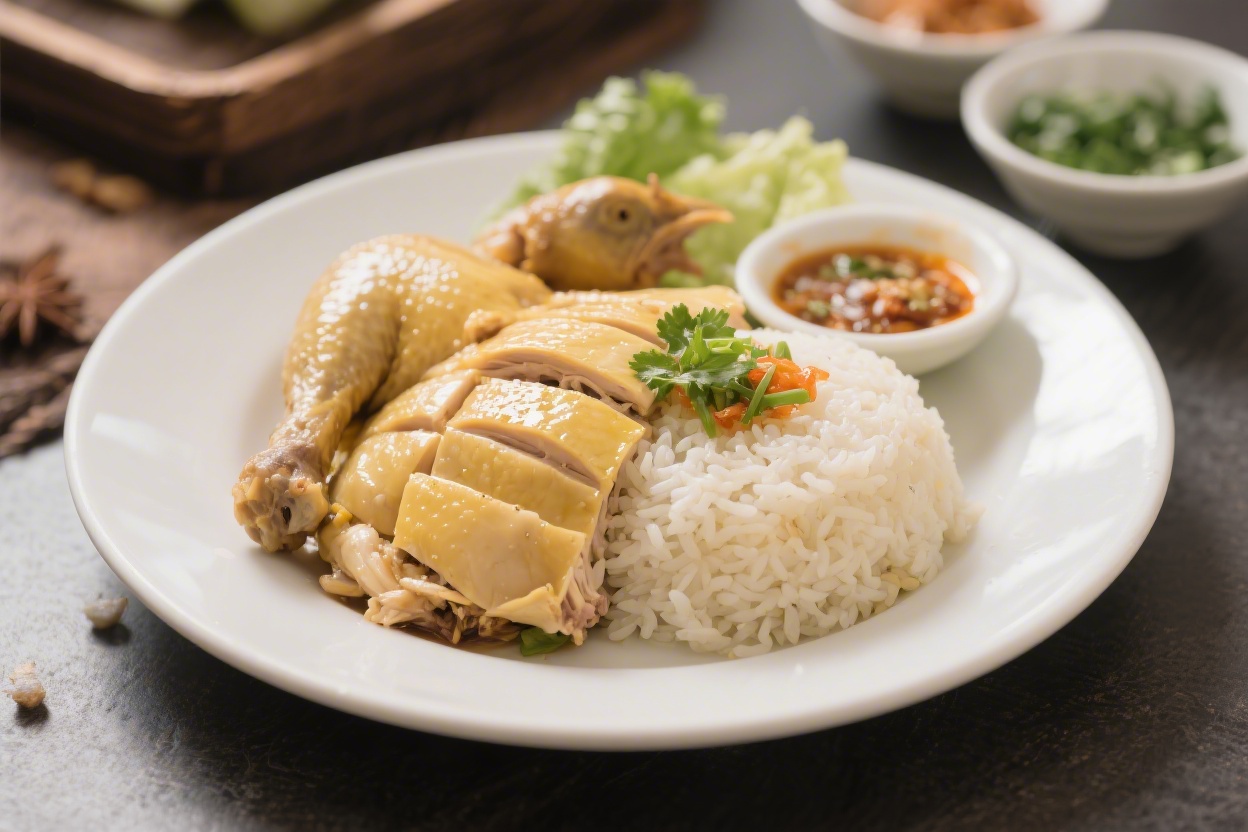
If you’ve ever craved a comforting, no-fuss meal that still feels special, Hainanese chicken rice hits the spot. It’s tender poached chicken, glossy fragrant rice, and a bright trio of sauces that pulls everything together. This beloved dish is a classic across Singapore, Malaysia, and Thailand, and it’s surprisingly achievable at home.
With a few smart steps, you’ll get restaurant-quality results in your own kitchen. Let’s make it happen.
Contents
What Makes This Recipe So Good
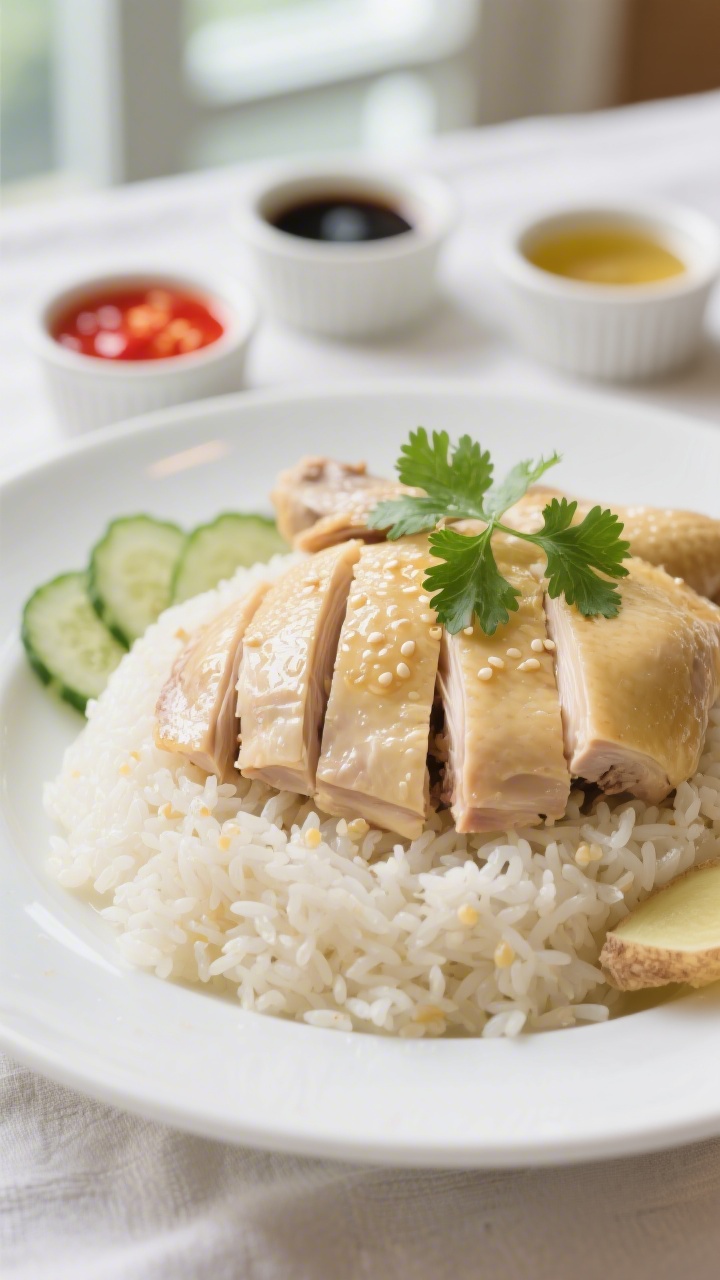
- Gentle poaching keeps the chicken incredibly juicy. No dry, stringy meat here—just silky chicken with a clean, delicate flavor.
- Rice that’s a star on its own. It’s cooked in chicken stock with ginger, garlic, and a bit of chicken fat, giving it a luxurious aroma and taste.
- Three essential sauces. A zippy chili sauce, savory-sweet soy mixture, and fresh ginger-scallion oil make every bite balanced and exciting.
- One pot, full meal. You’ll make the broth, chicken, and rice in a simple sequence, making cleanup easier than it sounds.
- Customizable and budget-friendly. Use a whole chicken for the most flavor, or swap in thighs if that’s what you have.
What You’ll Need
- Chicken: 1 whole chicken (about 3–4 lbs), preferably organic or free-range
- Salt: 2–3 tablespoons for rubbing and seasoning
- Ginger: 1 large knob (about 4 inches), peeled and sliced; plus extra minced for sauces
- Garlic: 8–10 cloves, smashed; plus extra minced for rice and sauces
- Scallions (green onions): 1 bunch, whites and greens separated
- Pandan leaves (optional but traditional): 2–3 knotted leaves
- Rice: 2 cups jasmine rice, rinsed until the water runs almost clear
- Chicken fat or neutral oil: 2–3 tablespoons (save rendered fat from the chicken skin if possible)
- Light soy sauce: 3 tablespoons
- Dark soy sauce: 1 tablespoon (adds color and light sweetness)
- Sugar: 1–2 teaspoons
- Sesame oil: 1–2 teaspoons
- Fresh red chilies: 2–3 (bird’s eye or red Fresno), roughly chopped
- Rice vinegar or lime juice: 1–2 tablespoons
- Chicken stock: From poaching the chicken (you’ll yield plenty)
- Cucumber: 1, thinly sliced for serving
- Fresh cilantro: A small bunch for garnish
Instructions
- Prep the chicken. Scrub the chicken skin with 1–2 tablespoons of salt to exfoliate and improve texture. Rinse, then pat dry.Stuff the cavity with a few slices of ginger and a couple of scallion whites. Tie legs loosely if needed.
- Poach gently. Place chicken breast-side down in a large pot. Add enough water to submerge.Add sliced ginger, smashed garlic, remaining scallion whites, and pandan leaves if using. Bring to a gentle simmer, not a rolling boil. Skim foam.
Simmer 35–45 minutes until juices run clear and the thickest part reaches about 160–165°F (71–74°C).
- Ice bath shock. Prepare a large bowl of ice water. Carefully lift the chicken from the pot and submerge it for 5–10 minutes. This tightens the skin and stops the cooking.Reserve the poaching liquid—it’s your broth.
- Season and rest. Remove the chicken, pat dry, and rub lightly with a mix of 1 teaspoon sesame oil and a pinch of salt. Let rest while you cook the rice and make sauces.
- Render fat and toast aromatics. In a pan, heat chicken fat or oil over medium heat. Add 3–4 minced garlic cloves and 1 tablespoon minced ginger.Sauté until fragrant, about 1 minute, without browning.
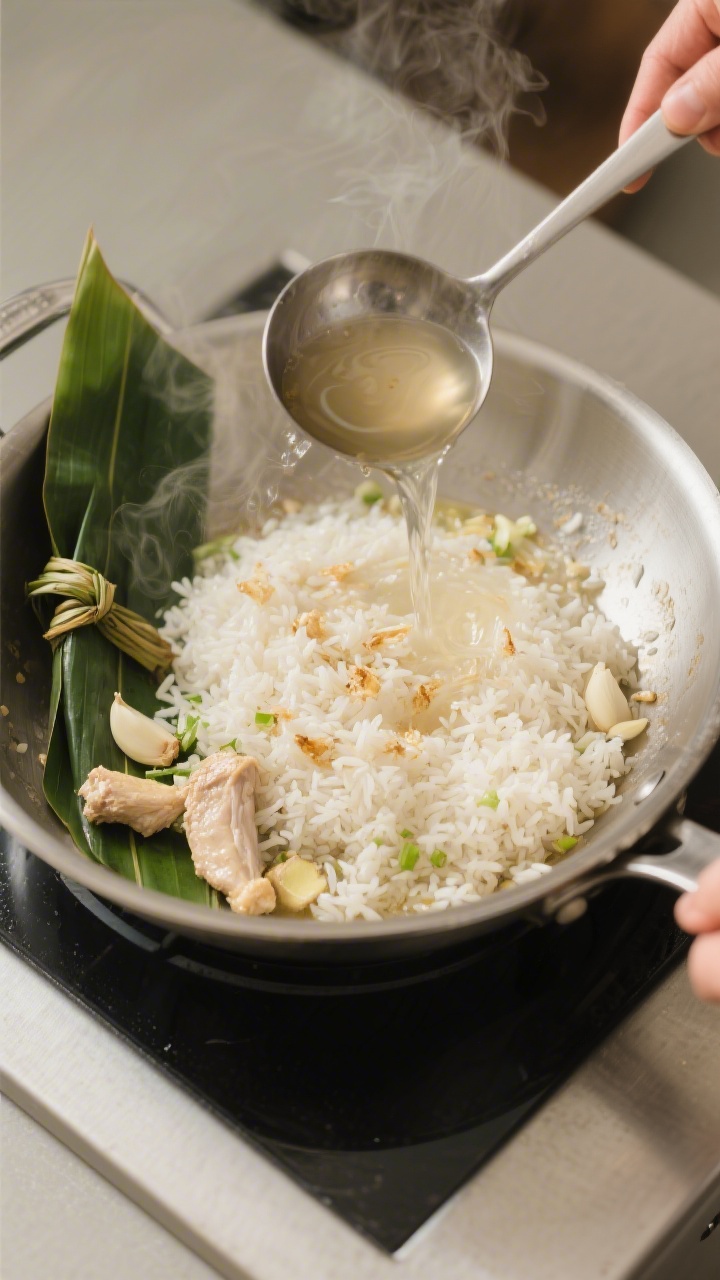
- Toast the rice. Add rinsed, drained jasmine rice to the pan. Stir to coat the grains in the aromatic fat for 2–3 minutes. Transfer to a rice cooker or pot.
- Cook the rice. Measure 2 cups of the reserved chicken broth (or slightly more depending on your rice cooker) and pour over the rice.Add a pinch of salt and a knotted pandan leaf if you have it. Cook until fluffy.
- Make the chili sauce. Blend red chilies, 2 cloves garlic, 1 tablespoon minced ginger, 2–3 tablespoons chicken broth, 1 tablespoon rice vinegar or lime juice, 1 teaspoon sugar, and a pinch of salt. Adjust with more lime and a splash of broth for desired heat and consistency.
- Make the soy dressing. In a small bowl, mix 3 tablespoons light soy sauce, 1 tablespoon dark soy, 1 teaspoon sugar, and 1 teaspoon sesame oil.Thin with a tablespoon of warm broth if you prefer a lighter drizzle.
- Make ginger-scallion oil. Finely mince 2 tablespoons ginger and 2–3 scallion greens. Place in a heatproof bowl with a pinch of salt. Heat 2 tablespoons neutral oil until shimmering, then pour over the mixture.Stir and let sit to bloom flavors.
- Carve the chicken. Separate legs, thighs, wings, and breasts. Slice the breast meat thickly against the grain. Traditional service keeps the skin on.Use the bones to enrich more broth if you like.
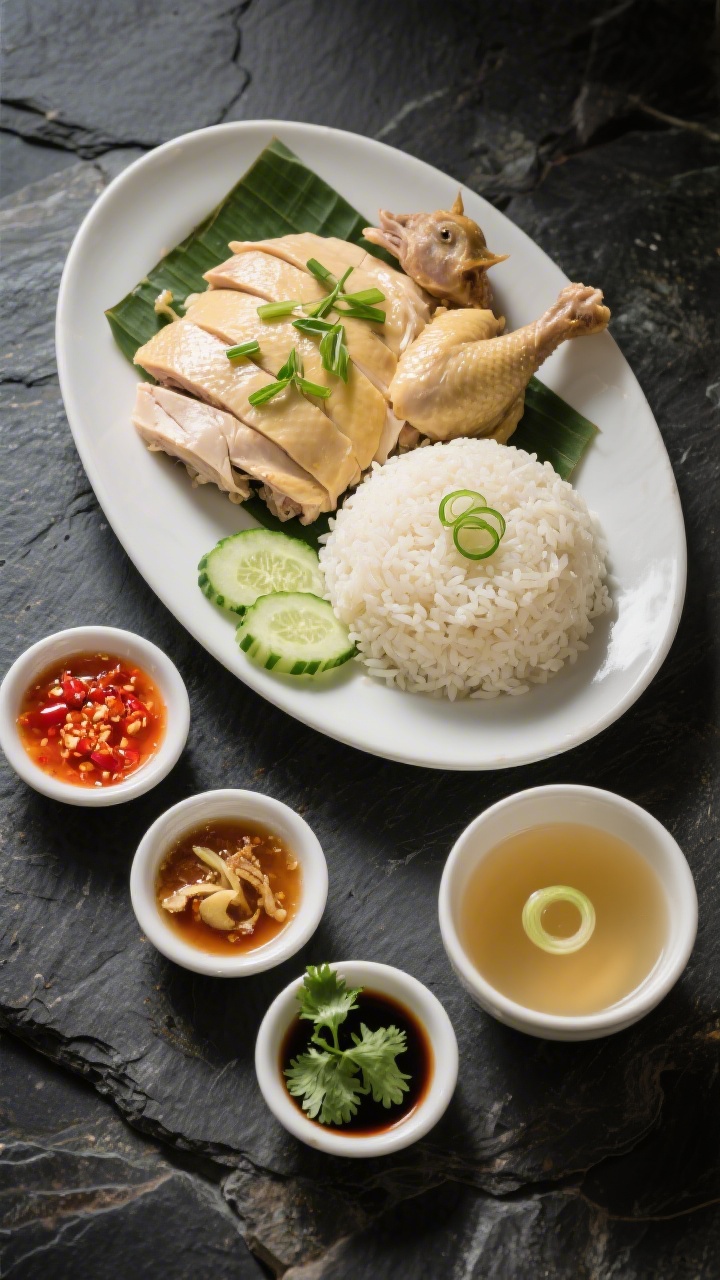
- Serve. Plate a mound of fragrant rice, top with sliced chicken, and add cucumber slices and cilantro. Serve with small dishes of chili sauce, soy dressing, and ginger-scallion oil. Offer hot chicken broth on the side as a light soup.
Storage Instructions
- Chicken: Store carved chicken in an airtight container for up to 3 days.Keep a little broth in the container to prevent drying.
- Rice: Refrigerate for up to 3 days. Reheat covered with a splash of broth to revive the aroma and texture.
- Sauces: Chili sauce and soy dressing keep 3–4 days in the fridge. Ginger-scallion oil is best within 2 days.
- Broth: Refrigerate up to 5 days or freeze up to 2 months.Skim fat after chilling if desired.
Why This is Good for You
- Lean protein: Poached chicken provides high-quality protein without heavy frying.
- Gentle flavors, easy digestion: Ginger and garlic support digestion and add antioxidant benefits.
- Balanced meal: You get protein, carbs, and a light broth, with fresh cucumber for crunch and hydration.
- Lower oil than takeout: Most of the richness comes from aromatic stock and a small amount of fat.
Pitfalls to Watch Out For
- Boiling too hard: A rolling boil toughens the meat. Keep the liquid at a gentle simmer the whole time.
- Skipping the ice bath: This step sets the skin and keeps the chicken juicy. Don’t skip it.
- Unrinsed rice: Not rinsing leaves excess starch, making the rice gummy instead of fluffy and glossy.
- Underseasoned rice: Use the flavorful broth and a pinch of salt.The rice should be delicious on its own.
- Overpowering sauces: Keep the sauces balanced. Chili should be bright, not bitter. Taste and adjust lime, sugar, and salt.
Alternatives
- Chicken cuts: Use bone-in thighs if you don’t want to cook a whole bird.Poach 20–25 minutes and rest as above.
- Instant Pot method: Pressure cook the whole chicken on High for 18–20 minutes with aromatics; natural release 10 minutes. Still give it an ice bath.
- No pandan leaves: Skip them. Add a tiny splash of pandan extract if you have it, or leave it out entirely.
- Ginger-scallion only: If short on time, make just the ginger-scallion oil.It pairs perfectly with the chicken and rice.
- Low-sodium option: Use low-sodium soy sauce and season gradually. The broth already brings saltiness.
FAQ
Can I make this ahead?
Yes. Poach the chicken and cook the rice up to a day ahead.
Keep the chicken and rice chilled separately. Reheat the rice with a splash of broth and serve the chicken at room temperature with hot broth on the side.
How do I know the chicken is done without a thermometer?
Pierce the thickest part of the thigh; the juices should run clear, not pink. The leg should wiggle easily at the joint.
Still, a thermometer is the most reliable method.
What if my rice is too wet or too dry?
Too wet: Use slightly less broth next time and be sure you fully drained the rinsed rice. Too dry: Add a few tablespoons of hot broth, fluff, and cover for 5 minutes to steam.
Is the chili sauce very spicy?
It can be, depending on the chilies used. For milder heat, use red Fresno or deseed the chilies.
Add more lime and sugar to balance if it tastes too hot.
Can I use brown rice?
You can, but it changes the texture and timing. Par-cook brown jasmine rice first, then finish with chicken broth and aromatics. Expect a nuttier, chewier bite.
Do I need dark soy sauce?
It adds color and a gentle sweetness, but you can skip it.
Use a touch more light soy and a pinch of sugar as a substitute.
What can I do with leftover broth?
Skim the fat and use it for soups, noodles, or to cook more rice. It’s flavorful and makes a great quick lunch with greens and tofu or dumplings.
In Conclusion
Hainanese chicken rice is all about simple technique and clean, confident flavors. With gentle poaching, aromatic rice, and bright sauces, you’ll get a dish that feels both homestyle and special.
Once you try it, you’ll see why it’s a staple across Southeast Asia—and why it often becomes a weeknight favorite at home. Keep the method, tweak the sauces to your taste, and enjoy every comforting spoonful.