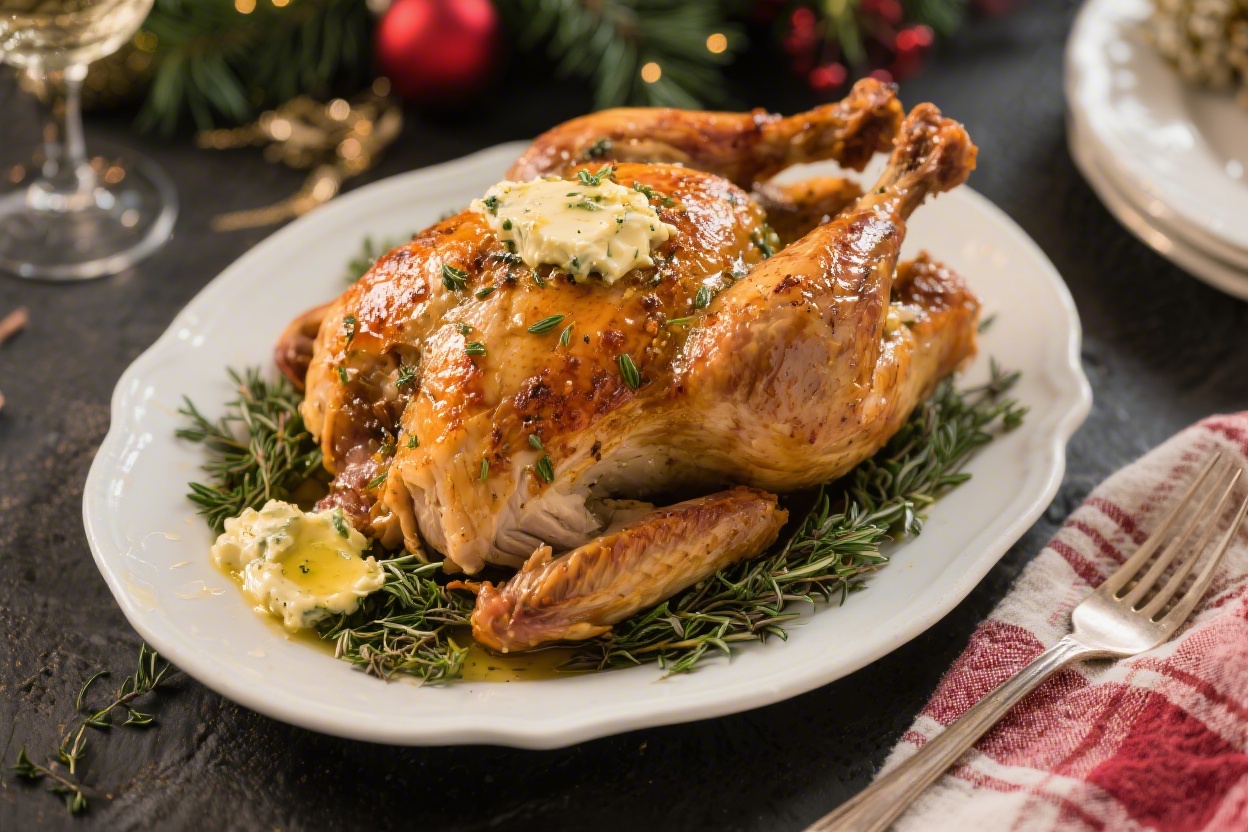
Nothing says celebration like a golden, juicy turkey at the center of the table. This herb butter roast turkey is simple to prepare, full of fresh flavor, and designed to stay moist from the first slice to the last. The method is straightforward, the ingredients are easy to find, and the results are reliably impressive.
If you’ve ever worried about a dry bird or complicated steps, this recipe will calm those nerves. You’ll get crisp skin, tender meat, and a buttery herb aroma that fills the kitchen.
Contents
- 1 What Makes This Special
- 2 Ingredients
- 3 Step-by-Step Instructions
- 4 Storage Instructions
- 5 Why This is Good for You
- 6 Pitfalls to Watch Out For
- 7 Variations You Can Try
- 8 FAQ
- 8.1 How big of a turkey should I buy?
- 8.2 Can I skip the dry brine if I’m short on time?
- 8.3 Should I rinse the turkey?
- 8.4 Do I need to baste?
- 8.5 What if my turkey is done early?
- 8.6 How do I prevent the breast from drying out?
- 8.7 Can I roast the turkey without a rack?
- 8.8 Is it safe to stuff the turkey with bread stuffing?
- 8.9 What herbs can I substitute?
- 8.10 How long should I rest the turkey?
- 9 In Conclusion
What Makes This Special
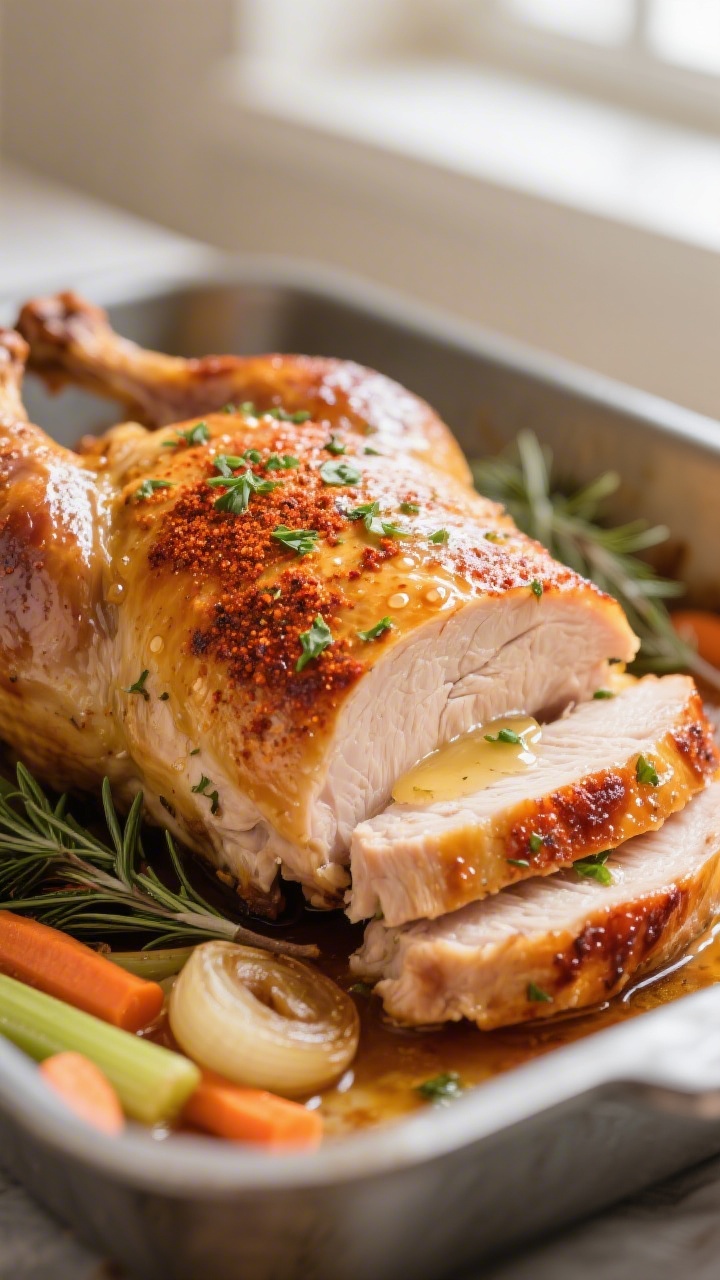
This recipe uses a generous layer of herb butter under and over the skin for maximum moisture and flavor. A quick dry brine helps the meat season evenly and stay juicy in the oven.
The roasting process is simple, with a steady temperature and minimal basting to avoid opening the oven too often. Aromatics in the cavity add subtle fragrance without overpowering the taste. The result is a balanced, savory turkey that pairs well with classic sides and gravy.
Ingredients
- 1 whole turkey (12–14 pounds), thawed if frozen
- 2 tablespoons kosher salt (for dry brine)
- 1 tablespoon black pepper, freshly ground
- 1 tablespoon paprika (optional, for color)
- 1 cup (2 sticks) unsalted butter, room temperature
- 4 cloves garlic, minced
- 2 tablespoons fresh rosemary, finely chopped
- 2 tablespoons fresh thyme, finely chopped
- 2 tablespoons fresh parsley, finely chopped
- 1 tablespoon fresh sage, finely chopped (optional but great)
- 1 lemon, zested and cut into wedges
- 1 onion, quartered
- 2 carrots, roughly chopped
- 2 celery stalks, roughly chopped
- 1 cup low-sodium chicken stock or turkey stock
- 2 tablespoons olive oil
- Kitchen twine for trussing
Step-by-Step Instructions
- Thaw and prep the turkey. If your turkey is frozen, thaw it in the refrigerator for 3–4 days.Remove the giblets and neck, pat the turkey dry with paper towels, and place on a rimmed baking sheet.
- Dry brine for juicy meat. Mix the kosher salt and half the black pepper. Sprinkle evenly over the turkey, including the cavity. Refrigerate uncovered for 12–24 hours.This helps the skin dry and the meat season deeply.
- Make the herb butter. In a bowl, combine softened butter, garlic, rosemary, thyme, parsley, sage (if using), lemon zest, remaining pepper, and paprika. Stir until smooth and fragrant.
- Preheat and prepare the pan. Heat the oven to 425°F (220°C). Scatter onions, carrots, and celery in a large roasting pan.Add the stock to the pan to keep drippings from burning.
- Butter under and over the skin. Gently loosen the skin over the breast with your fingers. Rub about half the herb butter under the skin, spreading it evenly. Rub the rest over the entire outside.Drizzle with olive oil for extra crispness.
- Stuff aromatics and truss. Place lemon wedges and a few onion pieces in the cavity. Do not overpack. Tie the legs with kitchen twine and tuck the wing tips under for even cooking.
- Start hot, then lower the heat. Roast at 425°F for 20 minutes to set the skin.Then reduce the oven to 325°F (165°C) and continue roasting.
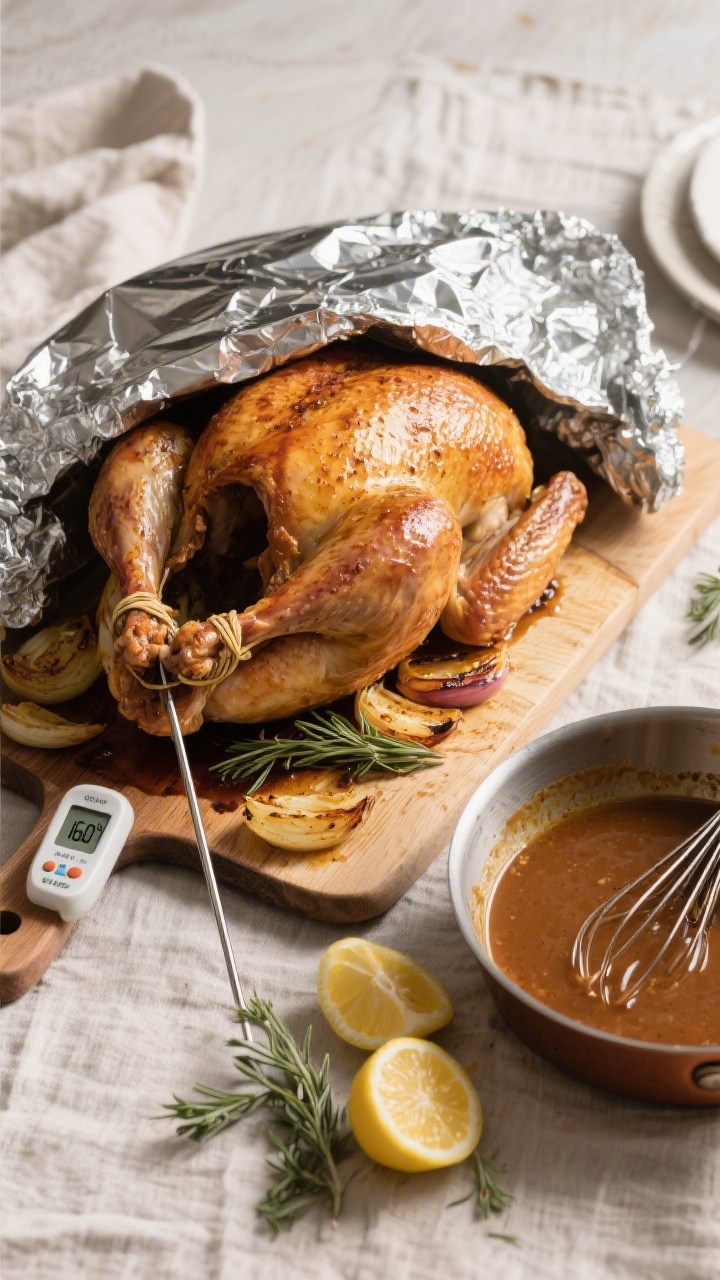
- Roast to temperature, not time. Plan on about 13–15 minutes per pound at 325°F, but rely on a thermometer. Aim for 160°F in the thickest part of the breast and 175°F in the thigh. The temperature will rise slightly as it rests.
- Minimal basting. If the skin is looking dry, baste once or twice with pan juices during the last hour.Keep the oven door closed as much as possible for steady heat.
- Shield if needed. If the breast skin browns too fast, tent it loosely with foil to prevent burning while the thighs finish.
- Rest before carving. Transfer the turkey to a cutting board and let it rest, tented with foil, for 30–45 minutes. This keeps the juices in the meat.
- Make gravy (optional but encouraged). Skim excess fat from the pan drippings. Simmer with a splash of stock and whisk in a spoonful of flour or cornstarch slurry until thickened.Season to taste.
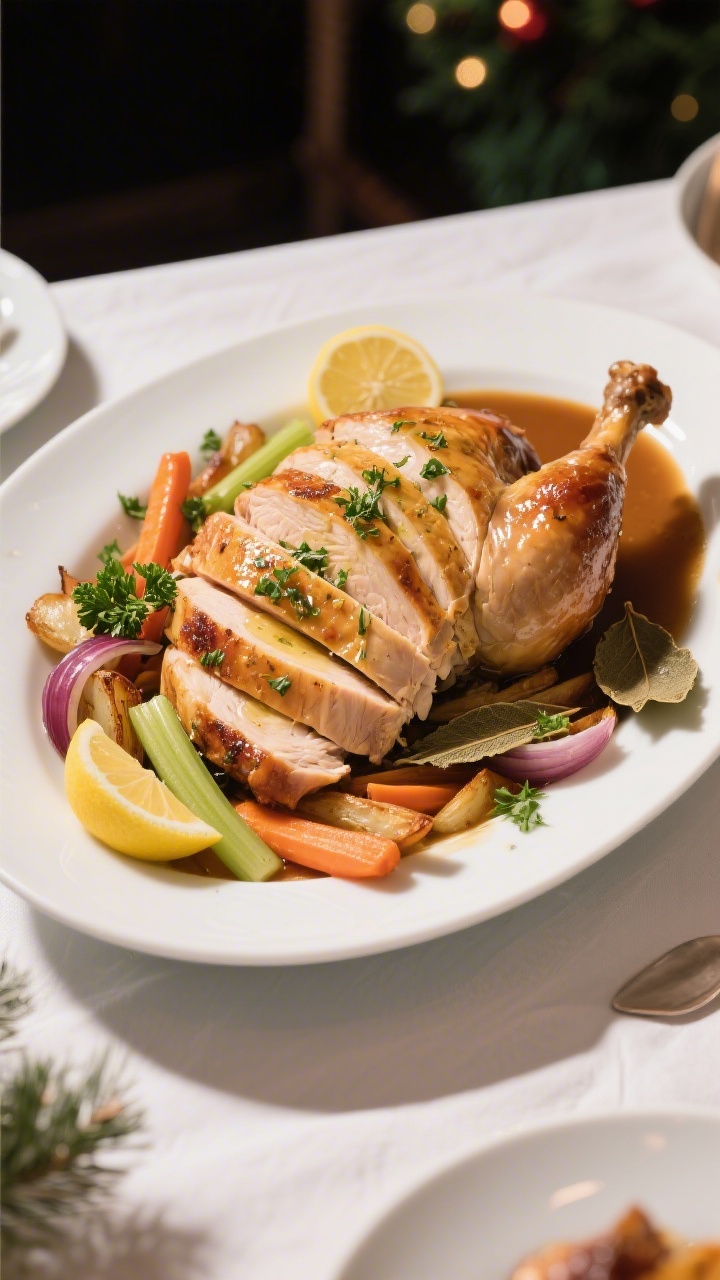
- Carve and serve. Remove the legs and thighs first, then the breasts. Slice against the grain. Serve with warm gravy and your favorite sides.
Storage Instructions
- Refrigerate: Store leftover turkey in shallow, airtight containers within 2 hours of serving.It keeps well for 3–4 days.
- Freeze: Wrap slices tightly and freeze for up to 3 months. Label with the date for easy planning.
- Reheat gently: Warm covered in a 300°F oven with a splash of broth until just heated through, or microwave with a damp paper towel to prevent drying.
- Use the carcass: Simmer the bones with onions, celery, carrots, peppercorns, and bay leaves for a rich, homemade stock.
Why This is Good for You
Turkey is a lean source of protein, which helps keep you full without loading on saturated fat. Fresh herbs add antioxidants and bright flavor, so you need less salt overall.
Making your own gravy from pan drippings lets you control sodium and thickness. Plus, roasting over vegetables infuses extra aroma and creates delicious, nutrient-rich drippings for sauces.
Pitfalls to Watch Out For
- Skipping the dry brine: This step builds flavor and improves texture. Without it, seasoning may taste flat.
- Not using a thermometer: Guessing leads to overcooked breast or underdone thighs.A digital probe is your best friend.
- Carving too soon: Rest time is essential. Cut early and you’ll lose those precious juices.
- Overstuffing the cavity: It slows cooking and can make the bird uneven. Keep it light with aromatics only.
- Oven crowding: Too many dishes in the oven can drop the temperature.Stagger side dishes or use a second oven if possible.
Variations You Can Try
- Citrus and fennel twist: Add orange zest to the butter and scatter sliced fennel in the roasting pan.
- Garlic-lemon pepper: Use extra lemon zest and cracked black pepper, plus a touch of crushed red pepper for heat.
- Maple herb glaze: Warm 1/4 cup maple syrup with a tablespoon of butter and brush over the skin during the last 20 minutes.
- Smoky paprika and cumin: Add 1 teaspoon each smoked paprika and ground cumin to the herb butter for a deeper flavor.
- Dairy-free option: Swap butter for olive oil or a dairy-free buttery spread; the technique stays the same.
FAQ
How big of a turkey should I buy?
Plan on 1 to 1.5 pounds of turkey per person. For a group of 8, a 12–14 pound bird is perfect and leaves a bit for leftovers.
Can I skip the dry brine if I’m short on time?
Yes, but try to give it at least 2–4 hours if you can. Even a short rest with salt helps the seasoning penetrate and improves the skin.
Should I rinse the turkey?
No.
Rinsing can spread bacteria around the sink. Pat it dry with paper towels instead, then wash your hands and sanitize surfaces.
Do I need to baste?
Not necessarily. The herb butter keeps the meat moist.
If the skin looks dry, baste lightly during the final hour, but keep the oven door closed as much as possible.
What if my turkey is done early?
Tent it with foil and keep it warm in a 200°F oven, or wrap well and rest in a cooler lined with towels for up to an hour. Slice just before serving.
How do I prevent the breast from drying out?
Spread butter under the skin and tent the breast with foil if it browns too fast. Pull the turkey when the breast hits 160°F and let carryover heat finish the job.
Can I roast the turkey without a rack?
Yes.
Use a bed of sturdy vegetables (onions, carrots, celery) to lift the bird off the pan so air circulates and the bottom doesn’t steam.
Is it safe to stuff the turkey with bread stuffing?
It’s safer and easier to bake stuffing separately. If you do stuff, use a thermometer to ensure the center of the stuffing reaches 165°F.
What herbs can I substitute?
Use what you have: thyme, rosemary, parsley, and sage are classic. Marjoram and tarragon add a softer, sweet note if you want to mix things up.
How long should I rest the turkey?
Thirty to forty-five minutes is ideal.
This lets juices redistribute and makes carving cleaner and easier.
In Conclusion
This herb butter roast turkey is a reliable, flavorful main that earns compliments without creating kitchen stress. The dry brine, buttery herbs, and steady roasting method give you crisp skin and tender, juicy meat every time. Pair it with simple sides and a quick pan gravy, and you’ve got a holiday meal that feels classic and comforting.
Keep it relaxed, trust your thermometer, and enjoy the moment around the table.
Printable Recipe Card
Want just the essential recipe details without scrolling through the article? Get our printable recipe card with just the ingredients and instructions.