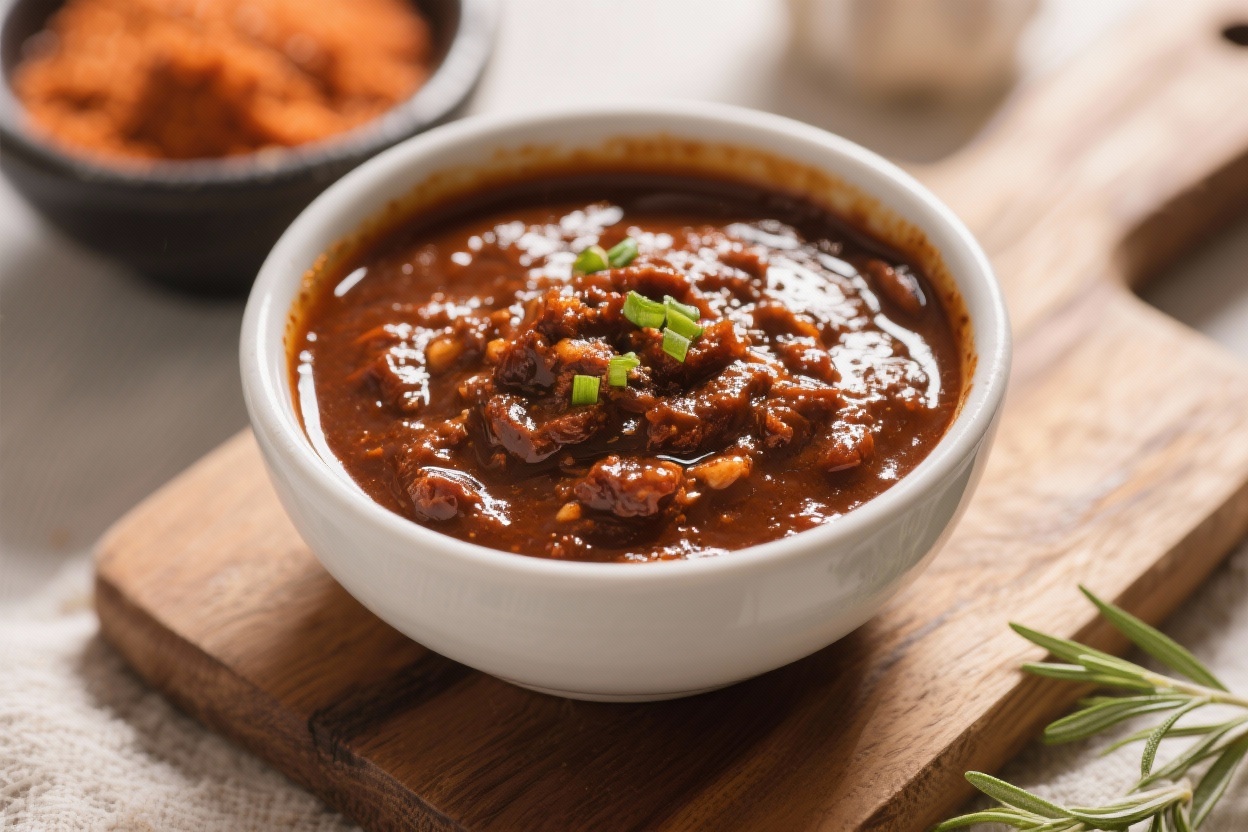
Adobo sauce is bold, smoky, and deeply savory exactly the kind of flavor booster that makes simple meals taste special. This version leans into dried chiles, garlic, tangy vinegar, and a hint of sweetness for balance. It’s the kind of sauce you’ll spoon over grilled meats, stir into stews, or whisk into a quick marinade.
If you’ve only had the canned chipotle-in-adobo version, this homemade take will surprise you with its freshness and depth. Make a batch once, and you’ll find a hundred ways to use it all week long.
Contents
What Makes This Special
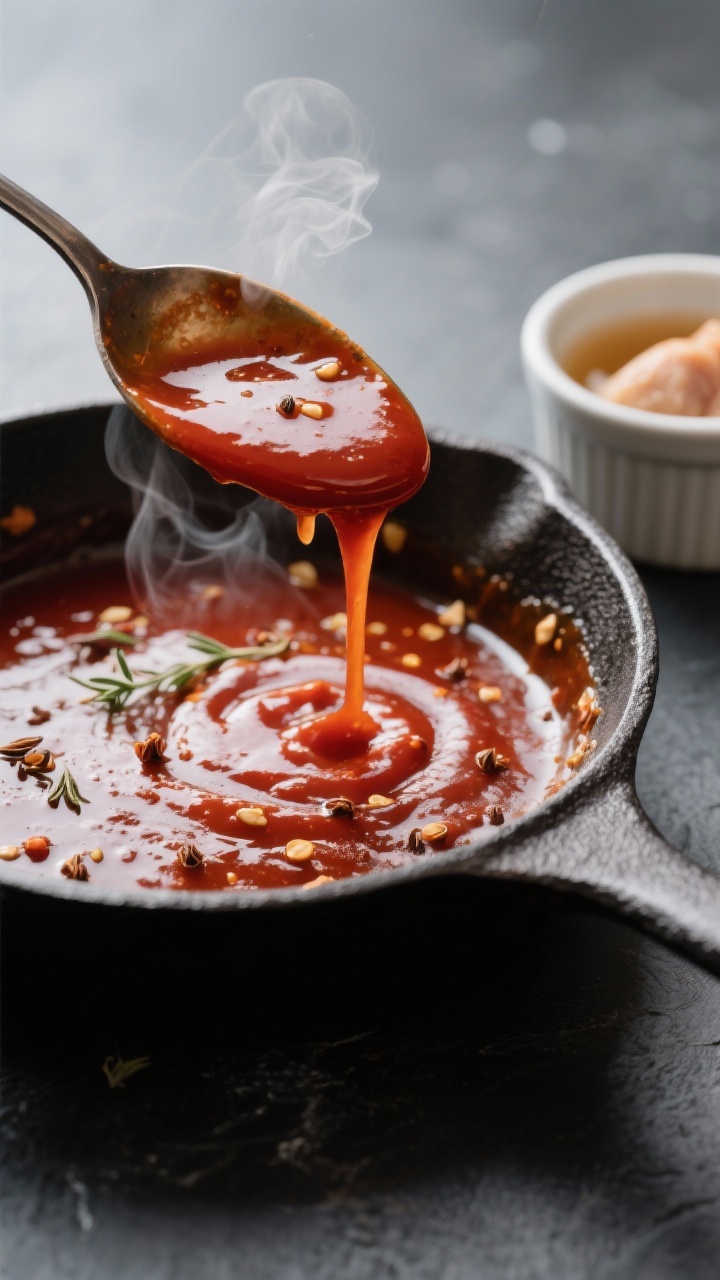
This adobo sauce builds flavor in layers, starting with toasted dried chiles for a warm, earthy base. A splash of vinegar adds brightness, while a touch of brown sugar softens the edges without making it sweet.
It’s thick enough to coat, smooth enough to blend into soups, and easy to adjust to your heat preference. Best of all, it stores well, so it’s a reliable go-to when you want fast flavor.
Ingredients
- 4 dried guajillo chiles, stemmed and seeded
- 2 dried ancho chiles, stemmed and seeded
- 1–2 dried chipotle chiles (optional, for extra heat and smokiness)
- 1 cup hot water (for soaking chiles)
- 1 small onion, roughly chopped
- 4–5 garlic cloves, peeled
- 2 tablespoons apple cider vinegar (or distilled white vinegar)
- 1 tablespoon tomato paste
- 1 teaspoon ground cumin
- 1 teaspoon dried oregano (preferably Mexican oregano)
- 1/2 teaspoon ground cinnamon (Mexican canela if available)
- 1/4 teaspoon ground cloves
- 1–2 teaspoons brown sugar, to taste
- 1 teaspoon kosher salt, plus more to taste
- 2 tablespoons neutral oil (such as canola or avocado)
- 1/2–3/4 cup low-sodium chicken stock (or water), as needed
- Freshly ground black pepper, to taste
How to Make It
- Toast the chiles. Heat a dry skillet over medium. Add guajillo, ancho, and chipotle chiles.Toast 30–45 seconds per side until fragrant and slightly darkened, but not burned. This wakes up their oils and deepens flavor.
- Soften the chiles. Place toasted chiles in a bowl and cover with hot water. Weigh them down with a small plate to keep submerged.Soak 15–20 minutes until pliable.
- Sauté aromatics. While chiles soak, warm oil in a skillet over medium. Add onion and cook 4–5 minutes until softened and slightly golden. Add garlic and cook 30–60 seconds until fragrant.Remove from heat.
- Prep the blender. Drain the chiles, reserving the soaking liquid. Add chiles to a blender with the cooked onion and garlic, tomato paste, vinegar, cumin, oregano, cinnamon, cloves, brown sugar, salt, and a few grinds of black pepper.
- Blend until smooth. Add 1/2 cup stock (or a mix of stock and a splash of chile soaking liquid) to the blender. Blend on high until very smooth, 60–90 seconds.If it’s too thick, add a bit more liquid. You’re aiming for a thick, pourable sauce.
- Simmer to marry flavors. Pour the sauce back into the skillet. Bring to a gentle simmer over low heat and cook 8–10 minutes, stirring often.Taste and adjust: add more salt for savoriness, a pinch of sugar for balance, or a splash of vinegar for brightness.
- Finish and cool. When the sauce looks glossy and coats a spoon, remove from heat. Let it cool before transferring to jars. It will thicken slightly as it cools.
Storage Instructions
- Refrigerator: Store in a clean, airtight jar for up to 10 days.Press a piece of parchment onto the surface to minimize air contact if you like.
- Freezer: Freeze in small containers or ice cube trays for up to 3 months. Pop out cubes and thaw what you need.
- To reheat: Warm gently on the stove with a splash of water or stock to loosen. Avoid boiling hard to preserve flavor.
Why This is Good for You
Dried chiles bring antioxidants and vitamins, and they add big flavor without heavy cream or butter.
The sauce is naturally dairy-free and can be made low-sodium if you control the salt. Because it’s concentrated, a spoonful goes a long way in seasoning lean proteins and vegetables. It also helps reduce food waste—use it to revive leftovers or turn plain beans and rice into a complete, satisfying meal.
Pitfalls to Watch Out For
- Burning the chiles: Over-toasted chiles taste bitter.Keep heat moderate and remove them at the first whiff of deep aroma.
- Skipping the soak: Dry, tough skins won’t blend smoothly. Soak until fully pliable, and don’t forget to reserve some soaking liquid.
- Under-seasoning: Adobo needs salt and acid to shine. Taste after simmering and adjust with salt, vinegar, or a pinch of sugar.
- Too thick or too thin: Control consistency with stock and simmer time.Thicken by simmering longer; thin with more liquid.
- Gritty texture: Blend longer than you think, or strain through a fine-mesh sieve for a silky finish.
Variations You Can Try
- Smokier version: Add more chipotle chiles or a dash of smoked paprika.
- Tomato-forward: Swap tomato paste for 1/2 cup crushed tomatoes and simmer a bit longer.
- Citrus lift: Replace half the vinegar with fresh orange juice for a subtle sweet-tart note.
- Herb twist: Add fresh cilantro stems to the blender for a greener edge, or use epazote if you have it.
- Spice swap: Try a pinch of allspice instead of cloves, or add coriander for a brighter aroma.
- Extra-hot: Include arbol chiles or add a fresh jalapeño to the blender.
- Vegan umami: Stir in a teaspoon of white miso or a splash of soy sauce to deepen savoriness.
FAQ
Can I use only one type of chile?
Yes, but the flavor will be simpler. Guajillos give a mild, fruity profile; anchos add chocolatey depth; chipotles bring smoke and heat. Use what you have, and adjust vinegar and sugar to balance.
Is this the same as the sauce in canned chipotle peppers?
It’s similar in style—smoky, tangy, and slightly sweet—but this version is fresher and more customizable.
If you want that exact vibe, add more chipotle and a bit more vinegar and sugar.
How can I use adobo sauce?
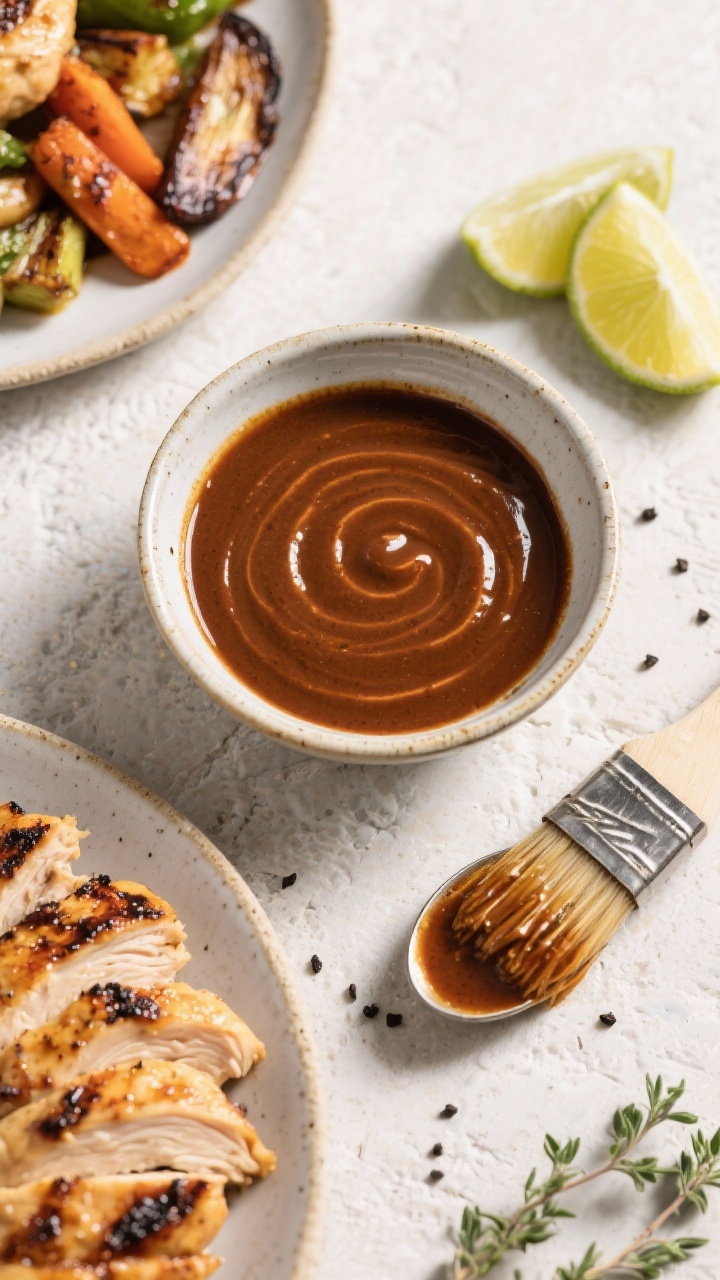
Spoon over grilled chicken, pork, or tofu. Stir into chili, braises, or beans. Toss with roasted vegetables, whisk into mayo for a quick spread, or mix with lime juice for a punchy marinade.
My sauce is bitter.
What happened?
Likely the chiles burned during toasting, or the sauce needs balance. Try blending in a little more brown sugar, a splash of vinegar, and a bit of stock to smooth it out.
Do I need to strain the sauce?
Not always, but straining yields a silkier texture, especially if your blender isn’t high-powered. It removes tough bits of skin for a smoother finish.
Can I make it without a blender?
A food processor will work, though the sauce may be a bit rustic.
For the smoothest result without a blender, chop everything very fine, simmer longer, and press through a sieve.
How spicy is this recipe?
Moderate, as written. For mild sauce, skip the chipotle and use more ancho. For hotter sauce, add arbol or extra chipotle, and taste as you go.
Can I can this sauce for shelf storage?
Home canning requires tested recipes for safety.
This version isn’t designed for water-bath canning. For longer storage, freeze in portions.
In Conclusion
Homemade adobo sauce gives you rich, smoky flavor with a short list of pantry ingredients. It’s easy to tailor to your heat and thickness preferences, and it works with everything from eggs to grilled meats.
Make a batch on the weekend, freeze a few portions, and you’ll always have a quick way to turn simple food into something memorable.
Printable Recipe Card
Want just the essential recipe details without scrolling through the article? Get our printable recipe card with just the ingredients and instructions.