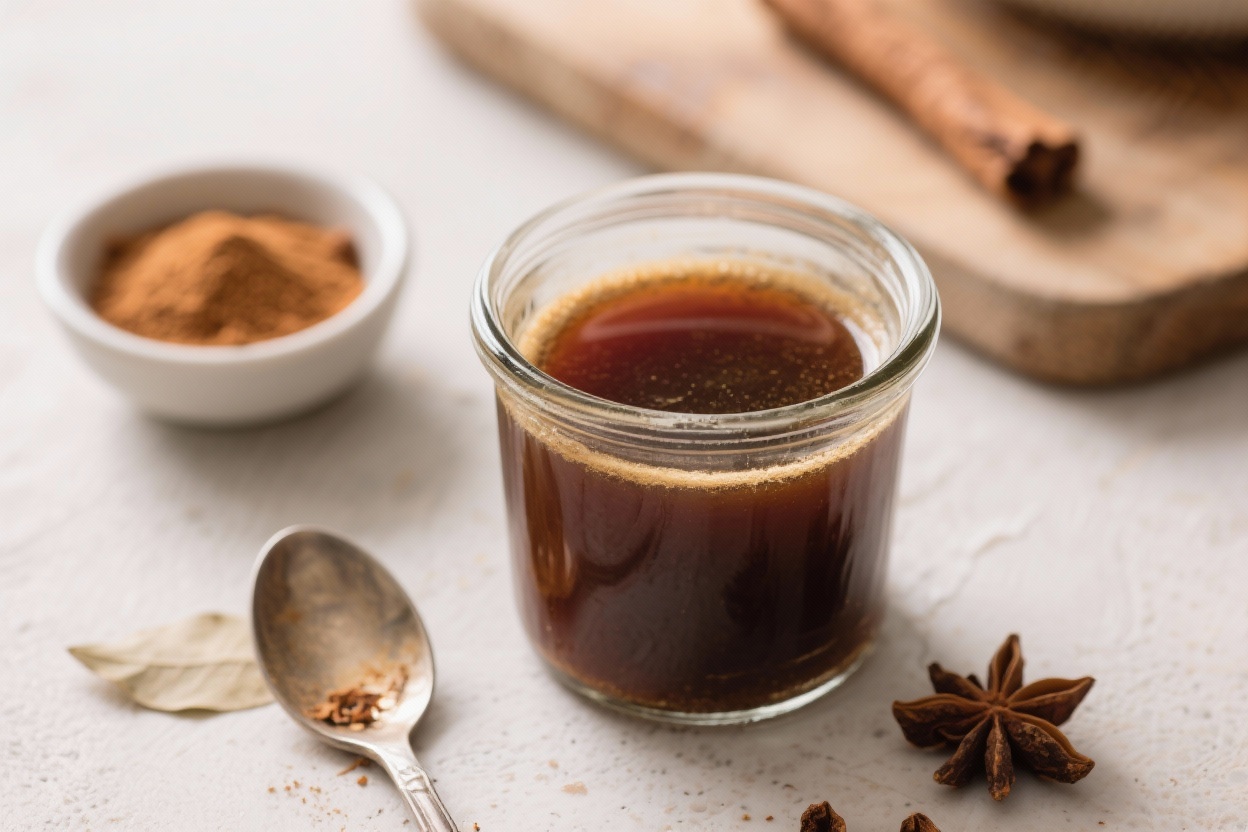
Chai at home should be bold, fragrant, and just sweet enough—without being fussy. This homemade chai concentrate gives you café-style chai in minutes, for a fraction of the cost. Brew a jar on the weekend and you’ll have spicy, warming tea ready for lattes all week.
It’s simple, flexible, and far better than most store-bought versions. If you love a creamy, comforting drink with real spice, this recipe will become a regular.
Contents
- 1 What Makes This Recipe So Good
- 2 What You’ll Need
- 3 Step-by-Step Instructions
- 4 Storage Instructions
- 5 Why This is Good for You
- 6 Common Mistakes to Avoid
- 7 Recipe Variations
- 8 FAQ
- 8.1 Can I use non-dairy milk?
- 8.2 How sweet should chai concentrate be?
- 8.3 What tea is best for chai?
- 8.4 Can I make it without cloves or star anise?
- 8.5 Why is my chai bitter?
- 8.6 How do I serve it iced?
- 8.7 Can I cut the recipe in half?
- 8.8 Can I make it spicier?
- 8.9 Is there a way to make it sugar-free?
- 8.10 What’s the best ratio for a latte?
- 9 Wrapping Up
What Makes This Recipe So Good
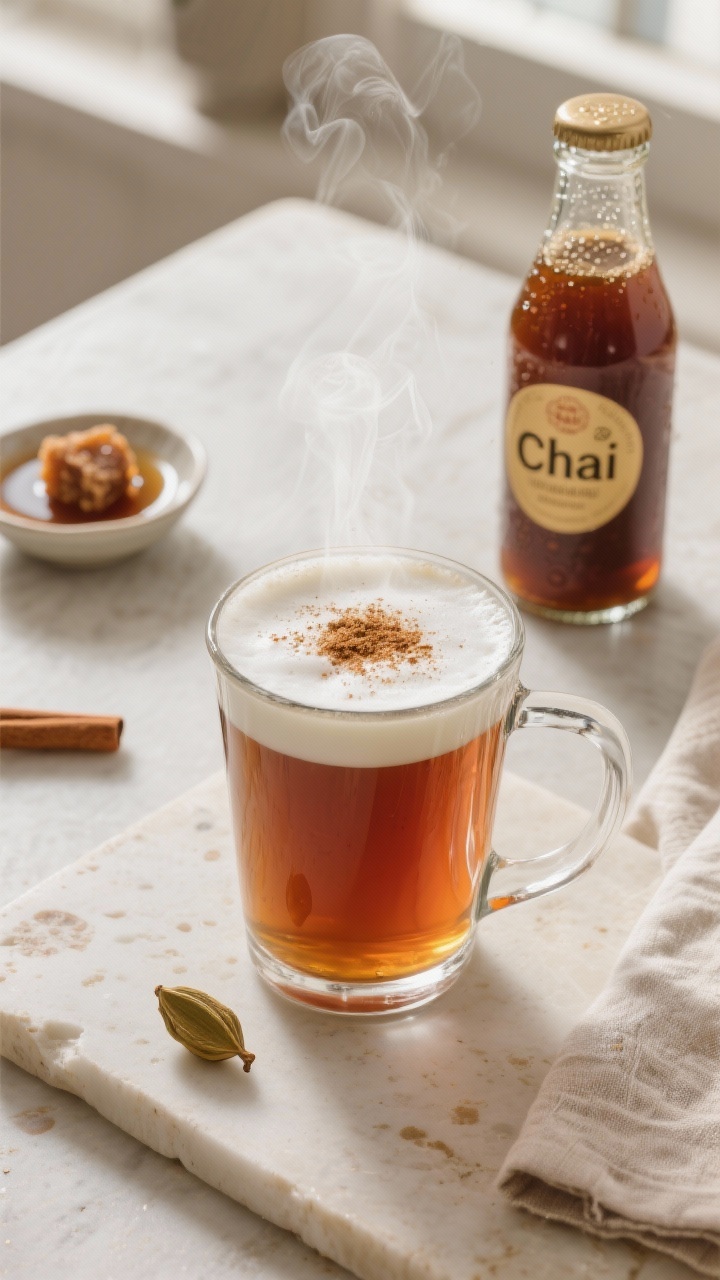
- Full-bodied flavor: Whole spices simmer slowly to build deep, layered warmth you don’t get from tea bags alone.
- Customizable sweetness: Sweeten just enough for balance, not syrupy sweetness. Adjust to your taste.
- Strong and versatile: The concentrate is intentionally robust, so it holds up when mixed with milk or poured over ice.
- Budget-friendly: One batch makes several drinks at a fraction of café prices.
- Make-ahead convenience: Brew once, enjoy for up to a week.It’s great hot or iced.
What You’ll Need
- 8 cups (1.9 L) water
- 10–12 black tea bags (Assam or English Breakfast; or 4 tablespoons loose-leaf)
- 1 cinnamon stick (or 2 for extra warmth)
- 8–10 green cardamom pods, lightly crushed
- 8 whole cloves
- 6–8 black peppercorns
- 1–2 star anise (optional but lovely)
- 1-inch piece fresh ginger, sliced (or 1 teaspoon ground ginger)
- 1 teaspoon fennel seeds (optional)
- 1 teaspoon vanilla extract (optional, added at the end)
- 1/3 to 1/2 cup sugar (or honey, maple syrup, or jaggery), to taste
- Pinch of salt (balances sweetness and enhances flavor)
Step-by-Step Instructions
- Prep your spices: Lightly crush the cardamom pods and peppercorns to expose their aromatics. Slice the ginger. Keep the cinnamon stick whole.
- Simmer the spices: Add water, cinnamon, cardamom, cloves, peppercorns, star anise, ginger, and fennel seeds to a large pot.Bring to a boil, then reduce to a gentle simmer. Let it simmer for 15–20 minutes until the kitchen smells amazing.
- Add the tea: Turn off the heat. Add tea bags (or loose tea in a mesh infuser).Steep for 5–7 minutes. Don’t oversteep or the concentrate can turn bitter.
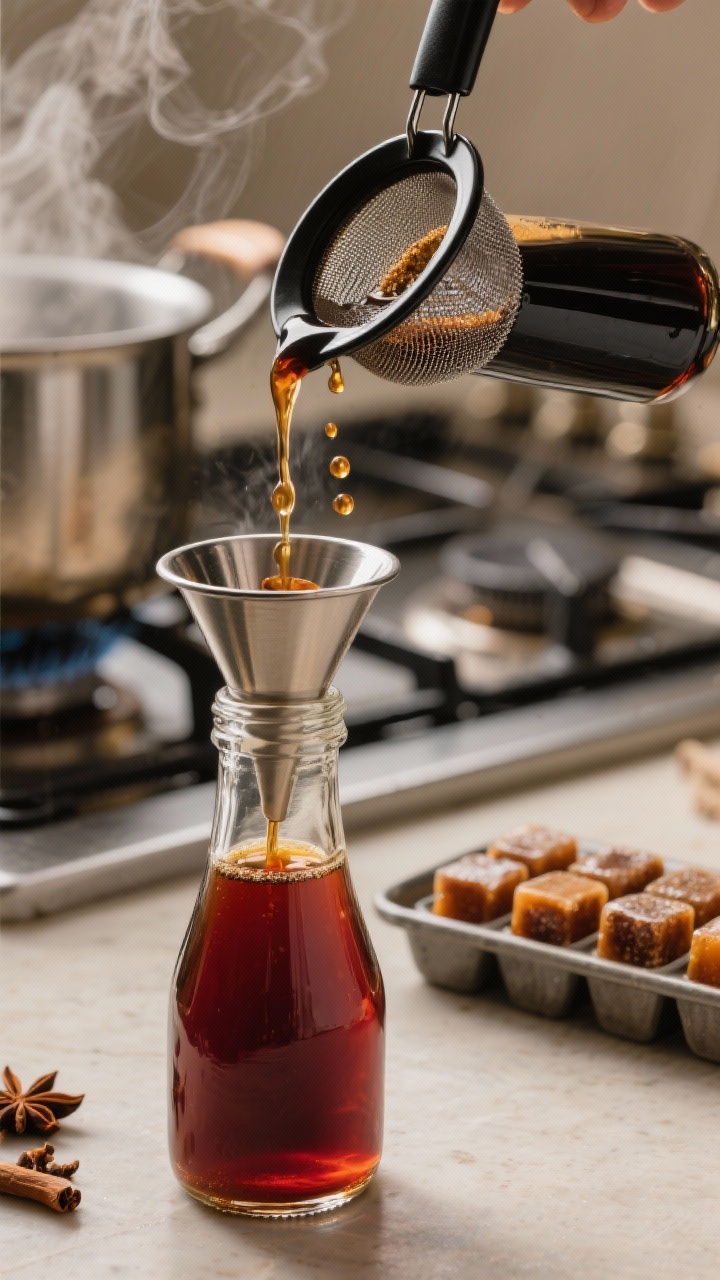
- Strain: Remove tea bags promptly and strain the liquid through a fine mesh strainer to catch spices and any tea leaves.
- Sweeten and finish: While still warm, stir in sugar (or your sweetener of choice) and a pinch of salt. Taste and adjust. Add vanilla extract if using.
- Cool and store: Let the concentrate cool to room temperature.Transfer to a clean glass jar or bottle and refrigerate.
- Serve: Mix 1 part chai concentrate to 1 part milk (dairy or non-dairy). Warm on the stove for a cozy latte, or pour over ice for an iced chai. Adjust ratio to taste.
Storage Instructions
- Refrigerate: Keep in a sealed jar for up to 7 days.
- Freeze: Pour into ice cube trays and freeze for up to 2 months.Pop a few cubes into cold milk for instant iced chai.
- Shake before using: Spices can settle; give it a quick shake or stir.
- Label the jar: Note the date so you remember when to use it by.
Why This is Good for You
- Anti-inflammatory spices: Ginger and cinnamon can help with digestion and inflammation.
- Lower sugar than café drinks: You control the sweetness, often cutting the sugar dramatically.
- Calming and warming: The spice blend is soothing, especially in cooler weather or after a big meal.
- Tea-based energy: Black tea offers a gentle caffeine lift without the crash of stronger coffee drinks.
Common Mistakes to Avoid
- Boiling the tea: Simmer the spices, but steep the tea off heat. Boiling tea turns it bitter.
- Oversteeping: Keep tea steeping to 5–7 minutes. Longer isn’t stronger—it’s harsher.
- Skipping the salt: A tiny pinch balances sweetness and rounds out the flavors.
- Using only ground spices: Ground spices can make the concentrate muddy and gritty.Whole spices are best. If using ground, strain through a coffee filter.
- Too little sweetener: You don’t need a lot, but a bit of sweetness unlocks the spices. Start with 1/3 cup and adjust.
- Weak ratio: Don’t dilute too much.Aim for 1:1 with milk, then tweak to taste.
Recipe Variations
- Extra Gingery: Double the ginger and add a few thin slices at serving time for a spicy kick.
- Masala-Forward: Add 1/2 teaspoon ground cinnamon and 1/4 teaspoon ground cardamom at the end for a stronger spice finish.
- Orange Peel Twist: Add a few strips of orange peel during the simmer for a bright citrus note.
- Vanilla Bean: Split a vanilla bean and simmer with the spices for a richer, bakery-style aroma.
- Caffeine-Free: Use decaf black tea or rooibos for a naturally sweet, herbal base.
- Maple Chai: Sweeten with pure maple syrup for a caramel-like depth.
- Cardamom Heavy: Increase cardamom to 12–14 pods if that’s your favorite note.
- Jaggery or Coconut Sugar: Swap white sugar for jaggery or coconut sugar for a more traditional, molasses-like sweetness.
FAQ
Can I use non-dairy milk?
Yes. Oat milk, almond milk, soy milk, and coconut milk all work well. For the creamiest latte, use a barista-style oat or soy milk that steams and froths nicely.
How sweet should chai concentrate be?
Aim for lightly sweet.
The concentrate should taste a bit sweeter than you want your final drink, since you’ll dilute it with milk. Start with 1/3 cup sugar and adjust to your taste.
What tea is best for chai?
Assam or English Breakfast works well because they’re strong and malty. Avoid delicate teas like Darjeeling; they can taste thin or astringent here.
Can I make it without cloves or star anise?
Absolutely.
If there’s a spice you don’t like, leave it out. Keep cinnamon, cardamom, and ginger as your base, then build from there.
Why is my chai bitter?
It’s usually from boiling the tea or steeping too long. Next time, turn off the heat before adding tea and steep for 5–7 minutes only.
Also, balance with a touch more sweetener and milk.
How do I serve it iced?
Fill a glass with ice, add 1 part concentrate and 1 part cold milk, and stir. For stronger flavor, use chai ice cubes so it doesn’t water down.
Can I cut the recipe in half?
Yes, halve every ingredient and keep the method the same. The timing remains unchanged.
Can I make it spicier?
Increase ginger and peppercorns, and simmer the spices a bit longer before adding tea.
Taste as you go to avoid bitterness.
Is there a way to make it sugar-free?
You can skip the sugar and sweeten each cup with a sugar alternative like stevia or monk fruit. Add just before serving to avoid aftertastes from heating.
What’s the best ratio for a latte?
Start with 1:1 concentrate to milk. If you want a bolder chai, try 2:1 concentrate to milk; for milder, go 1:2.
Wrapping Up
Homemade chai concentrate is one of those small kitchen habits that pays off every day.
With a jar in your fridge, cozy, spiced chai is always a minute away. Customize the spices, dial in the sweetness, and make it your own. Once you taste it, you may never go back to store-bought.
Enjoy it hot on a slow morning or iced for an afternoon pick-me-up.