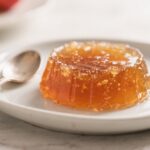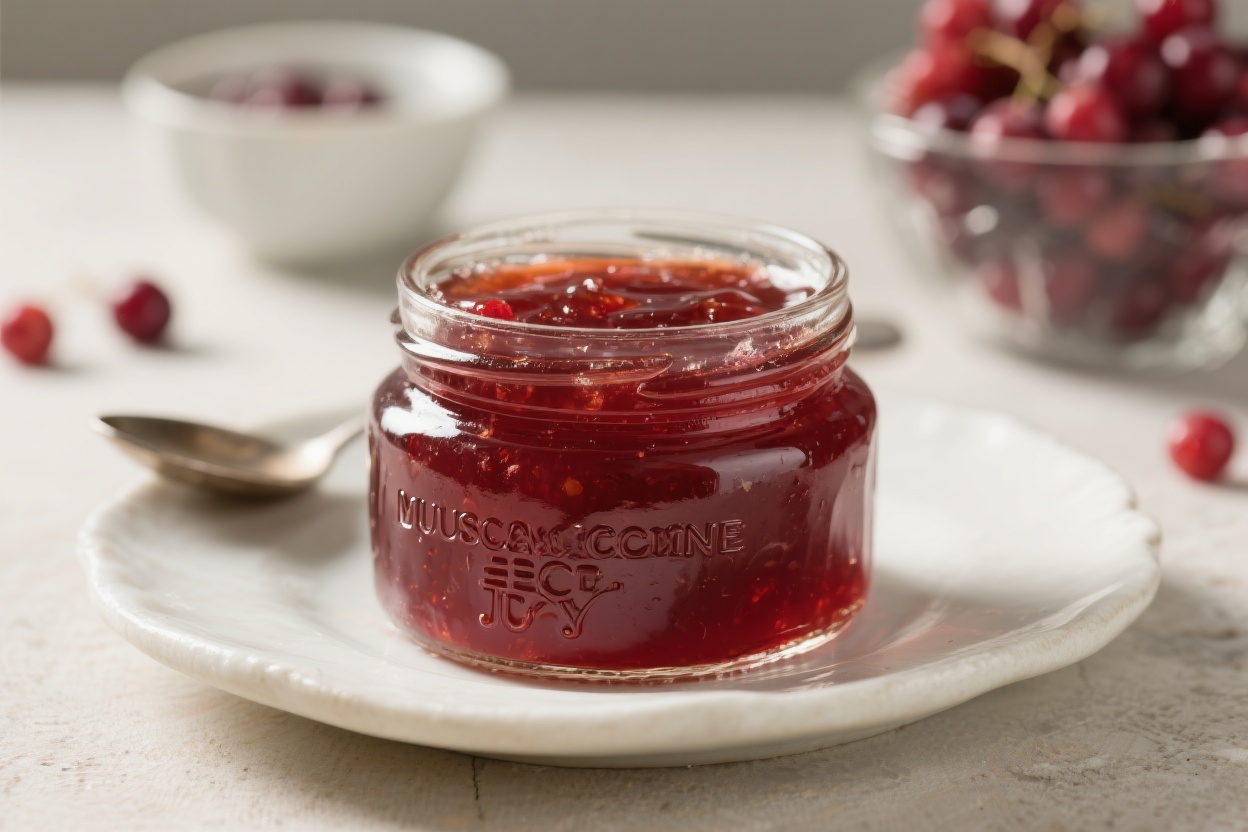
Muscadine jelly is one of those old-fashioned spreads that never goes out of style. It’s sweet, tangy, and full of rich grape flavor you just can’t get from store-bought jars. If you’ve got a basket of ripe muscadines or scuppernongs, this recipe turns them into something special.
The process is simple and satisfying, and the result is a glossy jelly that tastes like late summer on toast. Whether you’re a seasoned canner or it’s your first time, this guide walks you through every step with ease.
Contents
- 1 What Makes This Recipe So Good
- 2 Ingredients
- 3 Step-by-Step Instructions
- 4 Keeping It Fresh
- 5 Why This is Good for You
- 6 What Not to Do
- 7 Recipe Variations
- 8 FAQ
- 8.1 Can I use liquid pectin instead of powdered?
- 8.2 How do I fix jelly that didn’t set?
- 8.3 Why is my jelly cloudy?
- 8.4 Do I need to peel or seed the muscadines?
- 8.5 How many jars does this make?
- 8.6 Can I make this without a canner?
- 8.7 What altitude adjustments do I need?
- 8.8 Is it okay to reduce the sugar just a little?
- 9 Wrapping Up
What Makes This Recipe So Good
- Pure muscadine flavor: No concentrates here—just real fruit boiled down for big, bold taste.
- Reliable set: With added pectin and a quick boil, you get that classic jelly wobble every time.
- Beginner-friendly: Clear steps, common tools, and no special tricks required.
- Great for gifting: The color is gorgeous, and one batch makes several jars you can share.
- Small-batch or big-batch friendly: You can scale the recipe depending on how many grapes you have.
Ingredients
- 5 pounds muscadine or scuppernong grapes (enough for about 4 cups juice)
- 1 box (1.75 ounces) powdered fruit pectin (regular, not low-sugar)
- 5 cups granulated sugar
- 1 tablespoon lemon juice (helps the set and brightens flavor)
- 1/2 teaspoon unsalted butter (optional, reduces foaming)
- Water (just enough to start the simmer)
Equipment: Large pot, fine-mesh strainer or jelly bag, potato masher, ladle, sterilized half-pint jars with lids and bands, canning funnel, tongs, and a water-bath canner or deep stockpot with a rack.
Step-by-Step Instructions
- Prepare the jars: Wash jars, lids, and bands. Sterilize jars by boiling for 10 minutes, or run them through a hot dishwasher cycle.Keep jars warm until ready to fill.
- Rinse and sort the grapes: Rinse muscadines under cool water. Discard any that are shriveled or moldy. You want firm, ripe fruit.
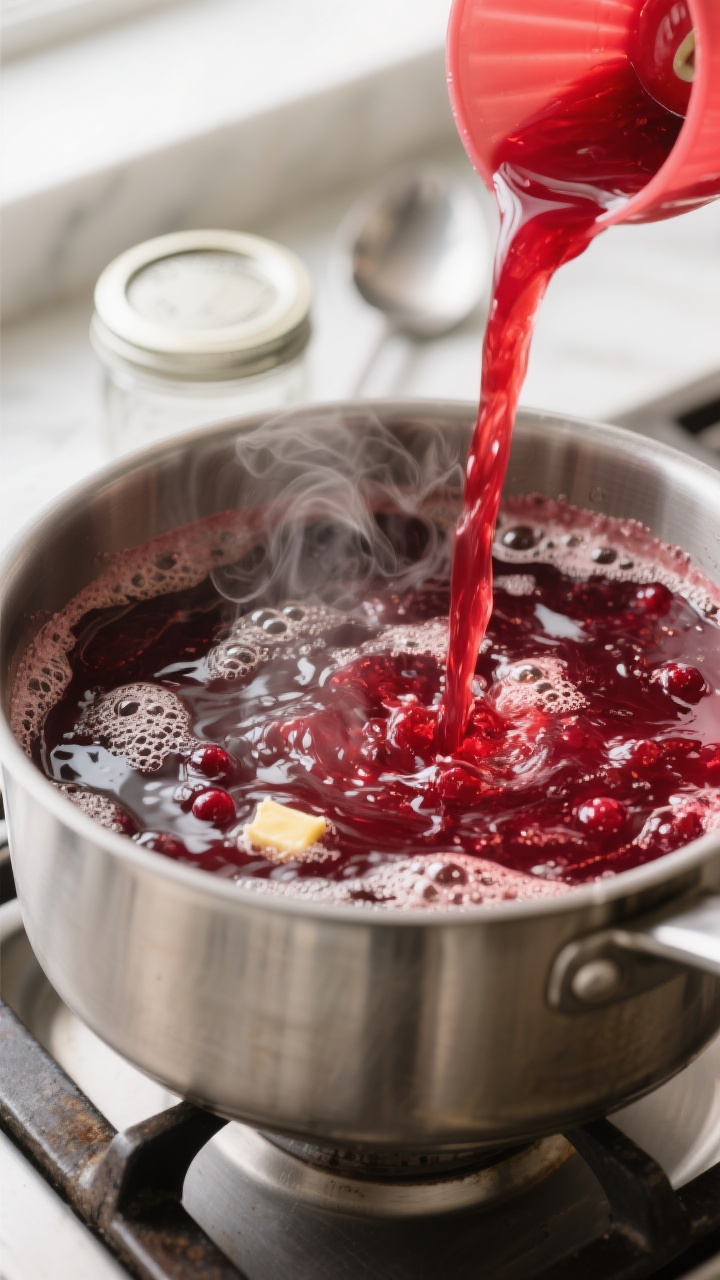
- Cook the fruit: Add grapes to a large pot with 1/2 cup water.Bring to a simmer over medium heat, then mash with a potato masher. Continue to cook 10–15 minutes until skins burst and juices run freely.
- Extract the juice: Pour the hot mixture through a jelly bag or a fine-mesh strainer lined with cheesecloth. Let it drain without pressing for the clearest jelly.You need about 4 cups of juice. If short, add a splash of water to reach 4 cups.
- Set up the canner: Fill your water-bath canner with enough water to cover jars by at least 1 inch. Bring to a simmer while you make the jelly.
- Combine juice and pectin: In a clean large pot, add the 4 cups muscadine juice, lemon juice, and pectin.Stir well. Bring to a full rolling boil over high heat, stirring constantly.
- Add sugar and boil hard: Once boiling, add all the sugar at once. Stir until dissolved.Add butter if using to control foam. Return to a full rolling boil and boil hard for 1 minute, stirring constantly.
- Check for set: Remove from heat. Skim any foam.You can test a small spoonful on a cold plate; it should wrinkle when nudged. If too loose, boil another 30 seconds.
- Fill the jars: Using a funnel, ladle hot jelly into warm jars, leaving 1/4-inch headspace. Wipe rims clean, place lids on, and screw bands fingertip-tight.
- Process in a water bath: Lower jars into the simmering canner.Bring to a full boil and process for 10 minutes (adjust for altitude if needed). Start timing once water is boiling.
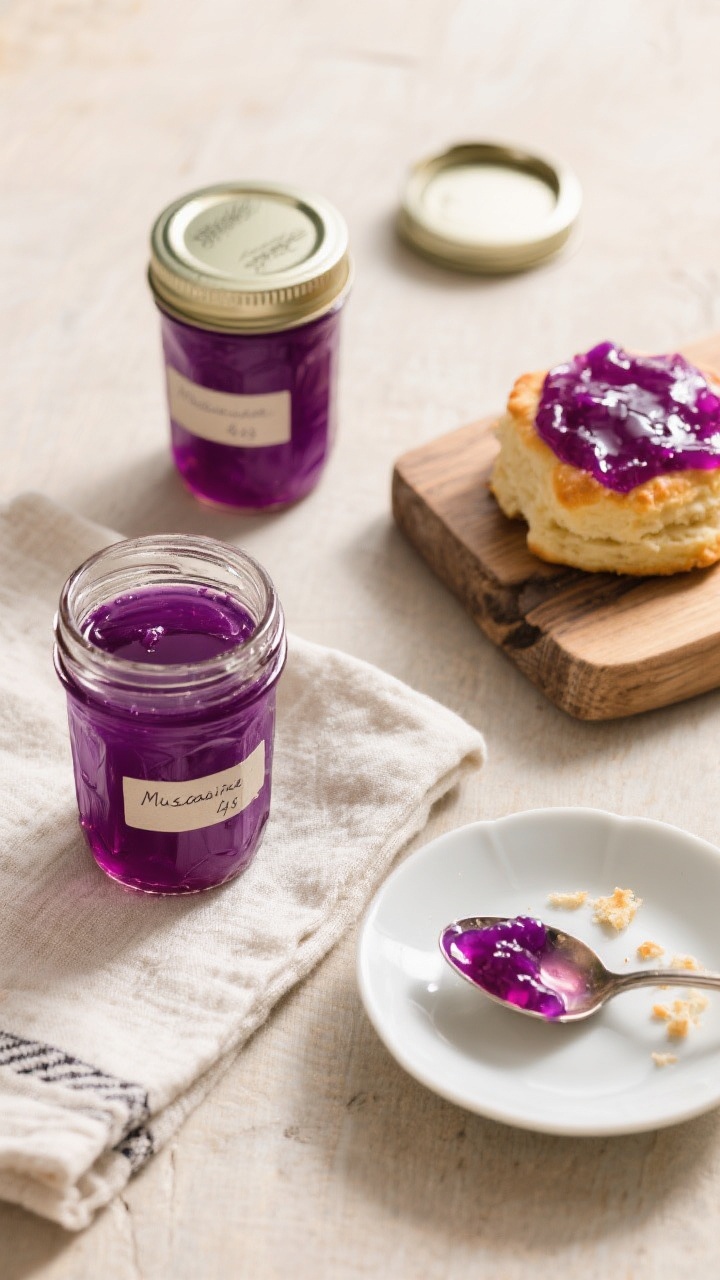
- Cool and seal: Carefully remove jars and place on a towel. Let cool, undisturbed, 12–24 hours.You should hear the lids “pop.” Check seals; lids should not flex when pressed.
- Label and store: Label jars with date. Store sealed jars in a cool, dark place. Refrigerate any unsealed jars and use within a few weeks.
Keeping It Fresh
- Sealed jars: Store in a cool pantry up to 12 months for best flavor and color.
- Opened jars: Keep refrigerated and use within 3–4 weeks.
- Freezer option: Skip the water bath and pour hot jelly into freezer-safe containers, leaving headspace.Freeze up to 1 year; thaw in the fridge.
- Avoid heat and light: Both fade color and weaken the set over time. A dark cabinet is ideal.
Why This is Good for You
Muscadines are naturally rich in antioxidants, especially in their thick skins. Those compounds can support overall wellness and may help fight free radicals.
While jelly does include sugar, a little goes a long way, and you’re still getting that distinct grape goodness without artificial flavors. Plus, making your own means you control the ingredients—no dyes, corn syrup, or unpronounceable additives.
What Not to Do
- Don’t skip the pectin: Muscadines vary in natural pectin. Added pectin ensures a proper set.
- Don’t reduce sugar drastically: Sugar helps the jelly set and preserves texture.For low-sugar versions, use low- or no-sugar pectin and follow that product’s directions.
- Don’t press the fruit too hard: Squeezing the pulp through the strainer makes cloudy jelly. Let it drip naturally.
- Don’t skip the water bath: Proper processing is essential for shelf stability and safety.
- Don’t overcook: Boiling too long can make the jelly rubbery or alter the flavor.
Recipe Variations
- Mixed grape jelly: Combine muscadines with Concord grapes for a deeper, jammy flavor. Keep the total juice at 4 cups.
- Honey-kissed: Replace 1 cup of sugar with mild honey.Expect a softer set and a warm floral note.
- Spiced muscadine: Simmer the juice with a cinnamon stick and 2–3 whole cloves, then strain before adding pectin and sugar.
- Low-sugar version: Use a low- or no-sugar pectin and sweeten to taste with 2–3 cups sugar or a sugar alternative, following the pectin package for ratios.
- Scuppernong twist: Use golden scuppernongs for a lighter, honeyed jelly with a beautiful amber hue.
FAQ
Can I use liquid pectin instead of powdered?
Yes, but the method and sugar amounts change. If using liquid pectin, bring the juice and sugar to a rolling boil first, then add the liquid pectin and boil hard for 1 minute. Follow the pectin packet for exact ratios.
How do I fix jelly that didn’t set?
Let it sit 24–48 hours first; sometimes the set improves.
If still loose, you can re-cook: for every 4 cups of jelly, mix 1/4 cup sugar with 2 tablespoons powdered pectin and 1/4 cup water. Bring jelly to a boil, whisk in the pectin mixture, boil 1 minute, then re-jar and process.
Why is my jelly cloudy?
It’s usually from pressing the fruit or having pulp in the juice. It’s still safe and delicious, just less clear.
Next time, let the juice drip without squeezing and strain twice if needed.
Do I need to peel or seed the muscadines?
No peeling needed. Seeds and skins stay in during the initial simmer and are removed when you strain the juice. That step also extracts the grape color and flavor.
How many jars does this make?
Expect about 5–6 half-pint (8-ounce) jars, depending on how vigorously you boil and how much juice you start with.
Can I make this without a canner?
Yes.
Use the freezer method or store the jelly in the fridge. For fridge storage, skip processing and refrigerate immediately; use within a few weeks.
What altitude adjustments do I need?
For water-bath canning, add 5 minutes for 1,001–3,000 feet, 10 minutes for 3,001–6,000 feet, and 15 minutes above 6,000 feet.
Is it okay to reduce the sugar just a little?
A small reduction can lead to a soft set. If you want less sweetness, switch to low- or no-sugar pectin and follow its instructions for best results.
Wrapping Up
Homemade muscadine jelly is simple, satisfying, and full of true grape flavor.
With a handful of ingredients and a few easy steps, you’ll have jars of jewel-toned jelly ready for biscuits, toast, and cheese boards. Keep a few for yourself and gift the rest—you’ll make someone’s morning brighter. Once you taste it, you’ll understand why this Southern staple sticks around year after year.
Printable Recipe Card
Want just the essential recipe details without scrolling through the article? Get our printable recipe card with just the ingredients and instructions.