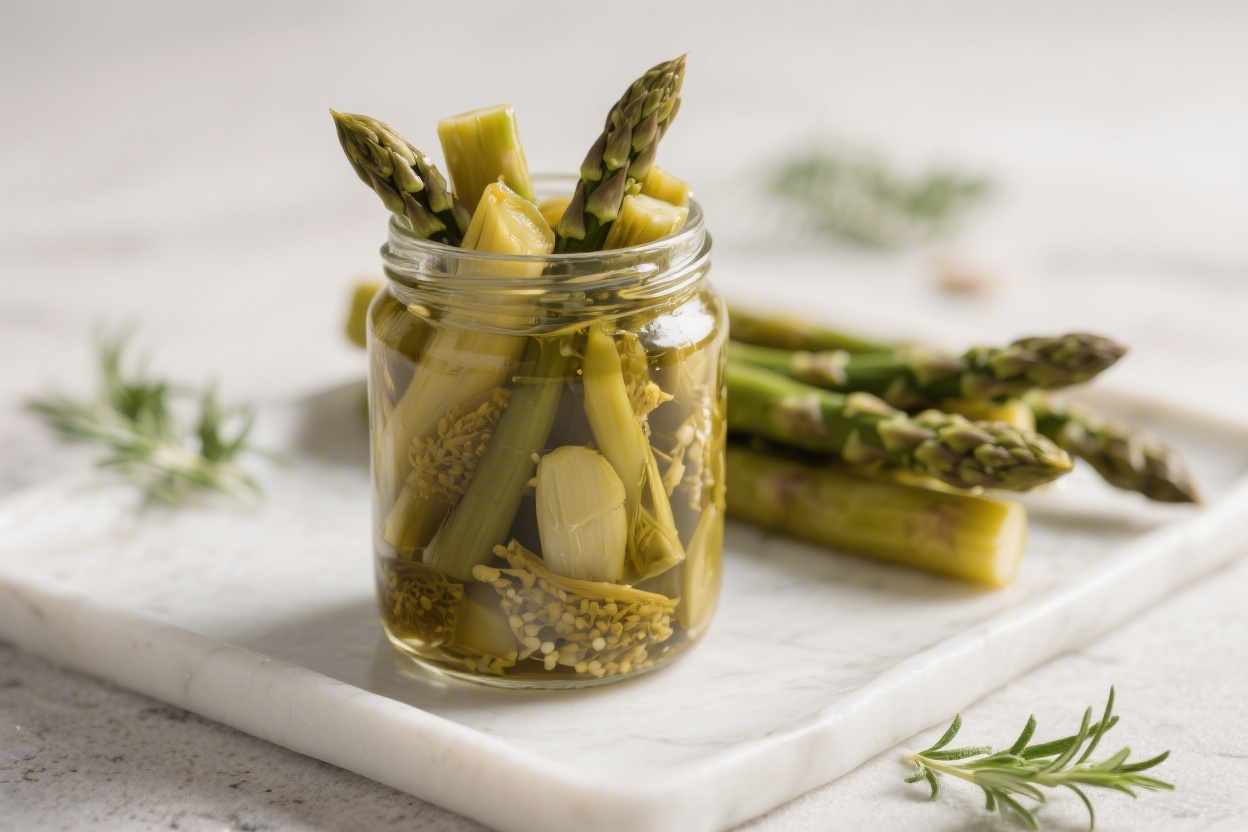
Pickled asparagus is the kind of snack that makes you want to keep a jar in the fridge at all times. It’s crisp, bright, and just the right amount of tangy. You can snack on it straight from the jar, tuck it into a charcuterie board, or use it as a garnish for brunch drinks.
The best part? It’s easy to make at home with basic ingredients and a simple method. If you’ve never pickled before, this recipe is a great place to start.
Contents
- 1 What Makes This Special
- 2 Shopping List
- 3 Step-by-Step Instructions
- 4 Storage Instructions
- 5 Benefits of This Recipe
- 6 Pitfalls to Watch Out For
- 7 Recipe Variations
- 8 FAQ
- 8.1 Do I have to blanch the asparagus?
- 8.2 Can I use apple cider vinegar instead of white vinegar?
- 8.3 How soon can I eat them?
- 8.4 Why did my asparagus get soft?
- 8.5 Can I reuse the brine?
- 8.6 Is this recipe safe for shelf storage?
- 8.7 What if I only have coarse sea salt?
- 8.8 Can I cut the asparagus into pieces?
- 8.9 What else can I pickle with the asparagus?
- 8.10 How do I keep the tips from becoming mushy?
- 9 Wrapping Up
What Makes This Special
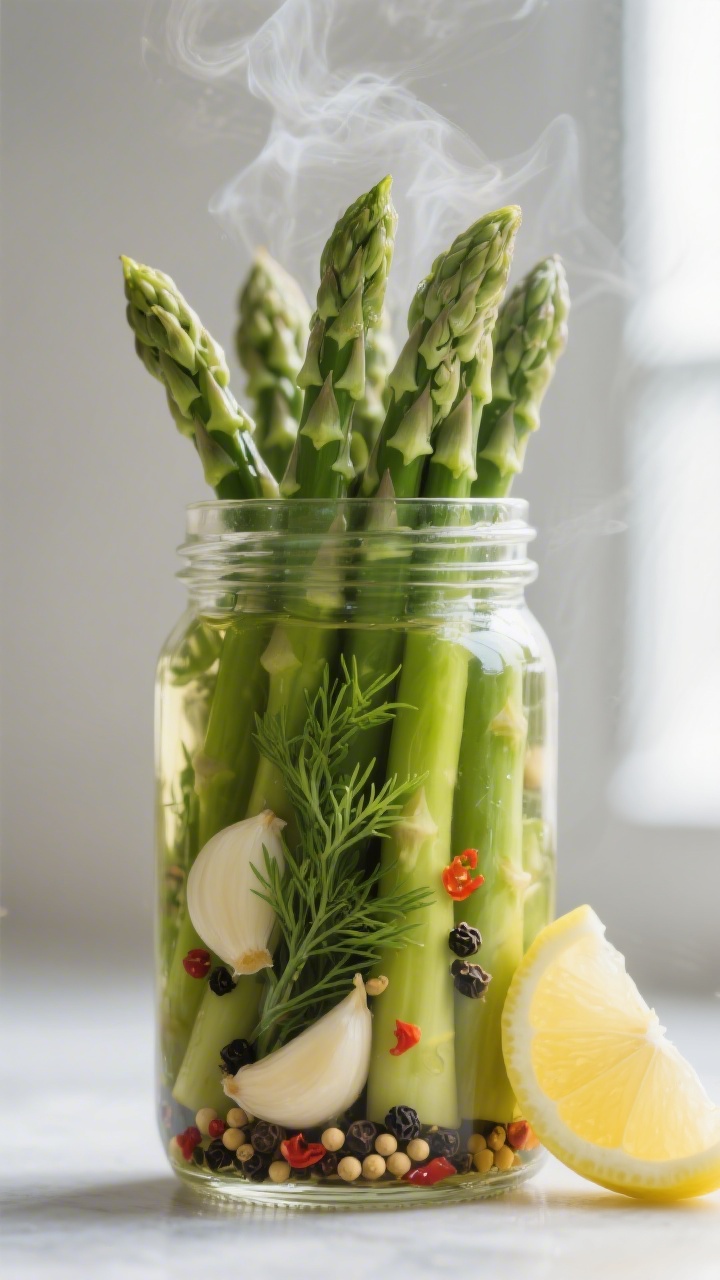
This recipe keeps things simple without sacrificing flavor.
The brine is balanced—salty, slightly sweet, and gently spiced—so the asparagus shines. You’ll also get a consistent, crisp texture because we blanch the spears just enough to set their color and snap. And since this is a quick refrigerator pickle, there’s no special canning gear needed.
You get fast results, big flavor, and a versatile jar of veggies you’ll actually finish.
Shopping List
- 2 pounds fresh asparagus (choose firm, medium-thickness spears)
- 1 1/2 cups white vinegar (5% acidity)
- 1 cup water
- 2 tablespoons kosher salt (or 1 tablespoon fine sea salt)
- 2 tablespoons sugar
- 4 cloves garlic, smashed
- 1 teaspoon black peppercorns
- 1 teaspoon mustard seeds
- 1/2 teaspoon red pepper flakes (optional, for heat)
- Fresh dill (4 to 6 sprigs)
- 1 lemon, sliced (optional, for brightness)
- 2 pint-size glass jars with lids, cleaned and rinsed well
Step-by-Step Instructions
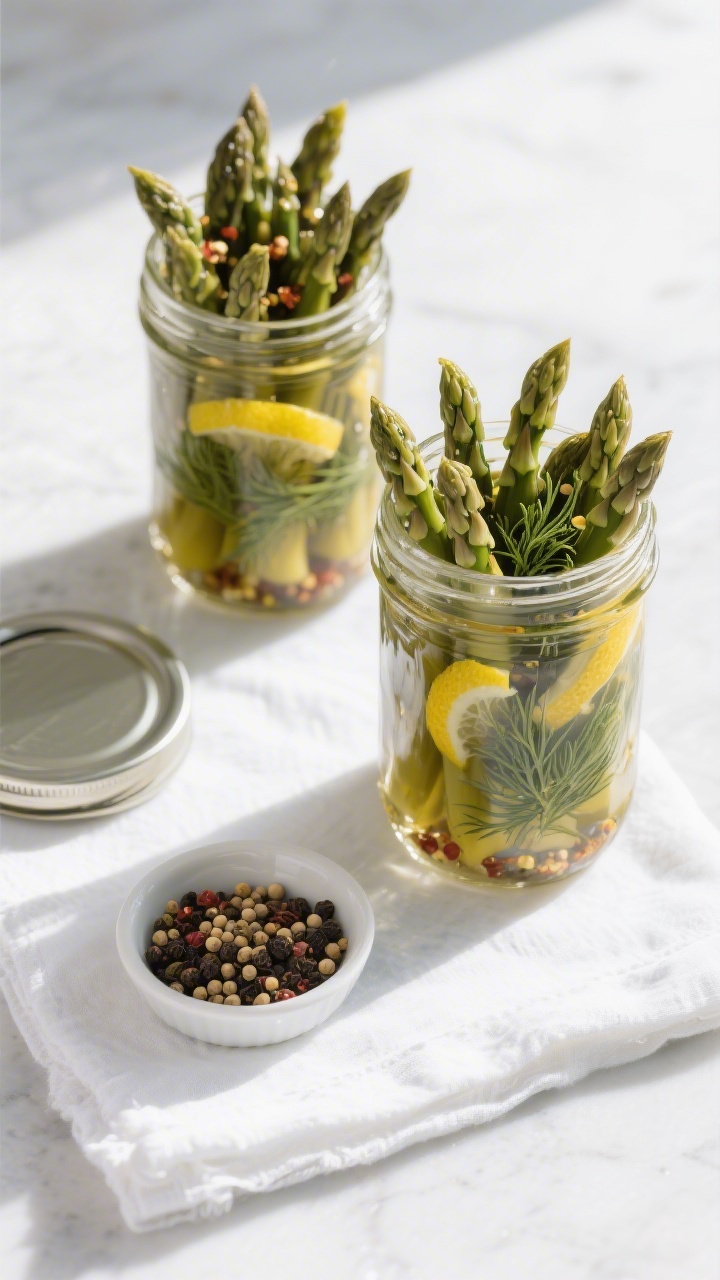
- Prep the jars. Wash two pint jars and lids in hot, soapy water. Rinse well and let air-dry. Clean jars help the pickles keep their best flavor and texture.
- Trim the asparagus. Rinse the spears and snap off the woody ends.Stand a spear next to a jar and trim the tops so they fit with about 1/2 inch of headspace. Save trimmed pieces for soups or stir-fries.
- Blanch for crispness and color. Bring a pot of salted water to a boil. Add asparagus and cook for 45 to 60 seconds, just until bright green.Immediately transfer to an ice bath to stop the cooking. Drain and pat dry.
- Pack the jars. Divide dill sprigs, garlic, peppercorns, mustard seeds, and red pepper flakes between the jars. Add a slice or two of lemon if using.Pack asparagus upright, tips up. Tuck in any shorter pieces horizontally on top.
- Make the brine. In a small pot, combine vinegar, water, salt, and sugar. Bring to a simmer, stirring to dissolve.Taste and adjust: add a pinch more sugar for balance or a splash more vinegar for extra tang.
- Pour and seal. Carefully ladle hot brine into each jar, covering the asparagus completely. Leave about 1/2 inch of headspace. Tap jars gently to release air bubbles and top up with brine if needed.Seal with lids.
- Cool, then chill. Let the jars cool on the counter until near room temperature. Move to the fridge. For best flavor, wait at least 24 hours before eating; 2 to 3 days is even better.
- Taste and tweak. After a day or two, taste a spear.If you want more heat, add a pinch of red pepper flakes to the jar. If you prefer sweeter pickles, add a small spoon of sugar to the brine next time—no need to remake this batch.
Storage Instructions
These are refrigerator pickles, not shelf-stable canned goods. Keep jars refrigerated at all times.
They’ll taste freshest within 2 to 3 weeks, though they can last up to a month if kept cold and submerged in brine. Always use a clean utensil to remove spears. If you notice cloudiness, off smells, fizzing, or mold, discard the jar.
For long-term pantry storage, use a tested pressure or water-bath canning method from a reliable source and follow all safety guidelines.
Benefits of This Recipe
- Fast and flexible. Minimal prep, simple steps, and easy to scale up or down.
- Crisp texture. Brief blanching and a balanced brine keep spears snappy.
- Budget-friendly. Perfect when asparagus is in season and on sale.
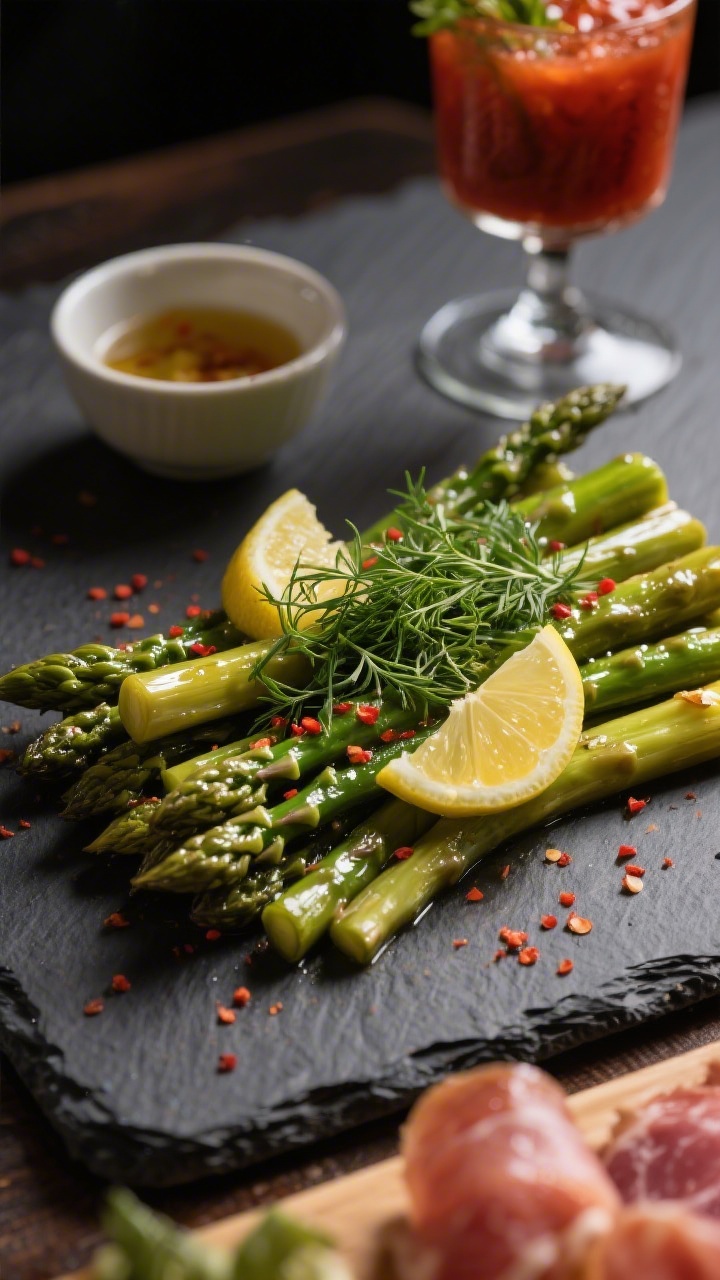
- Versatile. Great for snacking, salads, sandwiches, Bloody Marys, and cheese boards.
- Customizable. Change the heat level, herbs, or spices to match your style.
Pitfalls to Watch Out For
- Skipping the ice bath. Without it, the asparagus can overcook and lose its crunch.
- Packing too loosely. If the spears float around, they can soften and the brine won’t distribute as well. Pack snugly, but don’t crush them.
- Forgetting headspace. Leave about 1/2 inch so the brine fully covers the asparagus and the jar seals properly.
- Using old or limp asparagus. Start with the freshest spears you can find for the best snap and flavor.
- Under-seasoning the brine. Taste it hot. It should be boldly salty-tangy-slightly sweet; flavors mellow as they chill.
Recipe Variations
- Spicy Pickled Asparagus: Add 1 sliced jalapeño per jar or increase red pepper flakes to 1 teaspoon.
- Lemony Herb: Add 1 tablespoon lemon zest and swap dill for tarragon or thyme.Add a few extra lemon slices for brightness.
- Garlic-Dill Classic: Double the garlic and dill for a deli-style punch.
- Sweet and Tangy: Increase sugar to 3 tablespoons and add 6 coriander seeds and 2 allspice berries per jar.
- Smoky: Add 1/2 teaspoon smoked paprika to the brine and a few slivers of roasted red pepper to each jar.
- Rice Vinegar Twist: Replace half the white vinegar with unseasoned rice vinegar for a softer, rounder acidity.
FAQ
Do I have to blanch the asparagus?
No, but it helps. Blanching sets the color and keeps the texture crisp instead of squeaky or fibrous. If you skip it, expect a slightly firmer bite and possibly less vibrant color.
Can I use apple cider vinegar instead of white vinegar?
Yes.
Use a 5% acidity apple cider vinegar. The flavor will be fruitier and slightly sweeter. Avoid balsamic or malt vinegar here—they overpower the asparagus and can darken the brine.
How soon can I eat them?
They’re technically ready once chilled, but the flavor improves after 24 hours.
The best window is day 2 through week 2.
Why did my asparagus get soft?
Likely overcooking during blanching or using older spears. Make sure the blanch time is under a minute, cool quickly in ice water, and store the jar cold with the asparagus fully submerged.
Can I reuse the brine?
For food safety and texture, it’s best not to reuse brine for new raw vegetables. You can, however, use leftover brine in salad dressings, marinades, or Bloody Marys.
Is this recipe safe for shelf storage?
No.
This is a refrigerator pickle. For shelf-stable jars, follow a tested canning recipe with proper processing times and sterile technique from a trusted source.
What if I only have coarse sea salt?
Measure by weight if possible. If not, start with slightly less than the listed amount and taste the brine.
Different salts vary in crystal size and salinity.
Can I cut the asparagus into pieces?
Absolutely. Trim into 2- to 3-inch lengths for easier packing or bite-sized snacking. Reduce blanch time to around 30–45 seconds.
What else can I pickle with the asparagus?
Carrot sticks, green beans, or thinly sliced red onions work well.
Pack them along with the asparagus and keep the same brine.
How do I keep the tips from becoming mushy?
Pack spears tips-up, avoid over-blanching, and don’t pour boiling brine directly on delicate tips—let the brine drop from a simmer to just below boiling before ladling.
Wrapping Up
Pickled asparagus is simple to make and delivers big, fresh flavor with very little effort. A few pantry staples, some fresh spears, and a quick brine turn into a crunchy snack you’ll reach for again and again. Once you make one batch, you’ll start playing with spices and herbs to make it your own.
Keep a jar in the fridge, and you’ll always have a bright, tangy bite ready to go.
Printable Recipe Card
Want just the essential recipe details without scrolling through the article? Get our printable recipe card with just the ingredients and instructions.