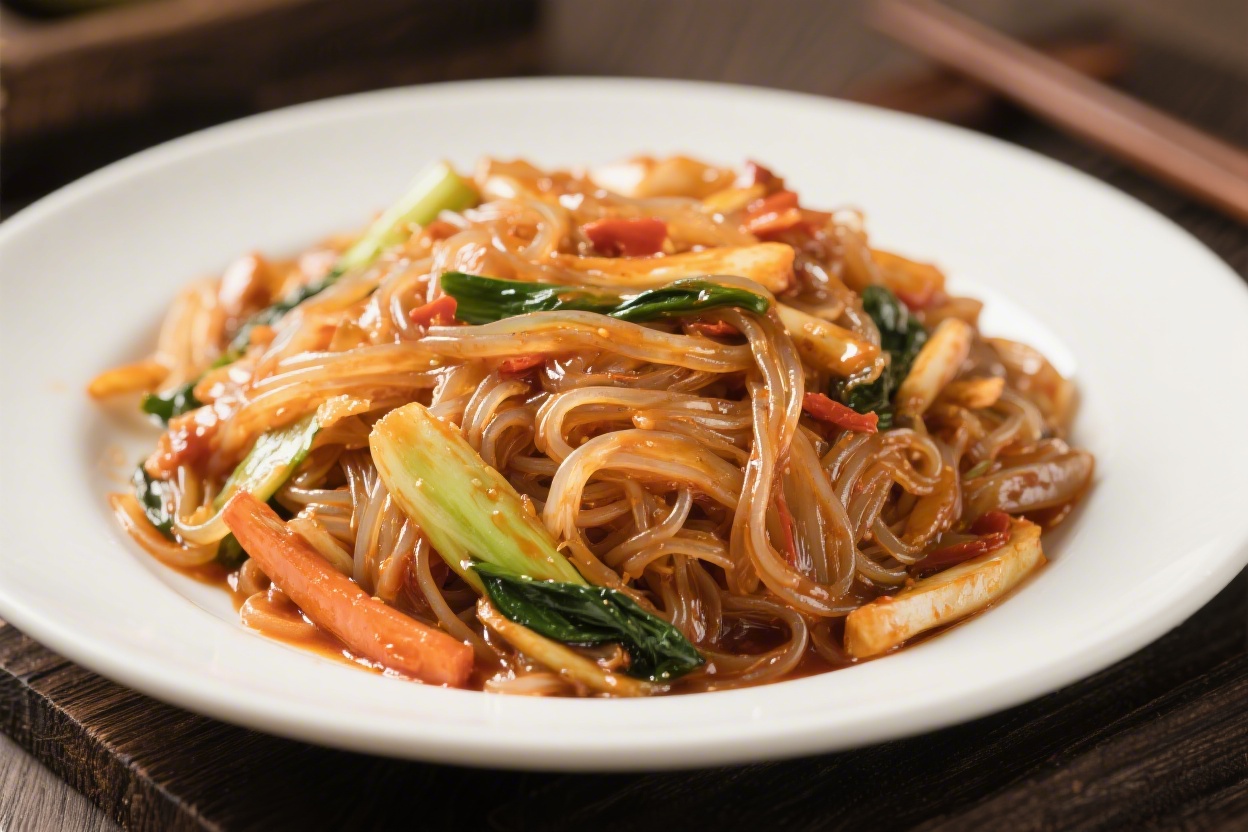
Japchae is one of those dishes that looks like a celebration. Springy glass noodles, glossy and tender, tangle with colorful vegetables and a savory-sweet sauce that clings to every bite. It’s satisfying without being heavy, and it works as a main dish or a side.
Best of all, it’s flexible—great with beef, just as good with tofu, and even better the next day. If you want a reliable, crowd-pleasing stir fry with true Korean flavor, this is the one.
Contents
Why This Recipe Works
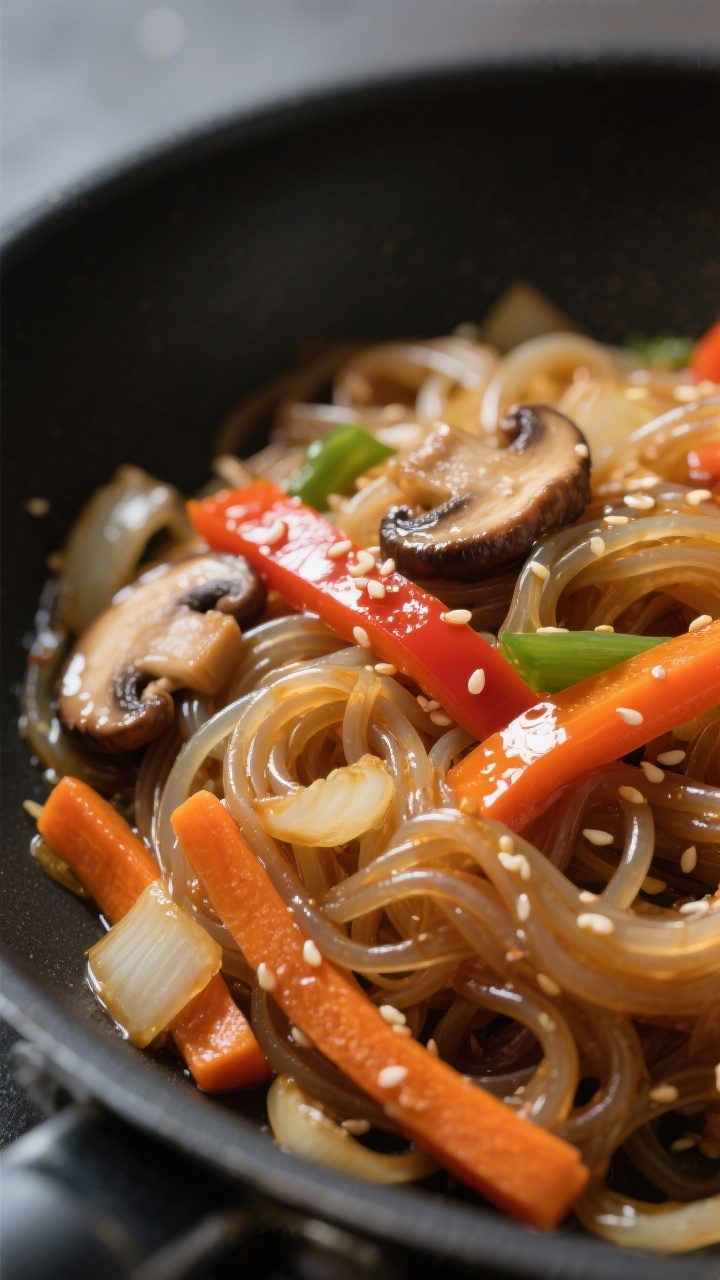
Japchae balances flavor and texture. The sweet potato glass noodles stay chewy and silky, soaking up the sauce without getting mushy.
A mix of carrots, spinach, onions, and mushrooms adds color and crunch for contrast. The sauce brings together soy sauce, sugar, garlic, and sesame oil for classic Korean depth that’s sweet, savory, and a little nutty. Each component gets cooked separately, then tossed together, so nothing overcooks and every ingredient shines.
The result is a dish that tastes restaurant-level but is simple enough to make at home.
What You’ll Need
- Sweet potato glass noodles (dangmyeon): 8 ounces (about 225 g)
- Beef (optional): 6–8 ounces sirloin or ribeye, thinly sliced (sub tofu for vegetarian)
- Spinach: 4 cups fresh (or 1 small bunch)
- Carrot: 1 medium, cut into thin matchsticks
- Onion: 1 small, thinly sliced
- Bell pepper: 1 red or yellow, thinly sliced
- Shiittake or cremini mushrooms: 1 cup, sliced
- Green onions: 2, cut into 2-inch pieces
- Garlic: 4 cloves, minced
- Eggs (optional for garnish): 2, lightly beaten
- Sesame oil: 2–3 tablespoons
- Neutral oil (canola/avocado): 1–2 tablespoons
- Soy sauce: 5–6 tablespoons (use tamari for gluten-free)
- Sugar: 2–3 tablespoons (or use brown sugar)
- Black pepper: 1/2 teaspoon, freshly ground
- Sesame seeds: 1–2 tablespoons, toasted
- Salt: to taste
Optional add-ins: Wood ear mushrooms, zucchini (julienned), Korean fish cake, or a splash of rice vinegar for brightness.
Step-by-Step Instructions
- Soak or boil the noodles. Cook dangmyeon according to the package (usually 6–8 minutes in boiling water). They should be chewy, not soft. Drain, rinse with cold water, and cut once or twice with scissors to make them easier to toss.
- Make the sauce. In a bowl, mix soy sauce, sugar, 1 tablespoon sesame oil, garlic, and black pepper.Stir until the sugar dissolves. Taste and adjust—aim for a slightly sweeter-than-savory balance.
- Marinate the protein. If using beef or tofu, toss it with 2 tablespoons of the sauce. Let it sit while you prep the vegetables.
- Blanch the spinach. Drop spinach into boiling water for 20–30 seconds, then drain and rinse with cold water.Squeeze out excess water and toss with a pinch of salt and a few drops of sesame oil. Set aside.
- Cook the egg garnish (optional). Heat a nonstick pan with a touch of oil. Make a thin omelet with the beaten eggs.Slide it out, let cool slightly, then slice into thin ribbons.
- Sear the protein. In a large pan or wok over medium-high heat, add 1 tablespoon neutral oil. Stir-fry the beef or tofu until just cooked. Remove to a bowl.
- Stir-fry the vegetables. Add a little more oil if needed.Cook onions and mushrooms with a pinch of salt until softened and lightly browned. Add carrots and bell peppers and stir-fry until crisp-tender, about 2–3 minutes. Add green onions last for 30 seconds.
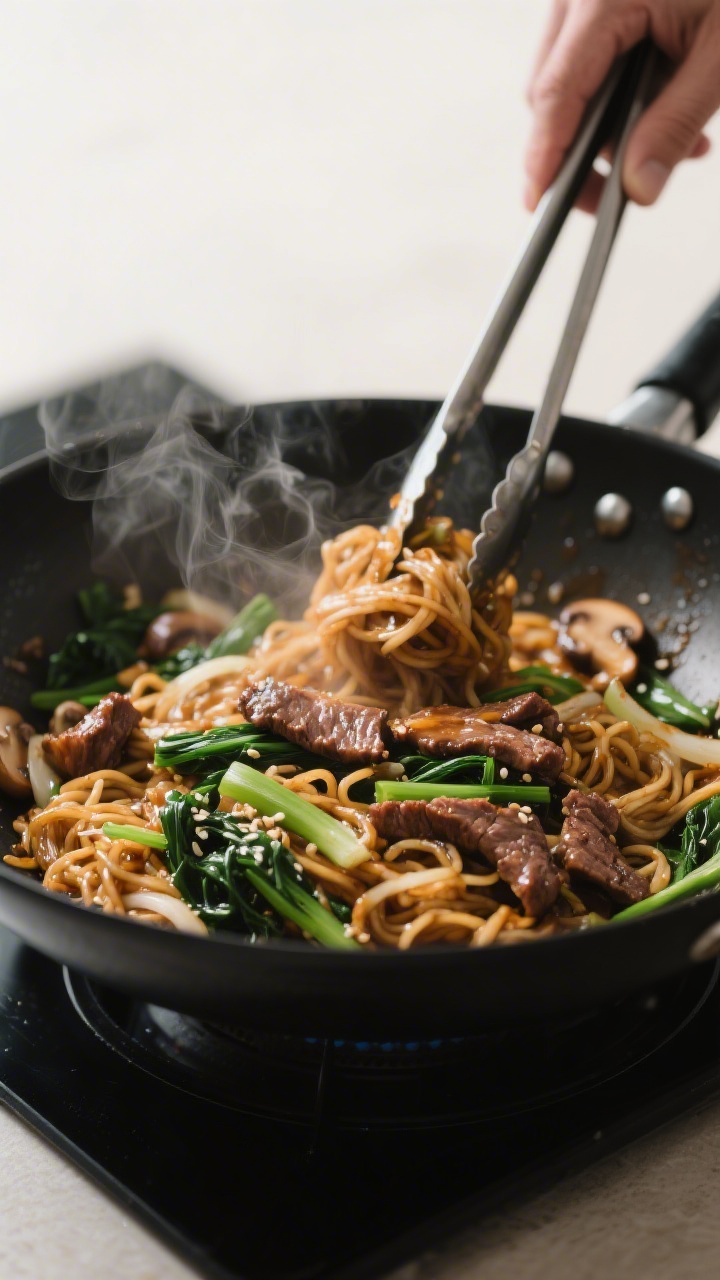
- Toss everything together. Add the noodles to the pan along with the protein and spinach.Pour in the remaining sauce. Toss with tongs until glossy and evenly coated. If the noodles look dry, add 1–2 tablespoons water and another drizzle of sesame oil.
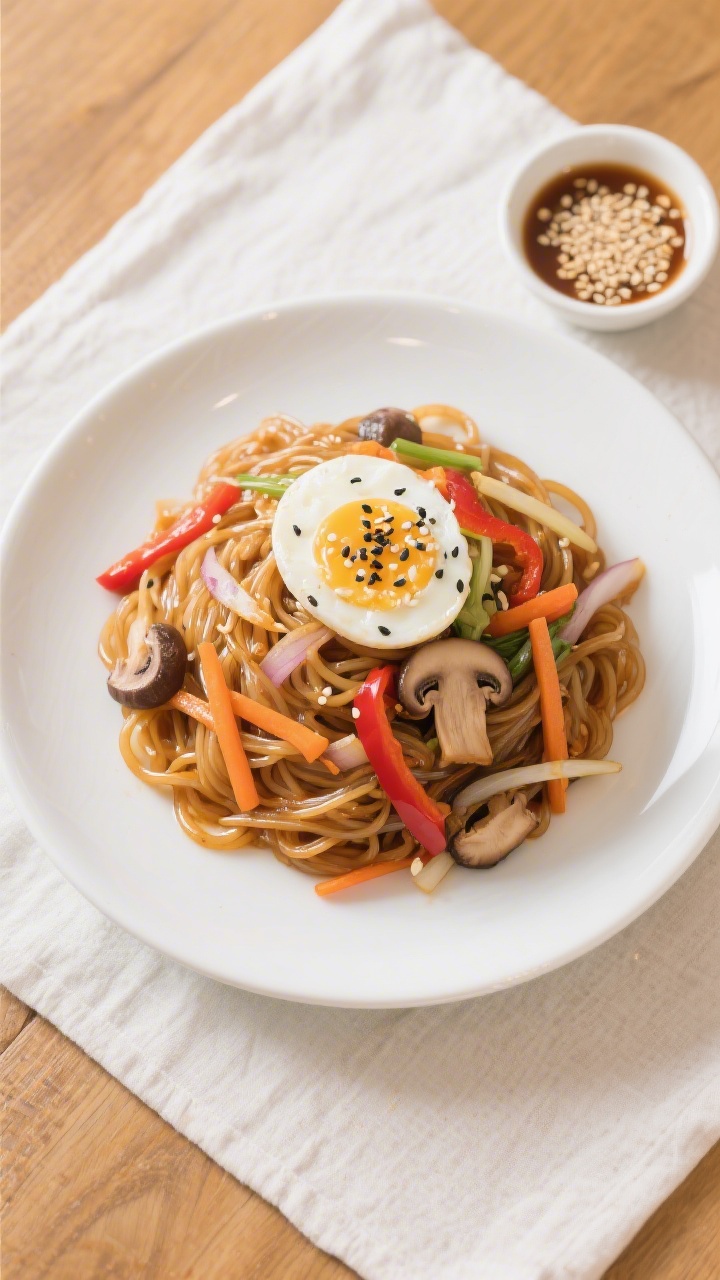
- Finish and garnish. Taste and adjust seasoning with more soy sauce or sugar as needed.Sprinkle sesame seeds and top with egg ribbons. Serve warm or at room temperature.
Keeping It Fresh
Japchae holds up well, which is why it’s popular at gatherings. Store leftovers in an airtight container for up to 3–4 days in the fridge.
Reheat gently in a pan with a splash of water and a few drops of sesame oil to revive the sheen and bounce. Avoid microwaving on high for too long—it can make the noodles tough. If you plan to make it ahead, keep the sauce separate and toss right before serving for the best texture.
Health Benefits
- Veggie-rich: Carrots, spinach, peppers, and mushrooms add fiber, vitamins A and C, folate, and antioxidants.
- Gluten-free adaptable: With tamari and sweet potato noodles, it’s easy to make gluten-free.
- Lean protein: Using lean beef, chicken, shrimp, or tofu keeps it satisfying without excess fat.
- Balanced energy: The combo of complex carbs from noodles, protein, and healthy fats from sesame oil supports steady energy.
What Not to Do
- Don’t overcook the noodles. They should be chewy.Overcooked noodles turn soggy and break apart when tossed.
- Don’t skip separate cooking. Cooking each component on its own keeps textures distinct and prevents a soggy stir fry.
- Don’t drown it in oil. Sesame oil is strong—too much can overwhelm the dish. Use it as a finishing touch.
- Don’t forget to season in layers. A pinch of salt for vegetables and a well-balanced sauce at the end makes the flavors pop.
Alternatives
- Protein swaps: Try chicken, pork, shrimp, or extra-firm tofu. For tofu, press it first and pan-fry for a golden crust.
- Vegetable variations: Zucchini, snow peas, napa cabbage, or bean sprouts fit right in.Keep the cuts thin and uniform.
- Sauce tweaks: Add gochugaru (Korean chili flakes) for gentle heat, or a touch of rice vinegar for brightness. A bit of honey can replace sugar.
- No sweet potato noodles? Use cellophane mung bean noodles. They’ll be less chewy but still work well.
- Lower-sodium version: Use low-sodium soy sauce and increase garlic, sesame, and pepper to maintain flavor.
FAQ
Can I make Japchae ahead of time?
Yes.
You can cook the components a day ahead and store them separately. Toss with sauce and reheat gently just before serving. Japchae is also delicious at room temperature.
How do I keep the noodles from sticking?
Rinse cooked noodles in cold water and toss with a small drizzle of sesame oil.
When reheating, add a splash of water to loosen them, then toss with tongs.
Is Japchae typically vegetarian?
Traditionally, Japchae often includes beef, but it’s just as authentic to make it meatless. Use tofu or skip the protein entirely and add more mushrooms for depth.
What if I don’t have a wok?
A large nonstick skillet or sauté pan works fine. Give ingredients room to sear so they don’t steam.
Cook in batches if needed.
Can I reduce the sugar?
Yes. The slight sweetness is key to classic Japchae, but you can cut the sugar by a third and add more onion and carrot for natural sweetness. A splash of mirin or apple juice can also help.
Why does my Japchae taste flat?
It likely needs a touch more soy sauce, sugar, or sesame oil.
Season in small steps, and don’t forget a pinch of salt on the vegetables during cooking to bring out their flavor.
Can I freeze Japchae?
Freezing isn’t ideal. The noodles lose their bouncy texture after thawing. It’s best enjoyed fresh or within a few days from the fridge.
What’s the best way to slice the beef?
Freeze the beef for 20–30 minutes to firm it up.
Slice against the grain into very thin strips so it cooks quickly and stays tender.
Final Thoughts
Japchae Korean Glass Noodle Stir Fry is all about balance—chewy noodles, crisp vegetables, and a glossy, savory-sweet sauce. It’s flexible, unfussy, and consistently delicious. Whether you serve it for a weekday dinner or a special gathering, it’s a dependable recipe that welcomes tweaks and add-ins.
Once you make it at home, you’ll see why it’s a staple in Korean kitchens and a favorite on party tables.
Printable Recipe Card
Want just the essential recipe details without scrolling through the article? Get our printable recipe card with just the ingredients and instructions.