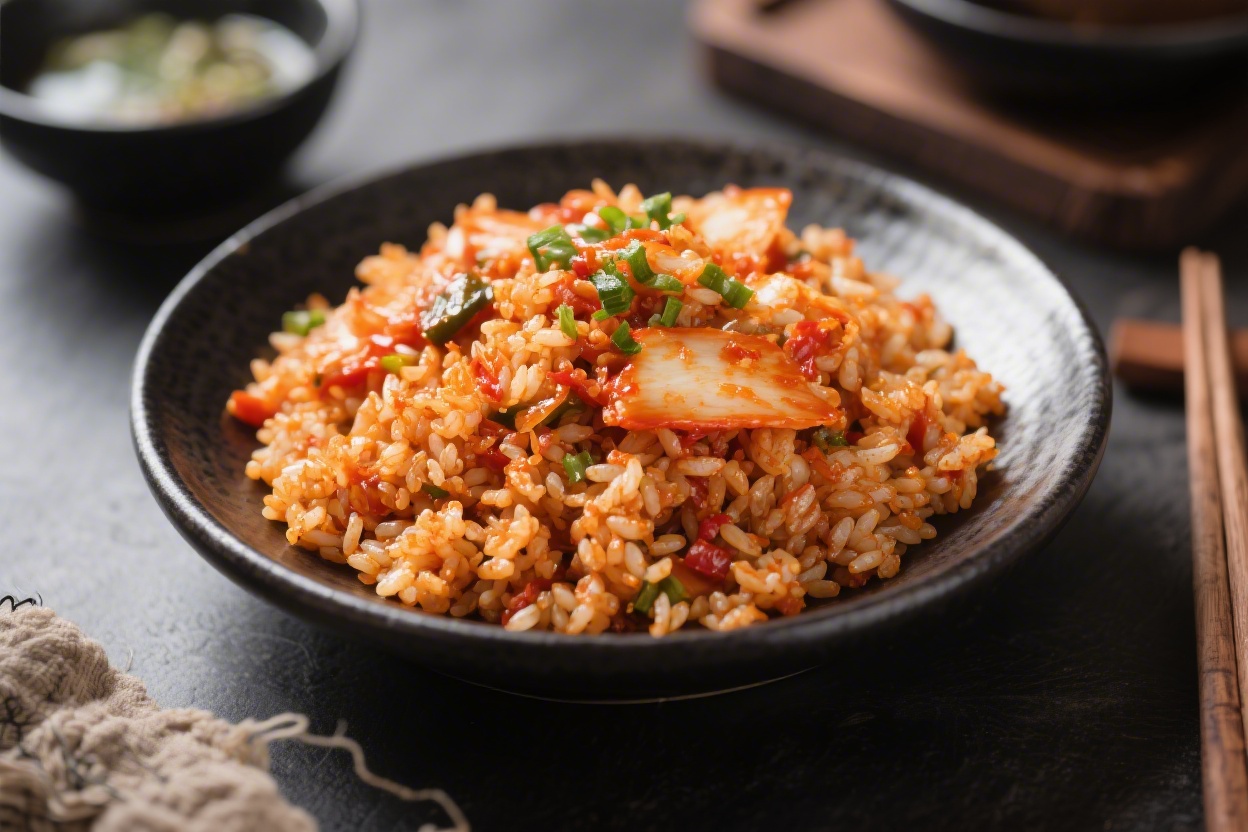
Kimchi fried rice is the kind of dish you make when you want big flavor with minimal effort. It’s bold, smoky, a little funky, and deeply comforting. The spicy tang of kimchi mixes with toasty rice, a touch of sweetness, and savory bits of protein.
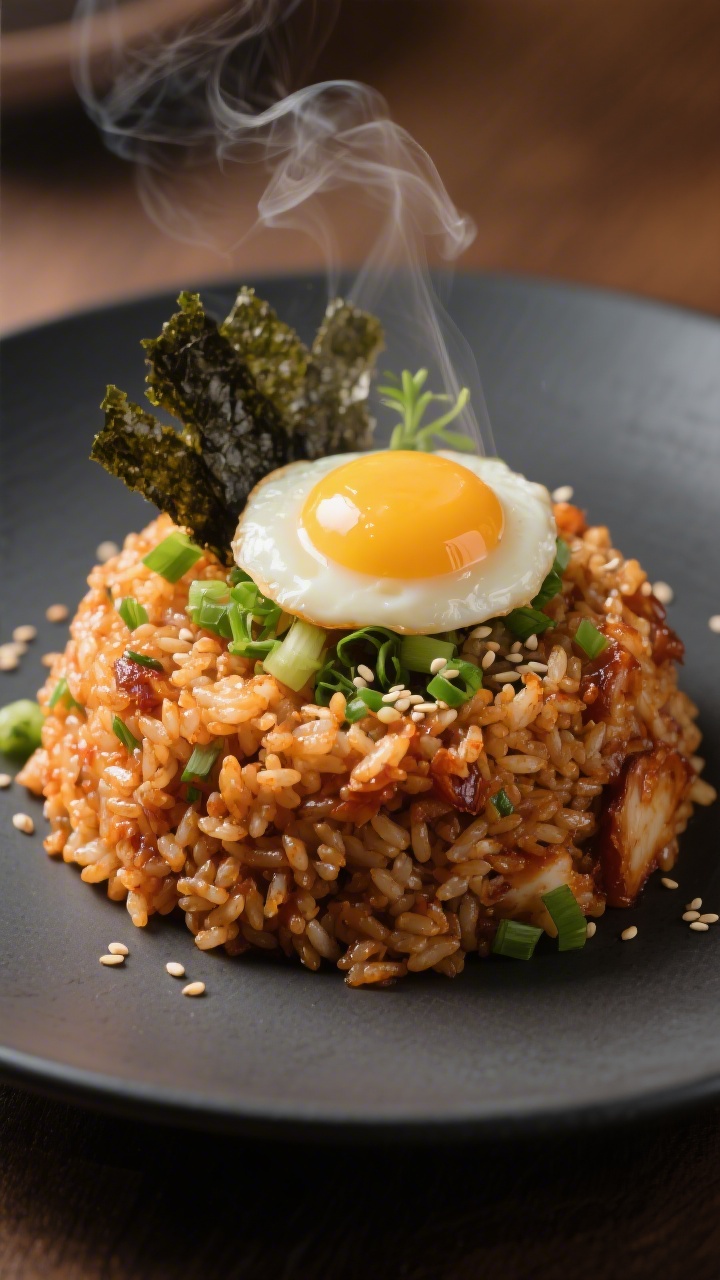
Top it with a runny egg and some crunchy seaweed, and it tastes like something from your favorite Korean spot. Best of all, it comes together fast and uses ingredients you might already have in the fridge.
Contents
What Makes This Recipe So Good
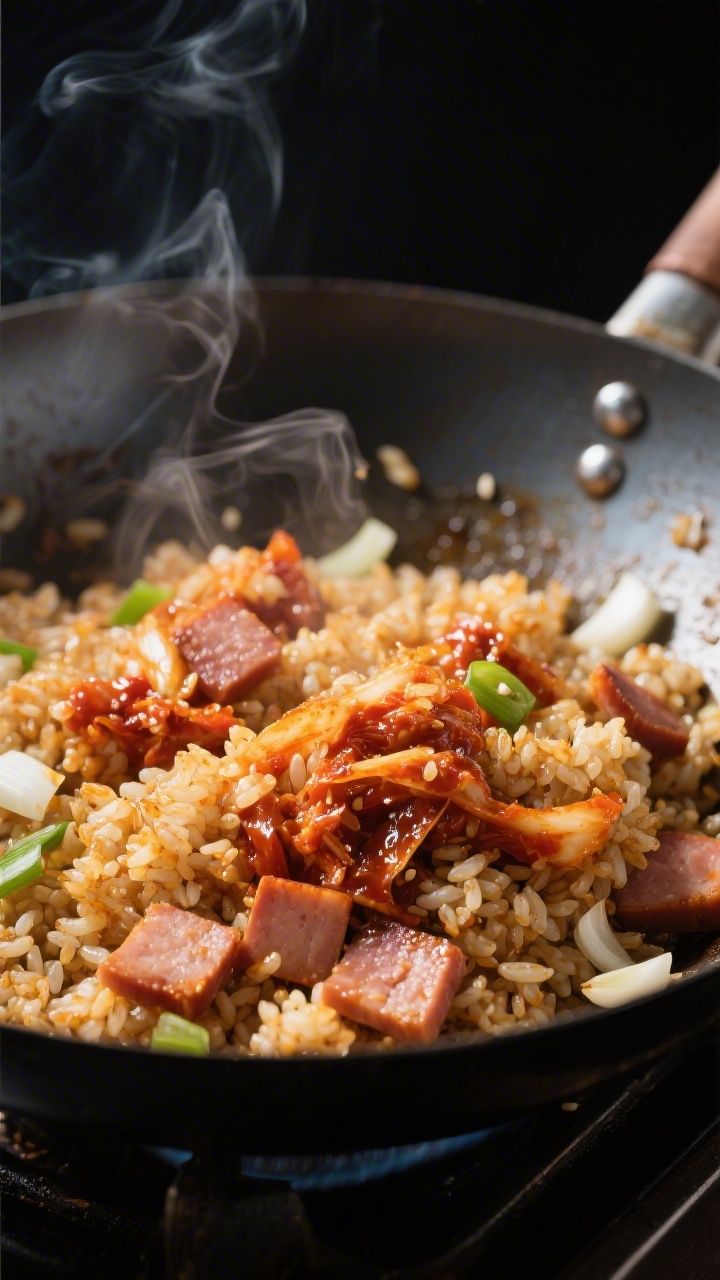
- Balanced flavor: The heat from gochujang and kimchi is rounded out by a touch of sugar and sesame oil, creating a perfect sweet-spicy-umami mix.
- Great texture: Day-old rice gets beautifully chewy and slightly crisp, while the kimchi brings a juicy bite.
- Fast and flexible: It’s a one-pan meal that takes about 20 minutes and works with leftover meats or veggies.
- Budget-friendly: Uses pantry staples and stretches small amounts of protein into a hearty meal.
- Customizable heat: Adjust the spice level easily by tweaking the gochujang and kimchi juice.
What You’ll Need
- 3 cups cooked rice (preferably day-old, medium- or short-grain white rice)
- 1 to 1 1/2 cups chopped kimchi (plus 2–3 tablespoons kimchi juice)
- 1 small onion, finely diced
- 2 scallions, thinly sliced (white and green parts separated)
- 2–3 cloves garlic, minced
- 1 tablespoon neutral oil (canola, vegetable, or avocado)
- 1 tablespoon unsalted butter (optional, for richness)
- 1–2 tablespoons gochujang (Korean red pepper paste, adjust to taste)
- 1–2 teaspoons gochugaru (Korean red pepper flakes, optional for extra heat)
- 1–2 teaspoons soy sauce (to taste)
- 1 teaspoon sugar or honey (balances the acidity)
- 2 teaspoons toasted sesame oil
- Protein options: 1/2 cup diced ham, spam, bacon, tofu, or leftover chicken (optional)
- 2 eggs (for topping; fry or soft-scramble)
- Optional garnishes: roasted seaweed (gim/nori), toasted sesame seeds, extra scallion greens, cilantro
Instructions
- Prep the rice: If using fresh rice, spread it on a plate to cool and dry slightly. Break up any clumps so the grains are loose.
- Heat the pan: Set a large skillet or wok over medium-high heat.Add the neutral oil and swirl to coat.
- Sauté aromatics: Add the onion and the white parts of the scallions. Cook 2–3 minutes until slightly softened. Stir in the garlic and cook 30 seconds until fragrant.
- Add protein (if using): Toss in ham, spam, bacon, tofu, or chicken.Stir-fry 2–3 minutes to warm through and develop a little browning.
- Cook the kimchi: Add chopped kimchi and a splash of the kimchi juice. Stir-fry 2–3 minutes until the kimchi darkens slightly and smells sweet and toasty. This step concentrates flavor.
- Build the sauce: Push everything to one side.Add gochujang, soy sauce, sugar, and gochugaru (if using) to the empty side. Let the gochujang sizzle for 15–20 seconds, then mix it into the kimchi and aromatics.
- Add rice: Toss in the rice and use a spatula to break it up, coating each grain with the sauce. Stir-fry 3–4 minutes, letting it sit for 15–20 seconds between stirs to develop light browning.
- Finish with richness: Stir in butter (if using) and sesame oil.Taste and adjust with more soy sauce or kimchi juice as needed. Fold in half of the scallion greens.
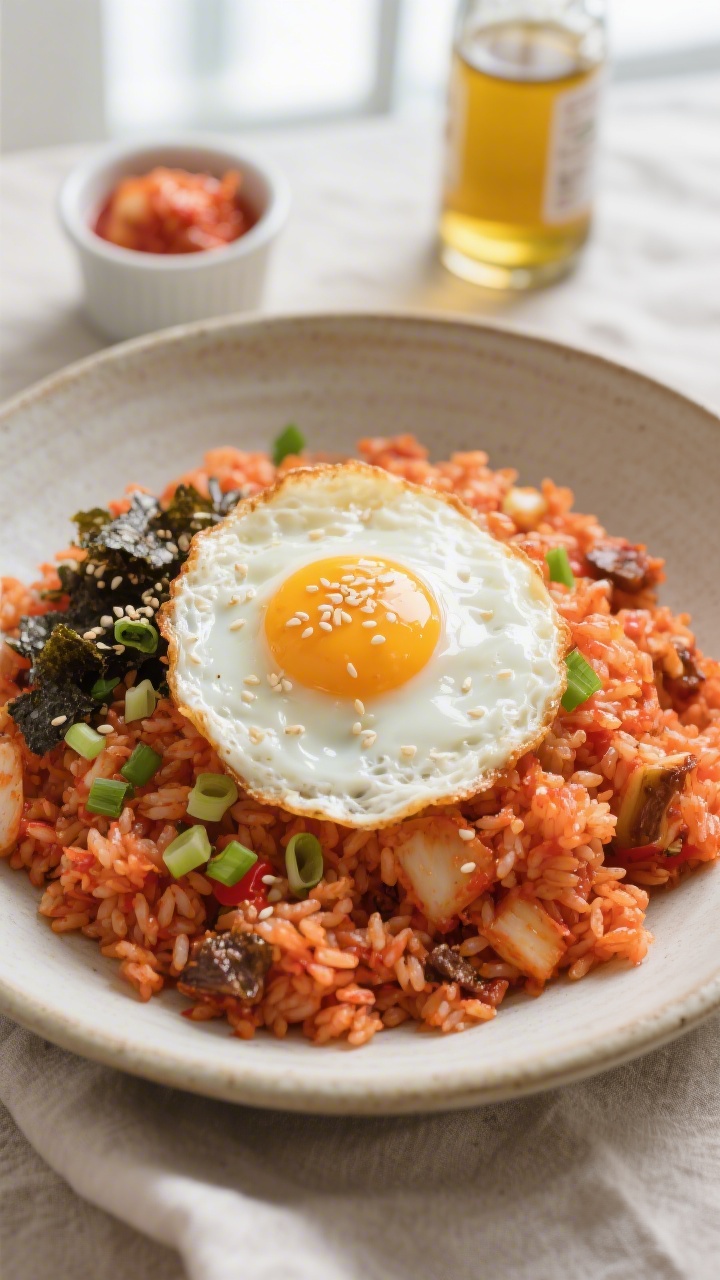
- Cook the eggs: In a separate small pan, fry eggs sunny-side up or over-easy in a little oil until the edges crisp and the yolks are runny. A soft-scramble also works.
- Serve: Spoon fried rice into bowls.Top each with an egg, remaining scallion greens, sesame seeds, and crumbled roasted seaweed. Serve hot.
How to Store
- Refrigerate: Cool completely, then store in an airtight container for up to 4 days.
- Freeze: Portion into freezer-safe bags, flatten for quick thawing, and freeze up to 2 months. Label with date.
- Reheat: Warm in a hot skillet with a splash of water or oil, stirring to loosen clumps.Microwave works in a pinch, but the skillet keeps texture better.
- Eggs: Cook fresh eggs just before serving for best results.
Benefits of This Recipe
- Quick meal: From fridge to table in about 20 minutes, perfect for busy weeknights.
- Great for leftovers: Uses day-old rice and odds and ends from your fridge.
- Probiotic boost: Kimchi is fermented and can support gut health when not overheated for too long.
- High in flavor, low in fuss: A short ingredient list delivers big, restaurant-style taste.
- Custom nutrition: Add tofu for plant protein, an extra egg for more richness, or extra veggies for fiber.
Common Mistakes to Avoid
- Using freshly cooked, wet rice: It clumps and turns mushy. If you must use fresh rice, cool it and let it dry out for 10–15 minutes first.
- Skipping the kimchi sauté: Raw kimchi tastes sharp. Cooking it briefly brings out sweetness and depth.
- Overloading the pan: Too much rice or moisture prevents browning.Work in batches if needed.
- Not seasoning to taste: Kimchi saltiness varies. Taste at the end and adjust soy sauce, sugar, and kimchi juice.
- Burning the gochujang: Let it sizzle briefly, then mix quickly. Burnt paste tastes bitter.
Alternatives
- Rice swaps: Try short-grain brown rice for a nuttier chew, or cauliflower rice for a lighter option.Adjust cooking time to avoid sogginess.
- Protein twists: Use ground pork, crumbled tempeh, shrimp, or leftover bulgogi. For vegetarian, go with extra-firm tofu or a soft-scrambled egg mixed in.
- Sauce variations: Add a dash of fish sauce for deep umami, or a spoon of oyster sauce for extra savory-sweet notes.
- Veggie add-ins: Peas, corn, shredded carrots, mushrooms, or spinach all work. Cook them before adding rice to remove excess moisture.
- Toppings: Try a drizzle of mayonnaise and a sprinkle of furikake, or add avocado slices to cool the heat.
FAQ
Can I make this less spicy?
Yes.
Use a milder kimchi, reduce or skip the gochugaru, and start with 1 teaspoon of gochujang. You can also add a bit more butter or a drizzle of honey to soften the heat.
What kind of kimchi works best?
Napa cabbage kimchi is classic for fried rice. Older, well-fermented kimchi (more sour) gives deeper flavor.
If yours is very fresh, add a little extra gochujang and soy sauce to boost savoriness.
Do I have to use day-old rice?
Day-old rice is ideal because it’s drier and fries better. If using fresh rice, spread it out to cool and dry for 10–15 minutes, or chill it briefly in the fridge to firm up the grains.
Can I make it vegetarian or vegan?
Absolutely. Skip meat and use tofu for protein.
Use a vegan kimchi (some contain fish sauce) and swap butter for more oil. Top with a jammy tofu scramble or omit the egg.
What pan should I use?
A wok is great for high heat and quick tossing, but a large skillet works well too. The key is giving the rice room to move so it can brown slightly instead of steaming.
How do I keep the rice from sticking?
Preheat the pan well, use enough oil, and avoid constant stirring.
Let the rice sit undisturbed for short intervals so it can sear and release naturally.
Can I add cheese?
Yes, a handful of shredded mozzarella or cheddar melts nicely into the rice and balances the heat. Stir it in at the end or torch it on top for a gooey finish.
What if my kimchi is too sour?
Balance it with a pinch more sugar or honey and a small knob of butter. A little extra protein or cheese can also round out the tang.
Is gochujang necessary?
It adds signature body and heat, but if you don’t have it, increase the kimchi and soy sauce, and add a small squeeze of sriracha for warmth.
Flavor won’t be identical, but it will still be tasty.
Final Thoughts
Kimchi fried rice hits that sweet spot between fast and satisfying. It’s spicy, smoky, and full of personality, yet simple enough for any weeknight. Use what you have, trust your taste buds, and don’t overthink it.
With a runny egg on top and a sprinkle of seaweed, it’s comfort in a bowl—no takeout required.
Printable Recipe Card
Want just the essential recipe details without scrolling through the article? Get our printable recipe card with just the ingredients and instructions.