
Lemon meringue pie brings sunshine to the table, no matter the season. It’s bright, tangy, and perfectly balanced with a cloud of sweet, toasted meringue. The contrast of silky lemon curd and crisp crust makes every bite memorable.
If you love desserts that feel special but approachable, this one checks every box. With a few smart tips, you can make a bakery-worthy pie at home.
Contents
- 1 What Makes This Recipe So Good
- 2 Ingredients
- 3 Instructions
- 4 Storage Instructions
- 5 Benefits of This Recipe
- 6 Common Mistakes to Avoid
- 7 Recipe Variations
- 8 FAQ
- 8.1 How do I prevent the meringue from weeping?
- 8.2 Can I use bottled lemon juice?
- 8.3 Why did my curd turn runny?
- 8.4 Is there a simpler meringue option?
- 8.5 Can I make parts of the pie ahead?
- 8.6 How do I get neat slices?
- 8.7 What if I don’t have a candy thermometer?
- 8.8 Why is my crust shrinking?
- 8.9 Can I reduce the sugar?
- 9 In Conclusion
What Makes This Recipe So Good

- Balanced flavor: Tart lemon filling meets sweet, fluffy meringue for a pie that never tastes too sugary.
- Dependable set: A touch of cornstarch in the curd helps it slice cleanly without weeping.
- Stable meringue: A hot sugar syrup (Italian-style) creates a glossy, sturdy topping that holds up.
- Make-ahead friendly: The crust and lemon filling can be prepared in advance, making final assembly stress-free.
- Textural contrast: Buttery, crisp crust; smooth, citrusy curd; airy, lightly toasted meringue. It’s the trifecta.
Ingredients
- For the crust:
- 1 1/4 cups (160 g) all-purpose flour
- 1 tablespoon granulated sugar
- 1/2 teaspoon fine salt
- 1/2 cup (115 g) cold unsalted butter, cubed
- 3–4 tablespoons ice water
- For the lemon filling:
- 1 cup (200 g) granulated sugar
- 1/4 cup (30 g) cornstarch
- 1/4 teaspoon fine salt
- 1 1/2 cups (360 ml) water
- 1 tablespoon lemon zest (from about 1–2 lemons)
- 1/2 cup (120 ml) fresh lemon juice (about 3–4 lemons)
- 4 large egg yolks, beaten
- 2 tablespoons unsalted butter
- For the meringue:
- 4 large egg whites, room temperature
- 1 cup (200 g) granulated sugar
- 1/4 cup (60 ml) water
- 1/4 teaspoon cream of tartar
- 1 teaspoon vanilla extract
- Pinch of salt
Instructions
- Make the crust: In a bowl, combine flour, sugar, and salt.Cut in the cold butter with a pastry cutter or your fingertips until pea-sized crumbs form. Sprinkle in ice water, 1 tablespoon at a time, and mix just until the dough holds together when pinched. Shape into a disk, wrap, and chill 45–60 minutes.
- Blind-bake the crust: Heat oven to 400°F (200°C).Roll the dough into a 12-inch circle, fit into a 9-inch pie pan, and crimp edges. Prick the base with a fork. Line with parchment and fill with pie weights.
Bake 15 minutes. Remove weights and parchment, then bake 8–10 minutes more until lightly golden. Cool completely.
- Prepare the lemon filling base: In a medium saucepan, whisk sugar, cornstarch, and salt.Slowly whisk in water until smooth. Cook over medium heat, whisking, until thick and translucent, about 5–7 minutes.
- Add lemon and yolks: Remove from heat. Whisk in lemon zest and juice.Temper the yolks by whisking in a few spoonfuls of the hot mixture, then return everything to the pan. Cook over medium-low heat, whisking constantly, 1–2 minutes until glossy and just bubbling. Off heat, whisk in butter.
Keep warm.
- Start the meringue syrup: In a small saucepan, combine sugar and water. Bring to a boil over medium heat, swirling gently. Cook until the syrup reaches 240°F (115–116°C) on a candy thermometer (soft-ball stage).
- Beat the egg whites: While the syrup heats, beat egg whites, cream of tartar, and a pinch of salt on medium speed until soft peaks form.
- Finish the meringue: With the mixer running on medium, slowly stream the hot syrup down the side of the bowl into the whites.Increase to medium-high and beat until thick, glossy, and cool to the touch, 4–6 minutes. Beat in vanilla.
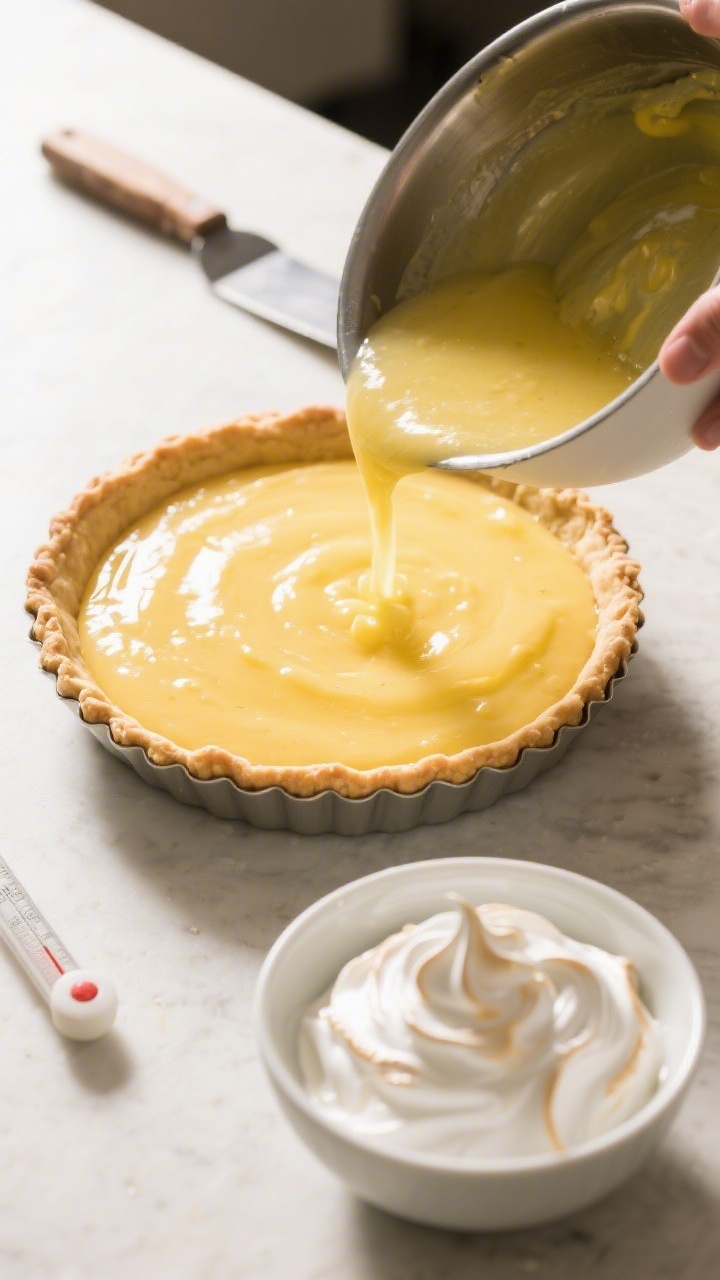
- Assemble: Pour the hot lemon filling into the cooled crust. Immediately spread the meringue on top, making sure it touches the crust all around to seal the edges.Swirl the top with a spatula.
- Toast: Lower oven to 375°F (190°C). Bake the pie 8–10 minutes until the meringue is golden in spots. Alternatively, use a kitchen torch to toast the peaks.
- Cool and set: Let the pie cool to room temperature on a rack, then chill 3–4 hours before slicing for the cleanest cuts.
Storage Instructions
- Refrigerate: Keep the pie loosely covered and chilled for up to 2 days.The meringue may gradually soften, but flavor remains bright.
- Avoid freezing: Lemon curd and meringue do not freeze well. The textures can separate and become weepy.
- Slice smart: Use a hot, dry knife for clean slices. Wipe the blade between cuts.

Benefits of This Recipe
- Showstopping look with simple steps: You get bakery-level appeal without fussy techniques.
- Accessible ingredients: Lemons, eggs, sugar, and pantry staples create a standout dessert.
- Make-ahead components: Crust and curd can be prepared a day in advance for easier timing.
- Reliable structure: Cornstarch and Italian meringue help prevent sogginess and weeping.
- Versatile sweetness: You can fine-tune the tart-to-sweet ratio to match your taste.
Common Mistakes to Avoid
- Under-cooked filling: If the cornstarch doesn’t fully thicken on the stove, your pie won’t set.Cook until glossy and bubbling.
- Cool filling with cool meringue: Spread meringue over hot filling. This helps cook and anchor the meringue, reducing weeping.
- Skipping the seal: Not sealing meringue to the crust leads to gaps and wateriness. Press the meringue to the edges.
- Overbaked or soggy crust: Blind-bake fully to keep the base crisp under the curd.
- Grease in the meringue: Any fat (even a trace of yolk) prevents stiff peaks.Use a clean, dry bowl and separate eggs carefully.
Recipe Variations
- Meyer lemon twist: Swap standard lemons for Meyer lemons. They’re sweeter and floral, so reduce sugar in the filling by 2–3 tablespoons if desired.
- Graham cracker crust: Replace pastry with a crumb crust: 1 1/2 cups crumbs, 1/3 cup sugar, 6 tablespoons butter. Bake 8 minutes at 350°F (175°C).
- Toasted coconut finish: Fold 1/2 cup lightly toasted coconut into the meringue or sprinkle on top before toasting.
- Extra tart: Increase lemon juice to 2/3 cup and add an extra tablespoon of sugar to balance.Expect a bolder pucker.
- Vanilla bean curd: Add seeds from 1/2 vanilla bean to the filling for a fragrant, custardy note that complements the lemon.
- Gluten-free crust: Use a trusted gluten-free flour blend for pastry or opt for a gluten-free crumb crust.
FAQ
How do I prevent the meringue from weeping?
Spread meringue over hot filling and seal it to the crust. Use a stable meringue made with hot sugar syrup. Avoid high humidity when making and serving if possible.
Can I use bottled lemon juice?
Fresh juice gives the brightest flavor.
Bottled juice can taste flat or bitter. If you must, choose a high-quality brand and add extra zest to boost aroma.
Why did my curd turn runny?
It likely wasn’t cooked long enough to activate the cornstarch, or the measurements were off. Cook until thick, glossy, and gently bubbling, and measure carefully.
Is there a simpler meringue option?
Yes.
You can make a classic French meringue by whipping sugar directly into the whites. It’s quicker but less stable, so serve the pie the same day.
Can I make parts of the pie ahead?
Yes. Bake the crust a day ahead and store at room temperature.
Cook the filling, press plastic wrap directly on the surface, and refrigerate up to 24 hours. Rewarm gently until pourable before assembling.
How do I get neat slices?
Chill the pie at least 3–4 hours. Use a sharp knife dipped in hot water and wiped dry between cuts.
A pie server helps keep the first slice intact.
What if I don’t have a candy thermometer?
You can make French meringue, or try the soft-ball test by dropping a bit of syrup into cold water—it should form a soft, malleable ball. A thermometer gives the most reliable results, though.
Why is my crust shrinking?
Overworking the dough or skipping rest time can cause shrinkage. Chill well, don’t stretch the dough into the pan, and use pie weights during the first bake.
Can I reduce the sugar?
You can trim a few tablespoons from the filling, but avoid cutting too much from the meringue or it may lose stability.
Taste as you go and rely on zest for brightness.
In Conclusion
Lemon meringue pie delivers big flavor and classic charm with simple pantry ingredients. A crisp crust, bright lemon curd, and lofty meringue create a dessert that feels both nostalgic and fresh. With the right steps—hot filling, sealed edges, and a fully cooked curd—you’ll get clean slices and confident results.
Keep this recipe on hand for holidays, gatherings, or any day that could use a little sunshine.
Printable Recipe Card
Want just the essential recipe details without scrolling through the article? Get our printable recipe card with just the ingredients and instructions.