Salads don’t have to be boring or leave you hungry an hour later. With the right mix of textures, flavors, and smart dressings, they can be satisfying and light at the same time. Here, you’ll find a simple framework plus three go-to low-calorie salad recipes you can mix and match during the week.
Everything is built around everyday ingredients, quick prep, and big flavor without extra calories. If you want meals that feel fresh, help you feel good, and don’t take much effort, you’re in the right place.
Contents
- 1 Why This Recipe Works
- 2 Shopping List
- 3 Step-by-Step Instructions
- 4 Keeping It Fresh
- 5 Why This is Good for You
- 6 What Not to Do
- 7 Alternatives
- 8 FAQ
- 8.1 How can I keep calories low without sacrificing flavor?
- 8.2 What’s the best protein for a low-calorie salad?
- 8.3 Can I meal prep these salads?
- 8.4 How much dressing should I use?
- 8.5 Are store-bought dressings okay?
- 8.6 What if I’m still hungry?
- 8.7 How do I avoid soggy salads?
- 8.8 Can I make these vegan?
- 9 Final Thoughts
Why This Recipe Works
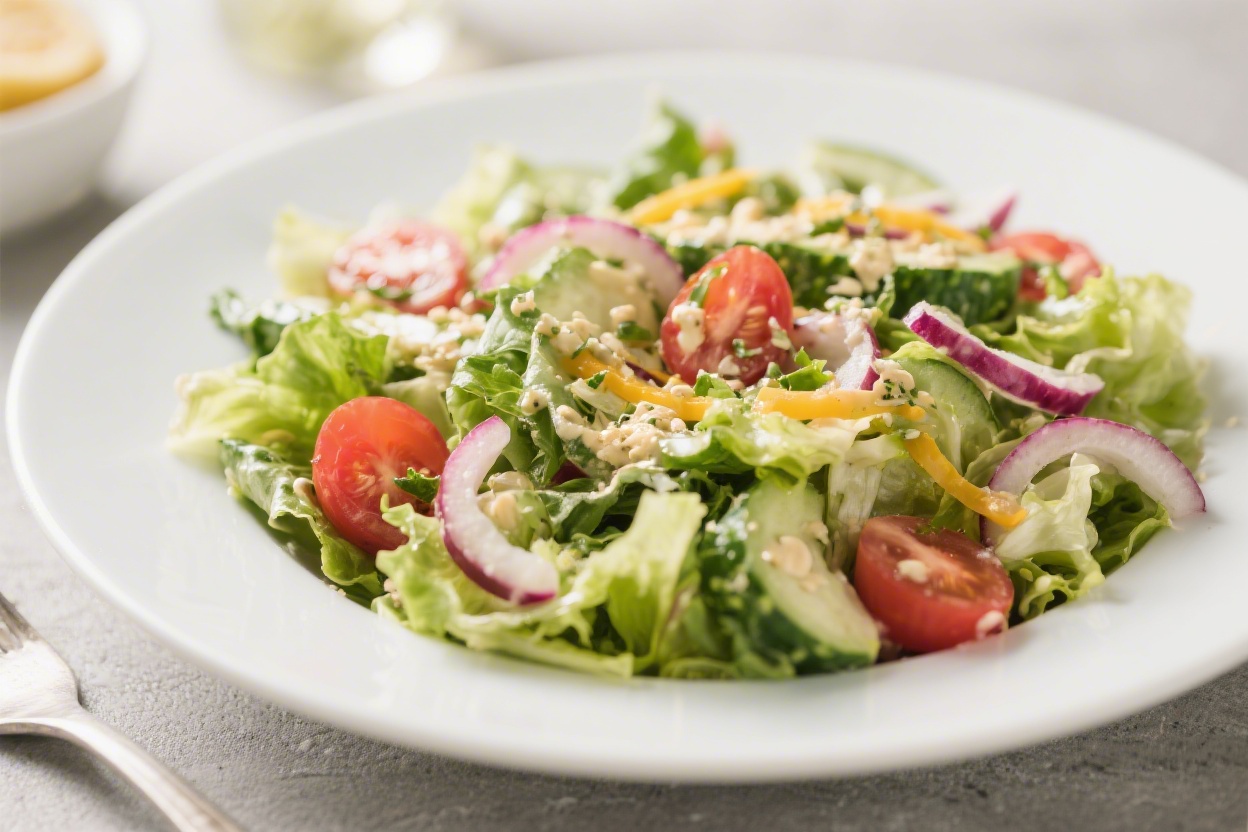
- High volume, low calories: Leafy greens, crunchy vegetables, and lean proteins keep portions generous without driving up calories.
- Smart dressings: Light vinaigrettes and yogurt-based sauces deliver flavor without heavy oils or sugar.
- Balanced texture and taste: Crisp veggies, tender protein, a bit of sweetness, and acidity make every bite interesting, so you won’t miss extra calories.
- Flexible base: Mix and match ingredients based on what you have, what’s in season, and how much time you have.
Shopping List
- Greens: Romaine, mixed spring greens, baby spinach, or arugula
- Vegetables: Cucumber, cherry tomatoes, red onion, bell peppers, shredded carrots, radishes
- Lean proteins: Grilled chicken breast, canned tuna in water, chickpeas, hard-boiled eggs, tofu
- Fruits (optional, for sweetness): Apple, berries, orange segments, grapes
- Herbs: Parsley, cilantro, mint, basil
- Light add-ins: Pickled onions, capers, olives (use sparingly), pumpkin seeds, sunflower seeds
- Dairy (optional): Feta, part-skim mozzarella, or a light sprinkle of Parmesan
- Pantry for dressings: Extra-virgin olive oil, red wine vinegar, apple cider vinegar, lemon, Dijon mustard, plain Greek yogurt, honey, garlic, salt, pepper
Step-by-Step Instructions
- Build your base: Fill a large bowl with 3–4 cups of mixed greens. Aim for a mix—something tender (spring mix) plus something crisp (romaine).
- Add color and crunch: Toss in 1–2 cups of chopped vegetables.Think cucumber slices, halved cherry tomatoes, thin red onion, and shredded carrots.
- Choose a lean protein: Add 3–4 ounces of grilled chicken, a half can of tuna, 1/2 cup chickpeas, or cubed baked tofu. This keeps you full longer.
- Layer in flavor boosters: Sprinkle fresh herbs, a tablespoon of seeds, or a small amount of olives or feta. Keep these measured so calories stay in check.
- Make a light dressing: Whisk 1 tablespoon olive oil, 2 tablespoons vinegar or lemon juice, 1/2 teaspoon Dijon, a pinch of salt, pepper, and minced garlic.For creaminess, whisk in 1 tablespoon plain Greek yogurt.
- Dress smartly: Drizzle half the dressing, toss, taste, then add more only if needed. This prevents overdressing.
- Balance with a touch of sweet or acid: Add a few apple slices or a squeeze of lemon to brighten flavors without heavy sauces.
- Serve immediately: Salads are best fresh. If packing for later, keep dressing separate until you’re ready to eat.
Keeping It Fresh
- Prep ahead: Wash and dry greens thoroughly.Store them in a container with a paper towel to absorb moisture.
- Keep wet and dry apart: Store chopped cucumbers and tomatoes separately so greens don’t wilt.
- Jar method for on-the-go: Dressing on the bottom, then sturdy veggies, protein, and greens on top. Shake just before eating.
- Use within 3–4 days: Most prepped components last several days, but add delicate herbs and dressing right before eating.
Why This is Good for You
- Fiber-rich: Vegetables and legumes help keep you full, support digestion, and steady energy.
- Lean protein: Chicken, tuna, tofu, or eggs support muscle health and prevent mid-afternoon crashes.
- Healthy fats: A small amount of olive oil and seeds helps your body absorb fat-soluble vitamins (A, D, E, K).
- Lower calorie density: Big portions with fewer calories can support weight goals without feeling deprived.
What Not to Do
- Don’t drown it in dressing: Even olive oil adds up fast. Measure it.One tablespoon is plenty for most single-serve salads.
- Don’t overload cheese and nuts: They’re delicious but dense. Use a small sprinkle for flavor, not a full handful.
- Don’t skip protein: Without it, you’ll be hungry soon. Include at least one lean protein source.
- Don’t let greens sit wet: Excess moisture leads to soggy salads and diluted flavor.
Alternatives
Here are three low-calorie salad recipes you can rotate through the week.
All quantities serve one generous portion; scale up as needed.
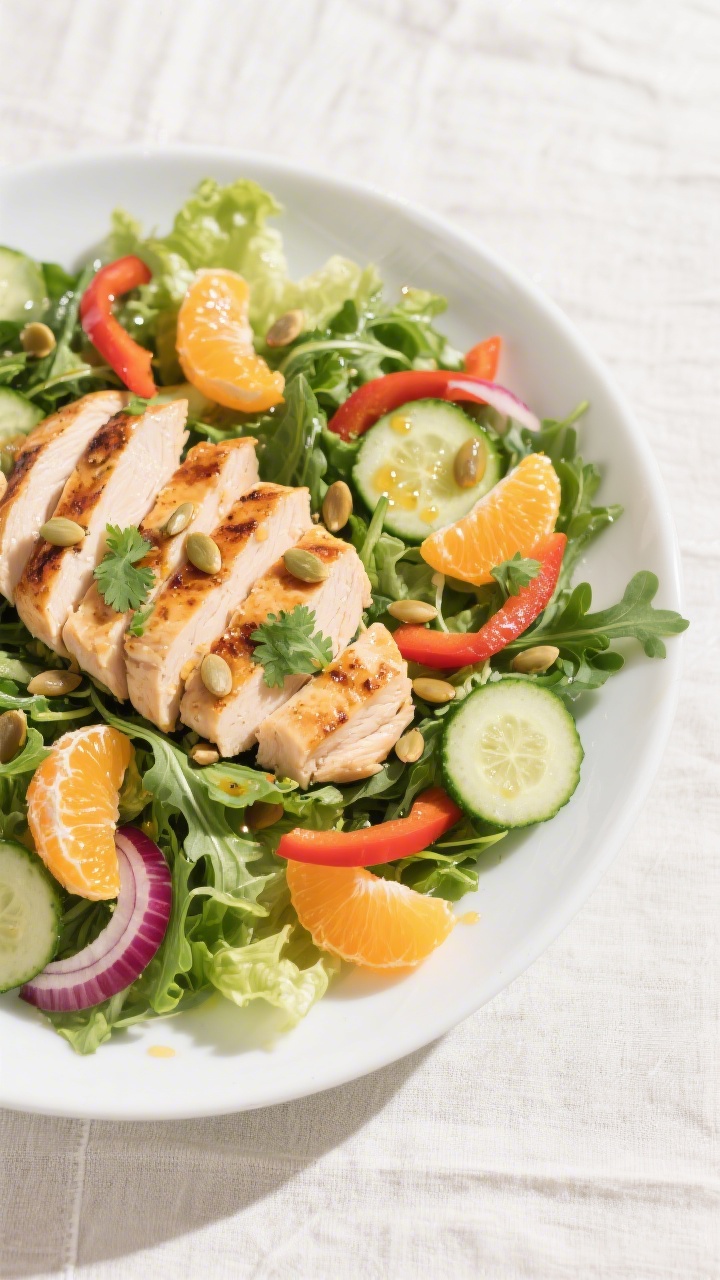
1) Crunchy Chicken & Citrus Salad
- Base: 2 cups romaine, 1 cup arugula
- Veggies: 1/2 cucumber (sliced), 1/2 red bell pepper (sliced), a few red onion slices
- Protein: 3–4 oz grilled chicken breast (sliced)
- Fruit: 1 small orange, segmented
- Extras: 1 tablespoon pumpkin seeds, chopped cilantro
- Dressing: 1 tablespoon olive oil, juice of 1/2 lemon, 1 teaspoon Dijon, pinch of salt, pepper
Why it works: Citrus brightens the chicken, seeds add crunch, and the whole bowl stays under a reasonable calorie count with balanced macros.
2) Mediterranean Chickpea Bowl
- Base: 3 cups mixed greens
- Veggies: Cherry tomatoes, cucumber, chopped parsley, a few kalamata olives (about 4–5)
- Protein: 1/2 cup rinsed chickpeas
- Dairy (optional): 1 tablespoon crumbled feta
- Dressing: 2 tablespoons red wine vinegar, 1 teaspoon olive oil, 1/2 teaspoon oregano, minced garlic, salt, pepper
Why it works: Bold flavors from olives, herbs, and vinegar mean you can use less oil and still get a satisfying bite.
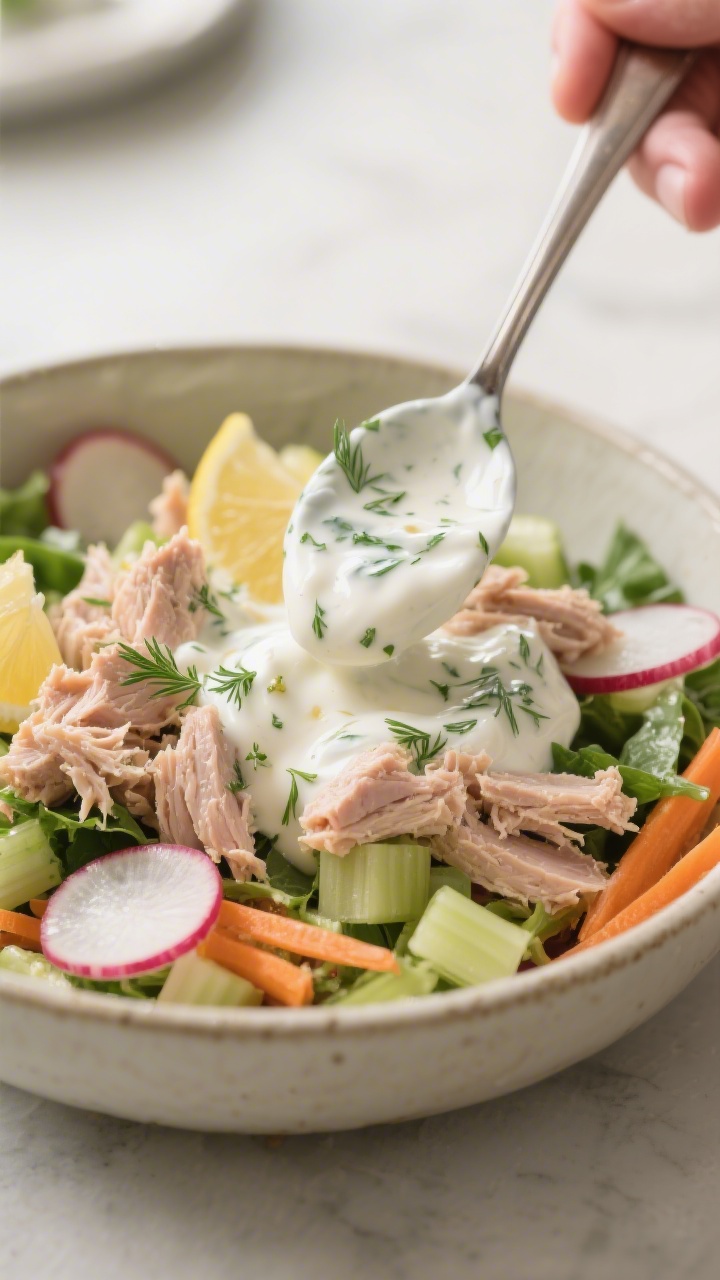
3) Creamy Herbed Tuna & Greens
- Base: 2 cups spinach, 1 cup spring mix
- Veggies: Radishes, shredded carrot, diced celery
- Protein: 1/2 can tuna in water, drained
- Dressing: 2 tablespoons plain Greek yogurt, 1 teaspoon lemon juice, 1/2 teaspoon Dijon, chopped dill, salt, pepper
Why it works: The yogurt dressing adds creaminess without heavy mayo, and fresh dill lifts everything up.
FAQ
How can I keep calories low without sacrificing flavor?
Lean on acids like lemon and vinegar, fresh herbs, garlic, mustard, and a pinch of salt and pepper. These boost flavor so you can use less oil, cheese, and sugary add-ins.
What’s the best protein for a low-calorie salad?
Grilled chicken breast, tuna in water, shrimp, tofu, chickpeas, or egg whites are all solid options. Choose what you enjoy so you actually look forward to the meal.
Can I meal prep these salads?
Yes.
Store greens, chopped veggies, and proteins separately in airtight containers. Add dressing and delicate herbs right before eating to keep everything crisp.
How much dressing should I use?
Start with 1 tablespoon oil plus 2 tablespoons acid for a single serving. Toss, taste, and add a bit more acid or water if you want more coverage without extra calories.
Are store-bought dressings okay?
They can be, but read labels.
Look for lower calories per serving, minimal added sugar, and simple ingredients. Light vinaigrettes usually beat creamy options.
What if I’m still hungry?
Add more low-calorie veggies (cucumber, bell peppers, greens) or a bit more lean protein. You can also include a small whole-grain side like a slice of whole-wheat toast.
How do I avoid soggy salads?
Dry your greens well, keep dressing separate until serving, and layer hearty ingredients at the bottom if you’re packing a lunch.
Use sturdier greens like romaine or kale for longer storage.
Can I make these vegan?
Absolutely. Use tofu, chickpeas, or lentils for protein, and swap yogurt with a dairy-free yogurt or blended silken tofu for creamy dressings.
Final Thoughts
Low-calorie salads are all about smart choices, not tiny portions. With fresh produce, lean protein, and bright dressings, you can build meals that feel generous and taste great.
Keep the base simple, measure the higher-calorie extras, and lean on herbs and acids for flavor. Once you have the formula down, you’ll have a week’s worth of easy, satisfying salads on autopilot.
Printable Recipe Card
Want just the essential recipe details without scrolling through the article? Get our printable recipe card with just the ingredients and instructions.