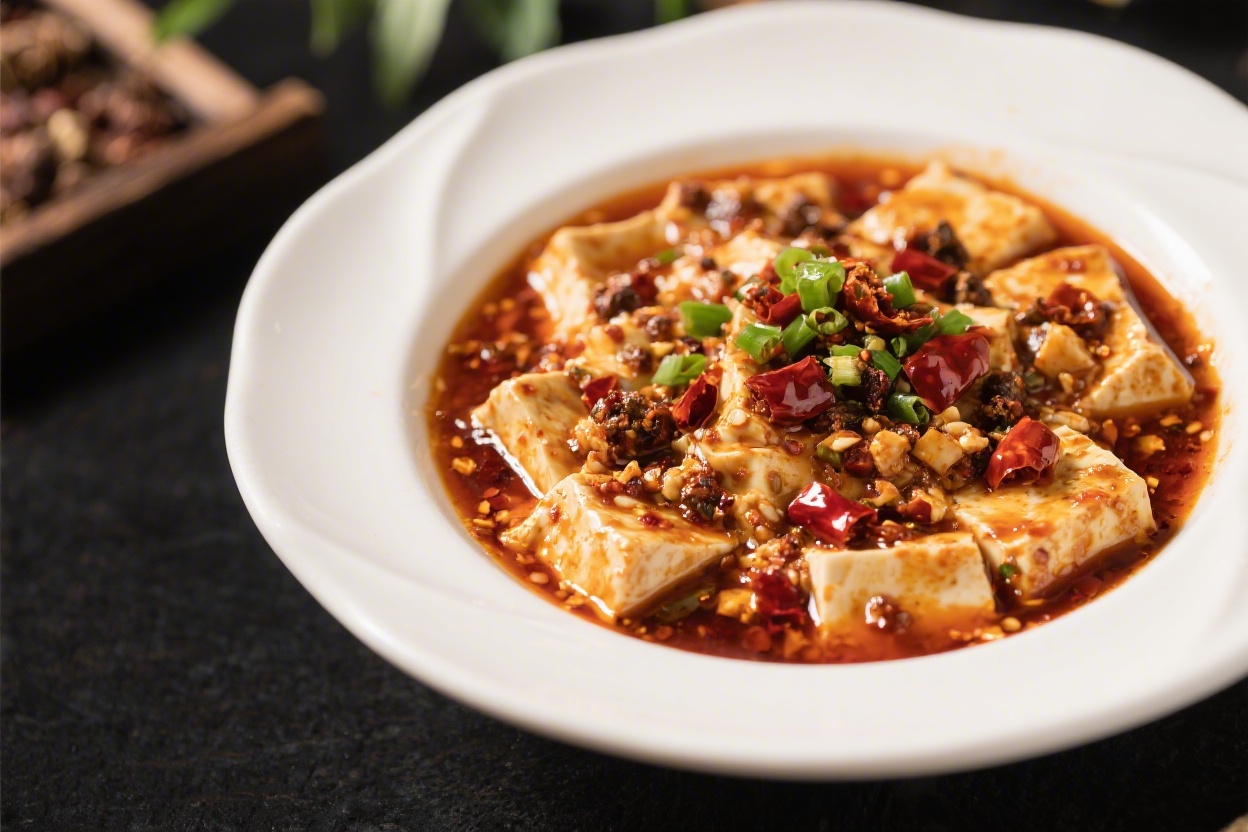
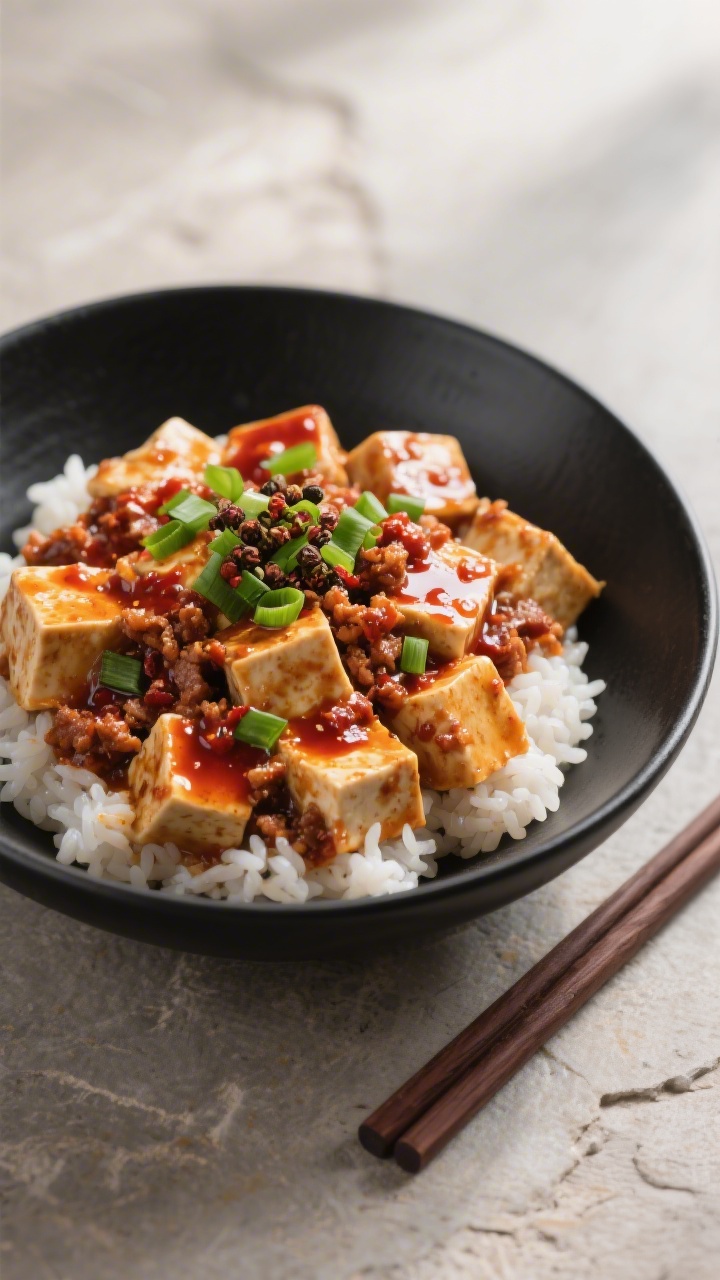
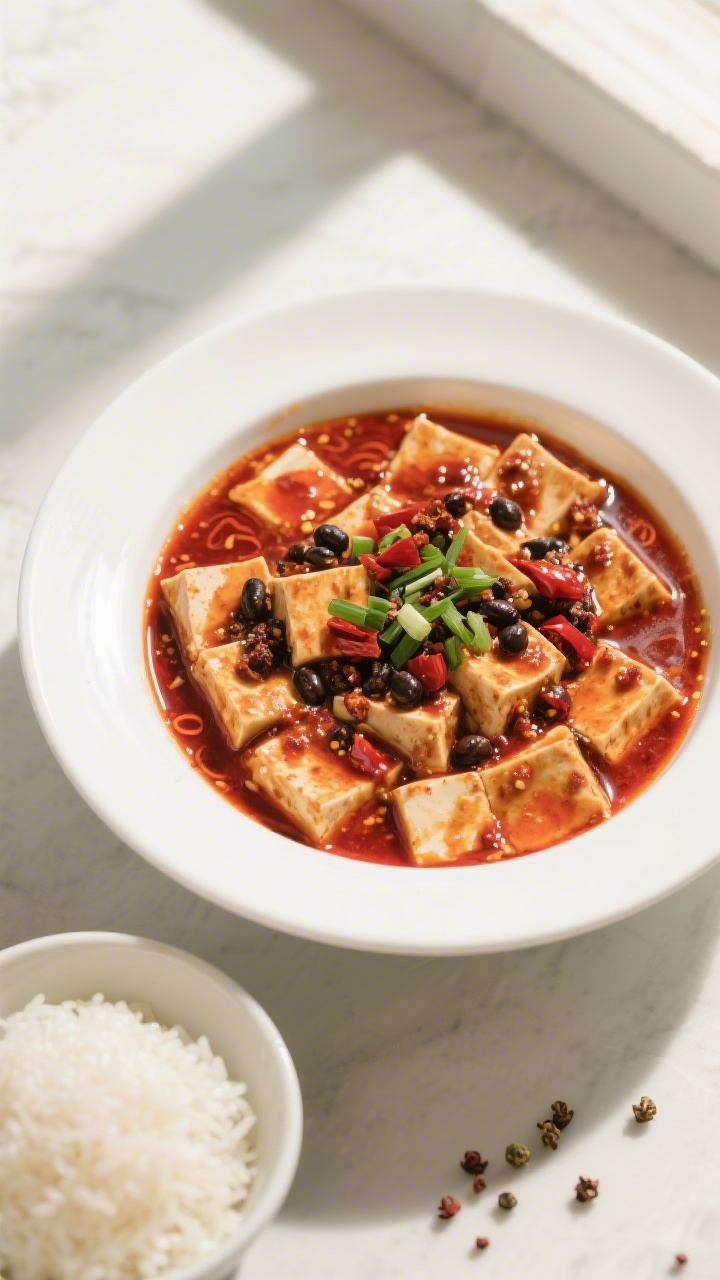
Mapo tofu is one of those dishes that wins you over from the first spoonful. It’s spicy, numbing, aromatic, and deeply comforting, all at the same time. Soft tofu sits in a rich, brick-red sauce that clings to every bite, with pops of minced pork and the signature tingling kick of Sichuan peppercorn.
It’s fast enough for a weeknight but memorable enough to serve to friends. If you’re craving a warming, flavor-packed dish that hits sweet, salty, spicy, and savory notes, this classic from Sichuan cuisine delivers every time.
Contents
What Makes This Recipe So Good
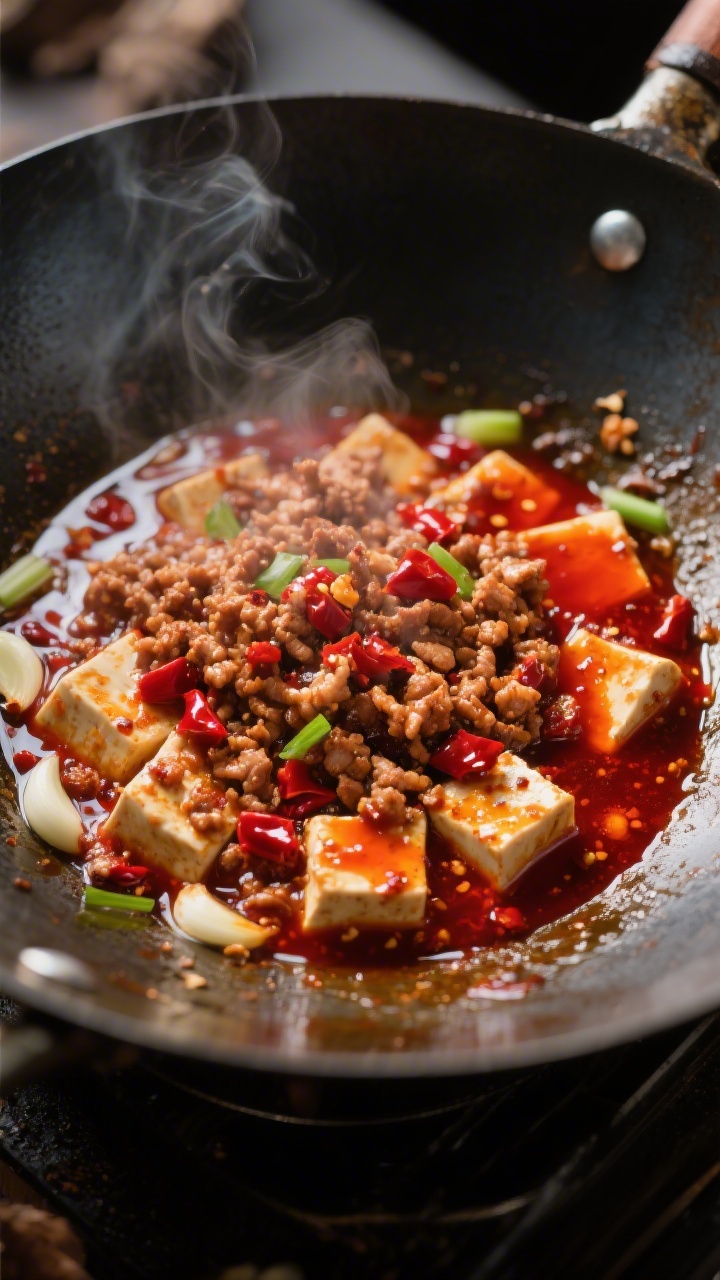
- Authentic flavor balance: The combo of doubanjiang (fermented chili bean paste), douchi (fermented black beans), and Sichuan peppercorn creates that iconic spicy, savory, and numbing profile.
- Quick and satisfying: From prep to plate in about 30 minutes. It’s a fast, hearty meal that tastes like it simmered for hours.
- Velvety texture: Silken or soft tofu gives a silky bite that contrasts the crisp bits of pork and bold sauce.
- Customizable heat: You can easily adjust the spiciness and the numbing effect to suit your taste.
- Budget-friendly: Simple ingredients stretch into a generous, flavorful dish perfect over steamed rice.
What You’ll Need
- Soft or medium-firm tofu: About 14–16 oz (400–450 g).Soft gives a silky result; medium-firm is easier to handle.
- Ground pork: 4–6 oz (115–170 g). Optional but traditional. Substitute with ground chicken, turkey, or mushrooms for vegetarian.
- Doubanjiang (chili bean paste): 1–2 tablespoons.Look for Pixian doubanjiang for best flavor.
- Douchi (fermented black beans): 1 tablespoon, rinsed and roughly chopped. Adds deep umami.
- Sichuan peppercorns: 1–2 teaspoons, toasted and ground. Provides the signature numbing “ma.”
- Garlic: 3 cloves, minced.
- Ginger: 1 tablespoon, finely minced.
- Green onions (scallions): 3–4, white parts minced and greens sliced for garnish.
- Light soy sauce: 1 tablespoon, for seasoning.
- Shaoxing wine: 1 tablespoon, for aroma and depth.Dry sherry works in a pinch.
- Chicken or vegetable stock: 1 to 1 1/4 cups (240–300 ml).
- Cornstarch slurry: 1 tablespoon cornstarch mixed with 2 tablespoons water.
- Sugar: 1/2 teaspoon, to round out the heat.
- Neutral oil: 2–3 tablespoons (peanut, canola, or vegetable).
- Chili oil: 1–2 teaspoons, optional for extra heat and sheen.
- White pepper: A pinch, optional.
- Salt: To taste (you may not need much due to doubanjiang).
- Steamed rice: For serving.
Instructions
- Prep the tofu: Cut tofu into 1-inch cubes. For extra delicate tofu, briefly blanch in gently simmering salted water for 2–3 minutes, then drain. This helps it stay intact and removes any beaniness.
- Toast and grind peppercorns: Lightly toast Sichuan peppercorns in a dry pan until fragrant, 1–2 minutes.Cool, then grind to a coarse powder with a mortar and pestle or spice grinder. Set aside.
- Bloom the aromatics: Heat neutral oil in a wok or deep skillet over medium heat. Add the white parts of scallions, garlic, and ginger.Stir until fragrant, about 30 seconds.
- Cook the pork: Increase heat to medium-high. Add ground pork and break it up. Cook until no longer pink and slightly browned, 3–4 minutes.Stir in Shaoxing wine and let it sizzle.
- Add the flavor base: Push meat to the side. Add doubanjiang and douchi to the oil in the center. Fry the pastes for 1–2 minutes, stirring, until the oil turns red and aromatic.This step builds deep flavor.
- Build the sauce: Pour in stock, soy sauce, sugar, and a pinch of white pepper if using. Bring to a gentle simmer and taste. Adjust salt if needed, keeping in mind the paste is salty.
- Add tofu gently: Slide in tofu cubes.Tilt and swirl the pan instead of vigorous stirring to avoid breaking the tofu. Simmer for 3–5 minutes to let flavors soak in.
- Thicken: Stir cornstarch slurry, then drizzle it into the simmering sauce while gently stirring. Let it bubble until the sauce lightly coats the tofu, about 1–2 minutes.
- Finish with heat and “ma”: Sprinkle in ground Sichuan peppercorns and drizzle chili oil to taste.Add half the green onion tops and give a gentle stir.
- Serve: Spoon over hot steamed rice. Garnish with remaining green onions. For a restaurant-style touch, dust with a bit more ground peppercorn just before serving.
Storage Instructions
- Refrigerator: Store leftovers in an airtight container for up to 3 days.The flavors often deepen by day two.
- Reheating: Warm gently on the stove over low heat with a splash of water or stock. Avoid rough stirring to keep the tofu intact.
- Freezing: Not recommended. Tofu can become spongy and the sauce may separate after thawing.
Benefits of This Recipe
- Protein-rich comfort: Between tofu and pork, you get a satisfying, protein-forward meal without feeling heavy.
- Flavor education: Cooking with doubanjiang, douchi, and Sichuan peppercorn helps you build a pantry and skill set for other Sichuan dishes.
- Flexible for diets: Easy to make gluten-free with tamari and to make vegetarian by swapping the pork for mushrooms or plant-based crumbles.
- Meal-prep friendly: Holds well for a couple of days and reheats beautifully with minimal effort.
Common Mistakes to Avoid
- Skipping the paste-frying step: Doubanjiang needs a brief fry in oil to unlock its aroma and color.Adding it directly to liquid dulls the flavor.
- Rough stirring: Soft tofu breaks easily. Swirl the pan or use a spatula to gently nudge the cubes.
- Over-thickening: Add cornstarch slurry gradually. Too much turns the sauce gloopy instead of silky.
- Burning the aromatics: Garlic and ginger burn fast.Keep heat moderate when blooming them and only crank it up after adding the pork.
- Using stale peppercorns: Old Sichuan pepper loses its numbing kick. Toast and grind fresh for the best “ma.”
Recipe Variations
- Vegetarian Mapo Tofu: Skip pork and sauté finely chopped shiitake or king oyster mushrooms for meaty texture. Use vegetable stock and a vegetarian-friendly doubanjiang.
- Extra Saucy: Increase stock to 1 1/2 cups and add an extra 1/2 teaspoon cornstarch slurry for a looser, scoopable sauce that’s great over rice.
- Lean and Light: Use ground chicken or turkey.Add a splash of sesame oil at the end for aromatic richness.
- Noodle Bowl: Ladle the finished mapo tofu over wheat noodles instead of rice. Thin the sauce slightly with more stock.
- Green Pepper Kick: Add a handful of sliced long green chilies or bell peppers in step 6 for extra aroma and color.
- Black Vinegar Brightness: Stir in 1–2 teaspoons Chinese black vinegar at the end to sharpen the flavors.
FAQ
What is the best tofu for mapo tofu?
Soft or medium-firm tofu works best. Soft tofu gives that classic silky texture, while medium-firm is easier to handle if you’re new to cooking with tofu.
Can I make it less spicy?
Yes.
Use less doubanjiang, skip the chili oil, and lean on soy sauce and stock for depth. You can also add more sugar and a bit more stock to soften the heat.
Do I need both doubanjiang and douchi?
For the most authentic flavor, yes. Doubanjiang brings chili heat and savory bean notes, while douchi adds a deep, fermented umami that rounds out the sauce.
If you must choose one, prioritize doubanjiang.
What’s the purpose of blanching tofu?
Blanching firms up the surface so it breaks less in the pan, and it removes any beany aroma. It’s optional but helpful, especially with very soft tofu.
Can I make this gluten-free?
Use gluten-free doubanjiang (check labels), tamari instead of soy sauce, and gluten-free stock. The rest of the ingredients are typically gluten-free.
What if I can’t find Sichuan peppercorns?
You can still make a tasty dish with chili oil and white pepper, but you’ll miss the numbing “ma” sensation.
If you find Chinese prickly ash or a similar citrusy peppercorn, that’s the closest substitute.
How do I avoid a greasy sauce?
Measure your oil, fry the pastes briefly without burning, and don’t overcrowd with extra fat. If the sauce looks oily at the end, skim with a spoon or blot gently with a paper towel.
Can I double the recipe?
Yes. Use a larger wok or Dutch oven to avoid crowding, and increase the aromatics and seasonings proportionally.
Thicken in stages so you don’t overdo the slurry.
In Conclusion
Mapo tofu is a bold, cozy, and wildly flavorful dish that’s easier to make than it looks. With a few key pantry ingredients and a gentle hand with the tofu, you can bring authentic Sichuan heat to your dinner table any night of the week. Adjust the spice, keep the sauce silky, and serve it over hot rice for pure comfort.
Once you try it, this spicy classic will quickly become a go-to favorite.
Printable Recipe Card
Want just the essential recipe details without scrolling through the article? Get our printable recipe card with just the ingredients and instructions.