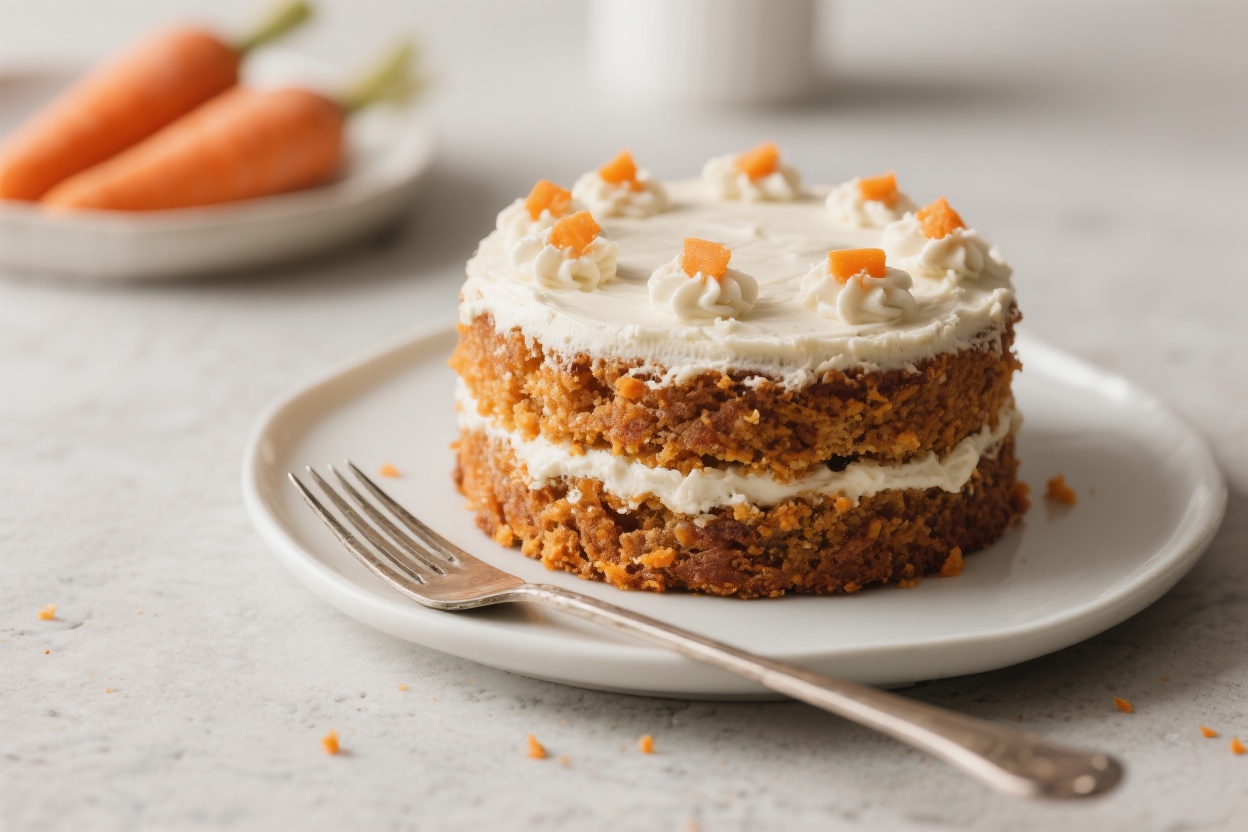
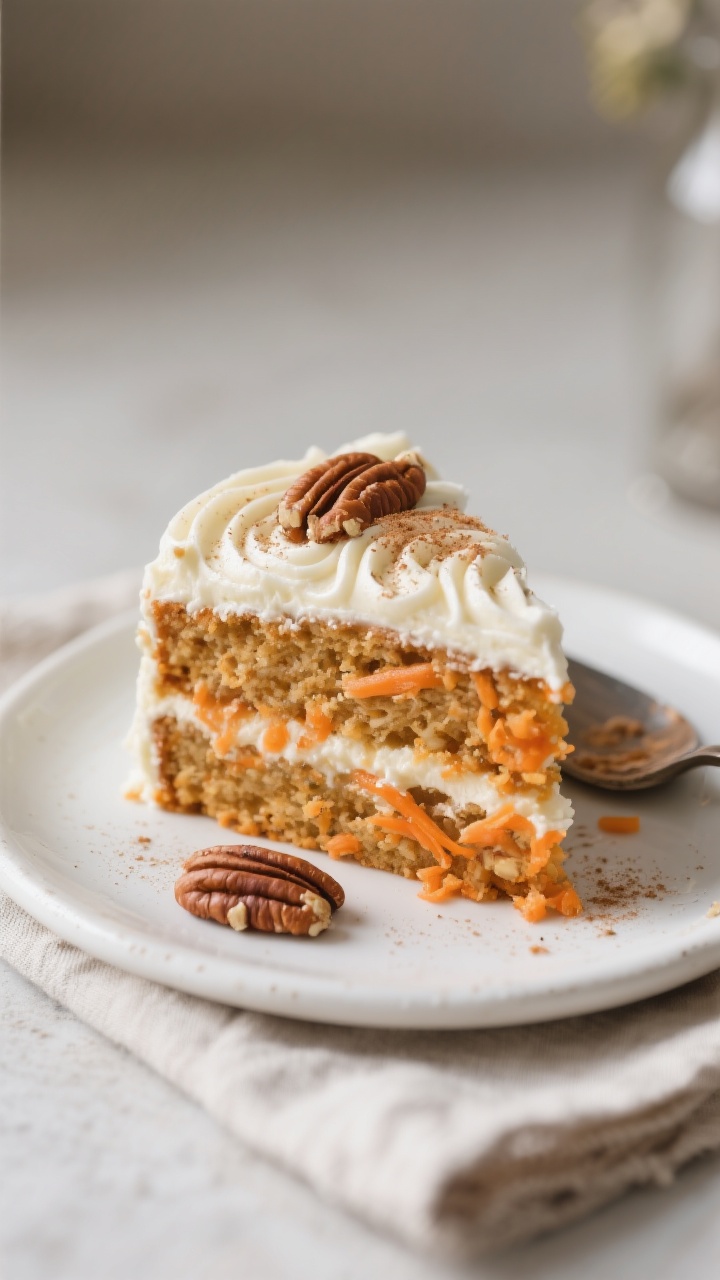
Carrot cake should be soft, rich, and full of warm spice—not dry or crumbly. This gluten-free version checks all the boxes, with a tender crumb and a creamy frosting that feels like a bakery treat. You won’t need fancy ingredients or special techniques to get it right.
Just a bowl, a whisk, and a little patience while it bakes. Whether you’re baking for a celebration or a cozy weekend dessert, this cake is the kind that keeps people coming back for seconds.
Contents
What Makes This Special
This recipe stays moist thanks to a smart mix of oil, brown sugar, and applesauce. It uses a trusted gluten-free all-purpose flour blend with xanthan gum for structure, so it slices cleanly without falling apart.
You’ll taste cinnamon and vanilla, not a hint of “gluten-free” aftertaste. It’s simple to prepare, easy to frost, and works well as a layer cake, a sheet cake, or cupcakes.
Ingredients
- Dry Ingredients
- 2 cups gluten-free all-purpose flour blend (with xanthan gum included)
- 1 teaspoon baking powder
- 1 teaspoon baking soda
- 1 1/2 teaspoons ground cinnamon
- 1/2 teaspoon ground nutmeg
- 1/2 teaspoon fine sea salt
- Wet Ingredients
- 3 large eggs, at room temperature
- 3/4 cup neutral oil (canola, avocado, or light olive oil)
- 1/2 cup unsweetened applesauce
- 3/4 cup light brown sugar, packed
- 1/2 cup granulated sugar
- 2 teaspoons pure vanilla extract
- Mix-Ins
- 2 cups finely grated carrots (about 3–4 medium carrots)
- 1/2 cup crushed pineapple, well drained (optional, for extra moisture)
- 1/2 cup chopped walnuts or pecans (optional)
- 1/2 cup raisins or golden raisins (optional)
- Cream Cheese Frosting
- 8 ounces cream cheese, softened
- 1/2 cup unsalted butter, softened
- 2–2 1/2 cups powdered sugar, sifted
- 1 teaspoon pure vanilla extract
- Pinch of salt
Instructions
- Prep the pans and oven. Heat the oven to 350°F (175°C). Grease and line two 8-inch round cake pans with parchment, or use a 9×13-inch pan.Greasing and lining prevents sticking, which is especially important with gluten-free cakes.
- Whisk the dry ingredients. In a medium bowl, whisk the flour, baking powder, baking soda, cinnamon, nutmeg, and salt until evenly combined. This helps avoid clumps and ensures even rise.
- Mix the wet ingredients. In a large bowl, whisk the eggs, oil, applesauce, brown sugar, granulated sugar, and vanilla until smooth and slightly thick. You don’t need a mixer here—just whisk until the mixture looks glossy.
- Combine the batters. Add the dry ingredients to the wet and fold gently with a spatula until no streaks of flour remain.Don’t overmix. The batter will be thick but spreadable.
- Fold in the extras. Stir in the grated carrots. If using pineapple, nuts, or raisins, fold them in now.If the pineapple seems juicy, blot it with a paper towel first to avoid a soggy center.
- Fill and level. Divide the batter evenly between the prepared pans, or pour it into the 9×13-inch pan. Smooth the tops with a spatula for even baking.
- Bake. For two 8-inch rounds, bake 25–30 minutes. For a 9×13-inch cake, bake 32–38 minutes.The cake is done when the center springs back lightly and a toothpick comes out clean or with a few moist crumbs.
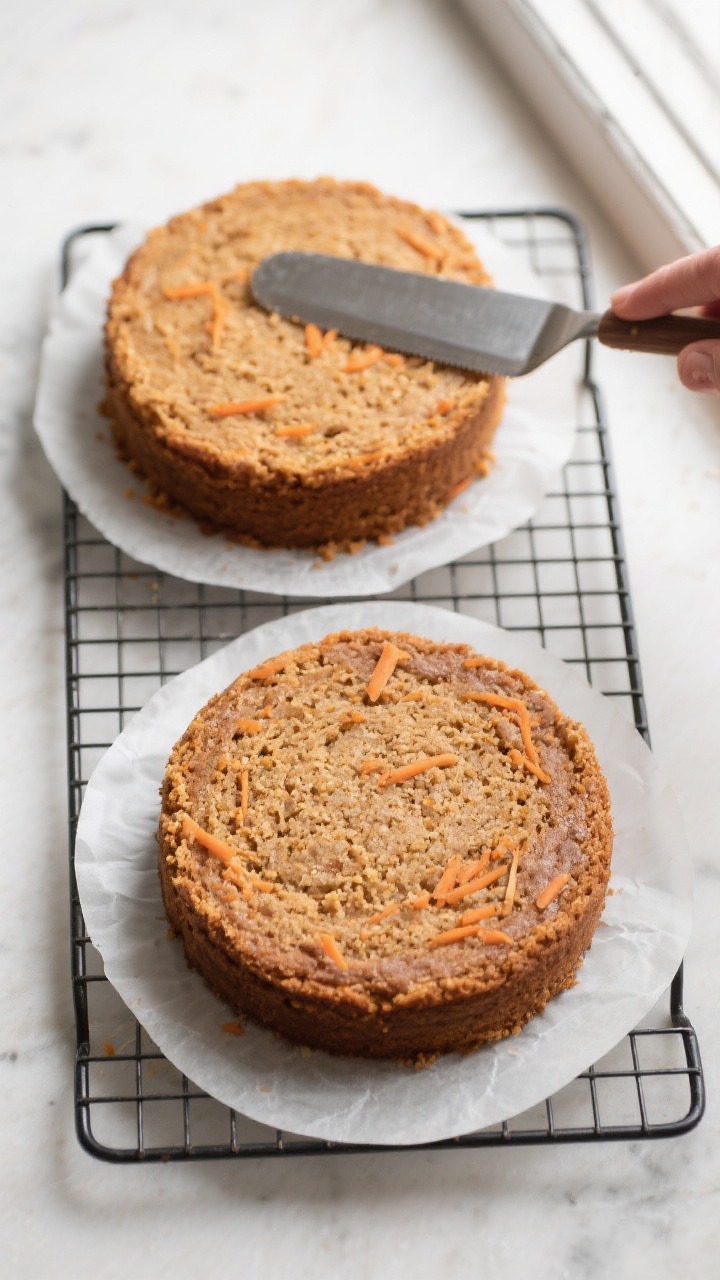
- Cool completely. Let the cakes cool in the pan for 10 minutes, then turn out onto a rack. Peel off parchment and cool fully before frosting. Warm cake will melt frosting, so be patient.
- Make the frosting. Beat the cream cheese and butter together until smooth.Add vanilla and salt. Beat in the powdered sugar, starting with 2 cups and adding more to reach a soft, spreadable consistency.
- Frost and finish. For layers, spread frosting between the cakes and over the top and sides. For a 9×13-inch cake, frost the top generously.Garnish with chopped nuts or a sprinkle of cinnamon if you like.
Keeping It Fresh
Store the frosted cake in an airtight container in the fridge for up to 5 days. The flavors deepen after the first day, and the texture stays tender. For serving, let slices sit at room temperature for about 20 minutes so the frosting softens and the crumb tastes richer.
To freeze, wrap unfrosted layers tightly in plastic and a layer of foil, then freeze for up to 2 months.
Thaw in the fridge overnight, then frost. You can also freeze individual frosted slices and thaw as needed.
Why This is Good for You
- Carrots bring fiber and natural sweetness. They add moisture and a gentle sweetness, which lets you use slightly less sugar without losing flavor.
- Balanced fats make for better texture. Oil and cream cheese create softness and satisfaction, so a small slice goes a long way.
- Gluten-free without compromise. A solid flour blend and proper leavening keep the crumb tender, so you get the classic carrot cake experience—just easier to digest for those avoiding gluten.
What Not to Do
- Don’t pack the flour. Spoon it into the measuring cup and level it off. Packed flour makes dense, dry cake.
- Don’t overmix the batter. Stir until combined.Overmixing can make the cake tough and gummy.
- Don’t skip parchment. Gluten-free cakes are more delicate when warm. Lining pans avoids tears and breakage.
- Don’t use watery pineapple. Drain it well. Excess moisture can sink the center.
- Don’t frost a warm cake. Let it cool completely or the frosting will slide and turn runny.
Variations You Can Try
- Dairy-free frosting. Use dairy-free cream cheese and vegan butter.Add a squeeze of lemon to brighten the flavor.
- Spice it up. Add 1/4 teaspoon ground ginger or cardamom for a cozy twist.
- Orange zest. Stir in 1 teaspoon fresh orange zest to the batter or frosting for a citrus lift.
- Coconut flair. Fold in 1/2 cup unsweetened shredded coconut and top with toasted coconut flakes.
- Carrot cake cupcakes. Portion into a 12-cup muffin tin with liners and bake 18–22 minutes.
- Lower sugar. Reduce granulated sugar by 2 tablespoons and add an extra tablespoon of applesauce. The cake will still be moist and flavorful.
FAQ
Do I need xanthan gum for this recipe?
If your gluten-free flour blend already includes xanthan gum, you’re set. If not, add 3/4 teaspoon xanthan gum to the dry ingredients for better structure and sliceability.
Can I make this egg-free?
Yes.
Use 3 flax eggs (1 tablespoon ground flaxseed + 3 tablespoons water per egg, rested for 5 minutes). The texture will be slightly denser but still moist and tasty.
What’s the best way to grate carrots?
Use the fine holes on a box grater or the small shredding disc on a food processor. Fine shreds blend into the batter and keep the crumb tender.
Can I skip the nuts and raisins?
Absolutely.
The cake stands on its own without them. If you want texture without nuts, try a small handful of shredded coconut instead.
How do I prevent a domed or sunken cake?
Weigh or measure ingredients carefully, don’t overmix, and bake on the center rack. Check your oven temperature with an oven thermometer; an accurate 350°F makes a big difference.
Is this recipe suitable for a 9-inch round pan?
Yes.
Use two 9-inch pans and reduce baking time slightly, checking at 22–25 minutes. The layers will be a touch thinner and bake faster.
Can I make the cake a day ahead?
Yes, and it often tastes better the next day. Bake, cool, and frost, then refrigerate overnight.
Let it sit at room temperature before serving.
Final Thoughts
This moist gluten-free carrot cake is the kind of dessert that wins over every crowd—no special disclaimer needed. It’s simple to mix, bakes up reliably, and delivers that classic spiced, carrot-rich taste with a creamy finish. Keep the method gentle, measure with care, and let the cake cool before frosting.
You’ll end up with a tender, beautiful carrot cake that feels like a small celebration every time you slice it.
Printable Recipe Card
Want just the essential recipe details without scrolling through the article? Get our printable recipe card with just the ingredients and instructions.