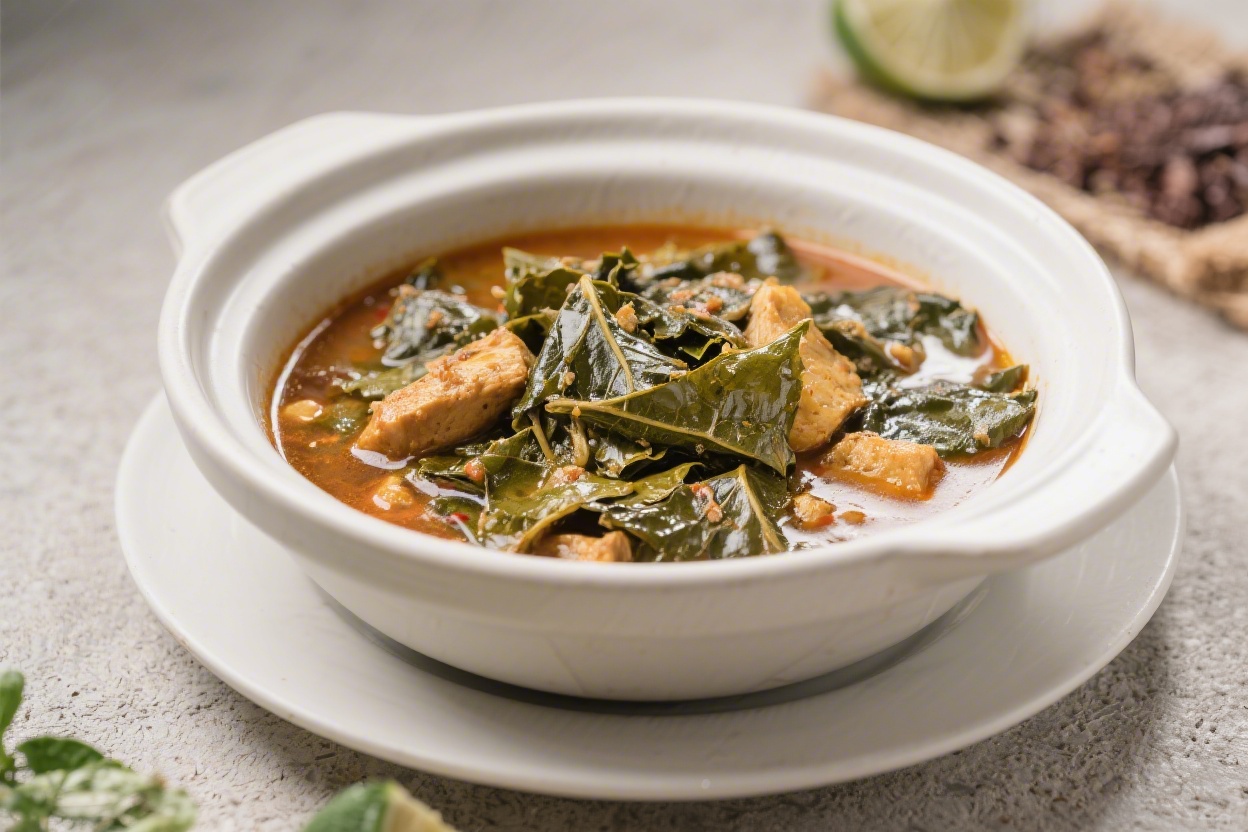
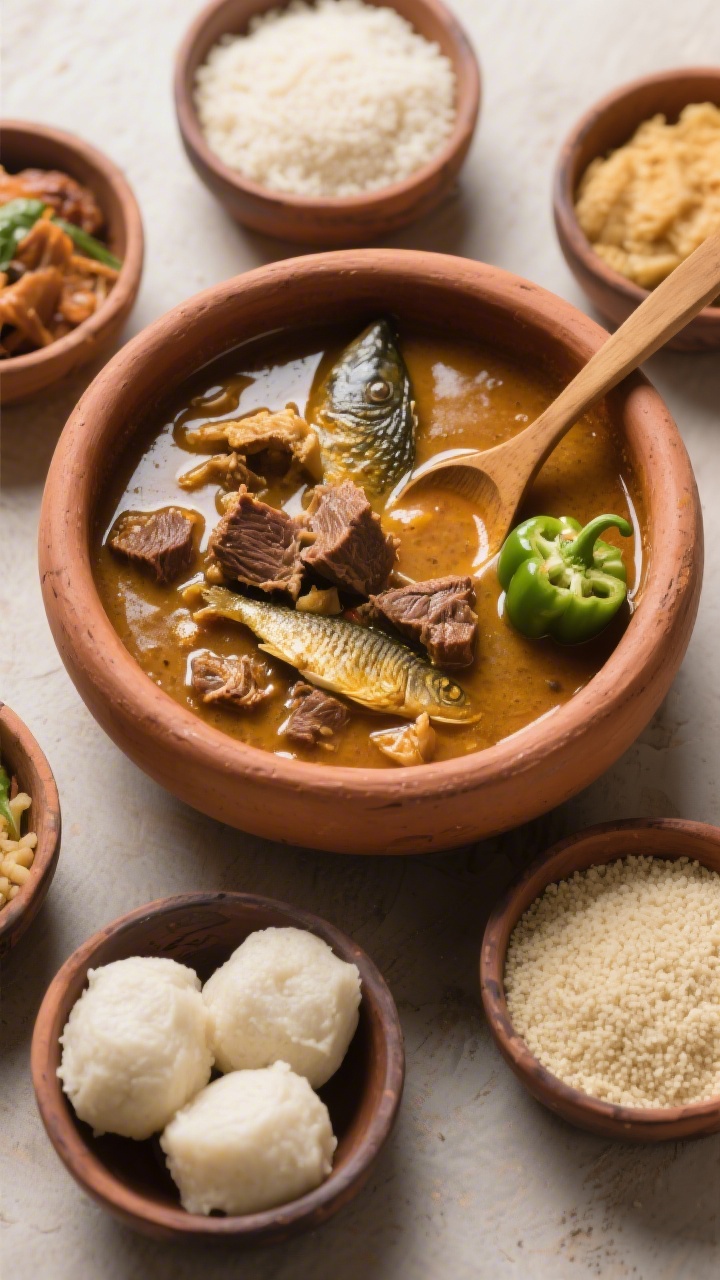
Onugbu soup, also known as bitterleaf soup, is a treasured delicacy from the Igbo people of southeastern Nigeria. It’s rich, fragrant, and deeply satisfying, with layers of flavor from meats, stockfish, palm oil, and the signature bitterleaf. The slight bitterness balances the creamy thickness of cocoyam or ofe akwu-style thickeners, creating a soul-warming bowl you’ll crave again and again.
If you’ve never cooked with bitterleaf before, don’t worry—this guide makes it simple and approachable. You’ll end up with a pot of goodness that tastes like home-cooked comfort.
Contents
- 1 What Makes This Recipe So Good
- 2 Ingredients
- 3 Instructions
- 4 Storage Instructions
- 5 Why This is Good for You
- 6 Pitfalls to Watch Out For
- 7 Variations You Can Try
- 8 FAQ
- 8.1 How do I remove the bitterness from fresh bitterleaf?
- 8.2 Can I make Onugbu soup without ogili okpei?
- 8.3 What can I use instead of cocoyam?
- 8.4 Is palm oil necessary?
- 8.5 Which swallow pairs best with Onugbu?
- 8.6 Can I cook this in an instant pot or pressure cooker?
- 8.7 How spicy should it be?
- 8.8 Why is my soup slimy or sticky?
- 9 In Conclusion
What Makes This Recipe So Good
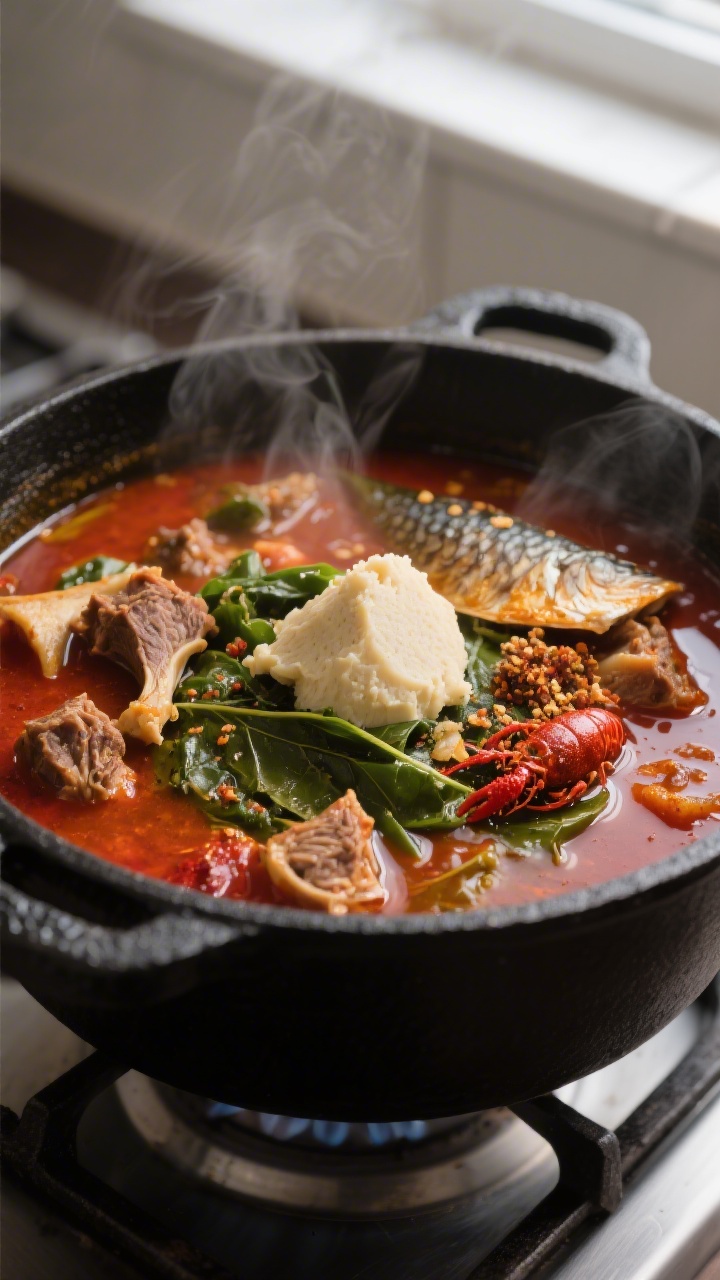
- Balanced flavors: The gentle bitterness of bitterleaf meets savory meats, umami-rich stockfish, and a silky palm-oil base.
- Authentic texture: Cocoyam paste thickens the soup to a velvety consistency that clings to each bite.
- Layered aromatics: Crayfish, ogili okpei or iru (locust beans), and smoked fish add depth you can smell and taste.
- Customizable: Works with goat, beef, or assorted offal. You can also make it leaner or heartier depending on your preference.
- Comfort food: It’s a complete meal with greens, protein, and healthy fats, especially delicious with pounded yam, fufu, semolina, or eba.
Ingredients
- 600–800 g assorted meats (beef, goat meat, tripe/shaki, cow skin/ponmo), cut into chunks
- 1–2 medium smoked fish (e.g., mackerel or catfish), cleaned and deboned
- 1 cup stockfish (head or fillets), soaked and rinsed
- 1 cup dried fish pieces (optional), rinsed
- 2–3 tablespoons ground crayfish
- 1–2 pieces ogili okpei (castor seed seasoning) or 1 tablespoon iru/locust beans (optional but recommended)
- 1/2–3/4 cup palm oil
- 6–8 cocoyam corms (ede) for thickening, or 1/2–3/4 cup cocoyam flour as a substitute
- 2 cups washed bitterleaf (onugbu), well-wrung; or fresh bitterleaf thoroughly washed to reduce bitterness
- 1–2 seasoning cubes or powder (Maggi/Knorr), to taste
- 1 small onion, chopped (optional for boiling meats)
- Salt, to taste
- Fresh Scotch bonnet (ata rodo) or ground chili, to taste (optional)
- 4–6 cups meat stock/water, as needed
Instructions
- Prep the proteins: Rinse the meats thoroughly.If using stockfish, soak in hot water for 20–30 minutes, then rinse. Clean and debone smoked fish, setting aside for later.
- Parboil and season meats: Add the tougher meats (goat, beef, tripe, cow skin) to a pot with chopped onion, salt, and a seasoning cube. Add enough water to cover.Simmer on medium until the meats begin to soften. Skim any foam.
- Add stockfish and continue simmering: Once the meats are halfway tender, add the soaked stockfish. Cook until everything is nearly done and the stock is flavorful.
- Cook the cocoyam: In a separate pot, boil the cocoyam corms (unpeeled) until soft, 20–30 minutes.Peel, then pound in a mortar or blend with a splash of warm water to form a thick, smooth paste. If using cocoyam flour, make a stiff paste with hot water.
- Add palm oil and aromatics: Pour palm oil into the meat stock. Stir in crayfish and crushed ogili okpei or iru.Allow to simmer for 5–8 minutes so the flavors bloom. Taste and adjust salt or seasoning cube.
- Thicken the soup: Add small scoops of cocoyam paste to the pot, stirring gently to dissolve. Let it simmer until the broth thickens. Add more paste if you prefer a thicker soup.
- Add smoked/dried fish: Gently fold in the smoked fish and any dried fish pieces.Simmer 5–7 minutes to infuse the soup without breaking the fish apart.
- Stir in bitterleaf: Add the washed bitterleaf. If your leaves are very bitter, rinse and squeeze again before adding. Simmer for 8–10 minutes. Taste for balance: you want a mild, pleasant bitterness, not a harsh bite.
- Finish and season: Add chili if using, then check the salt and seasoning.The soup should be savory, slightly bitter, and round on the palate with a glossy finish from palm oil.
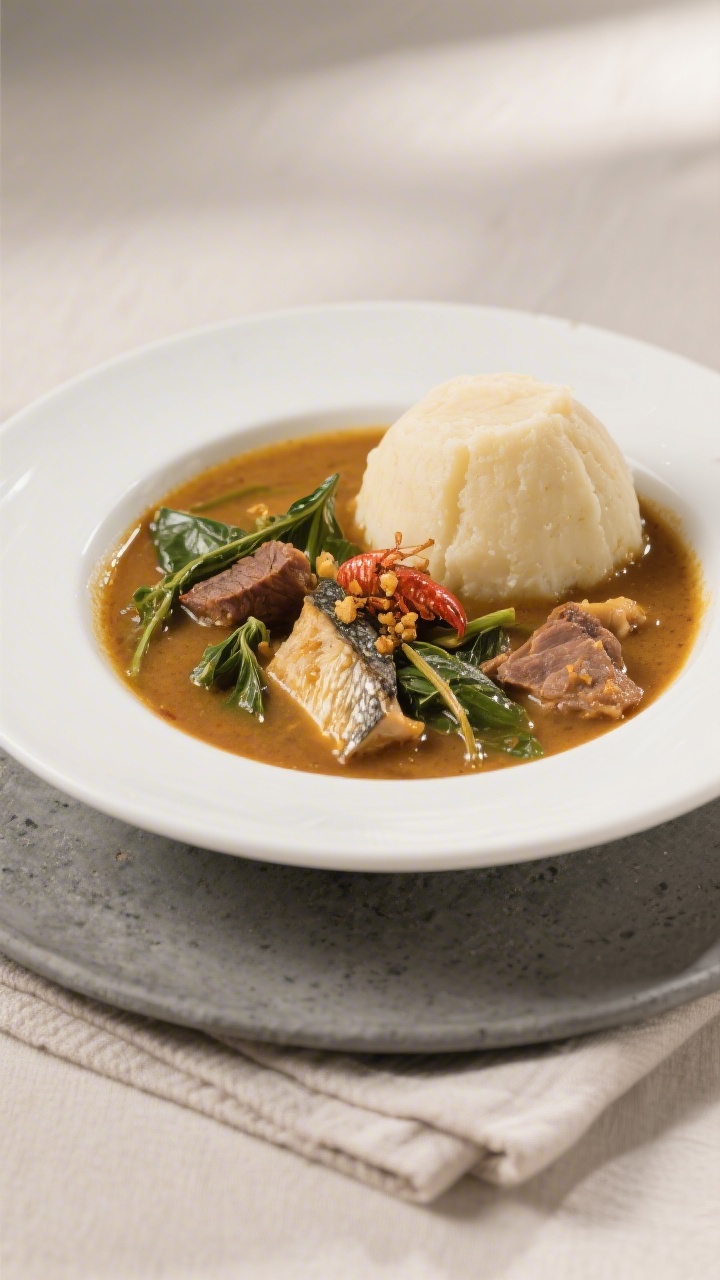
- Serve hot: Pair with pounded yam, akpu/fufu, semolina, wheat swallow, or eba. Spoon generously to enjoy the thick, rich texture.
Storage Instructions
- Refrigerator: Cool completely, then store in airtight containers for up to 4 days. The flavor often improves by day two.
- Freezer: Portion into freezer-safe containers and freeze for up to 2 months.Thaw overnight in the fridge before reheating.
- Reheating: Warm gently on low heat, adding a splash of water or stock to loosen the soup. Stir occasionally to prevent sticking.
- Avoid overcooking: Prolonged reheating can break the fish and mute the aromatics.
Why This is Good for You
- Nutrient-dense greens: Bitterleaf contains vitamins, minerals, and plant compounds. Its light bitterness can encourage digestion and appetite in some people.
- Quality protein: Assorted meats and fish provide protein, collagen, and essential amino acids for strength and satiety.
- Healthy fats: Palm oil delivers carotenoids (precursors to vitamin A) and helps you absorb fat-soluble nutrients.
- Natural thickener: Cocoyam adds body and fiber without relying on refined thickeners.
Pitfalls to Watch Out For
- Overly bitter soup: If the leaves are not thoroughly washed, the bitterness can overpower.Rinse and squeeze repeatedly until the water runs almost clear.
- Thin, watery texture: Not enough cocoyam or too much liquid will dilute the soup. Add cocoyam paste gradually and simmer to activate its thickening power.
- Bland stock: The base stock must be well-seasoned. Undersalted meats lead to a flat soup, even with spices.
- Broken fish: Stir gently after adding smoked or dried fish to keep chunks intact.
- Burning at the bottom: The thick soup can catch easily.Keep heat moderate and stir periodically, especially during reheats.
Variations You Can Try
- Leaf swap: Mix bitterleaf with ugu (fluted pumpkin) for a milder bitterness and a slightly sweeter finish.
- No cocoyam option: Use achi, ofo, or yam flour to thicken. Start with 1–2 tablespoons, whisk in, and adjust slowly.
- Seafood-forward: Skip red meat and load up on stockfish, smoked fish, and prawns for a lighter, briny profile.
- Spice profile: Add a hint of uziza seeds for warmth and mild pepperiness, but use sparingly.
- Lean version: Use lean beef and reduce palm oil slightly. Keep crayfish and ogili for depth so flavor doesn’t suffer.
FAQ
How do I remove the bitterness from fresh bitterleaf?
Rinse the leaves thoroughly, rubbing them between your palms, then squeeze out the dark water.
Repeat several times until the water is almost clear and the leaves taste only mildly bitter. Some people parboil the leaves briefly, but washing and squeezing is usually enough.
Can I make Onugbu soup without ogili okpei?
Yes. While ogili adds a signature earthy note, you can substitute iru (locust beans) or simply increase crayfish slightly.
The soup will still be delicious and robust.
What can I use instead of cocoyam?
Achi or ofo powder works as a convenient thickener. Start small and build up until the texture coats the back of a spoon. Yam flour can also help, but add gradually to avoid lumps.
Is palm oil necessary?
Palm oil gives Onugbu its classic color, aroma, and mouthfeel.
You can reduce the quantity for a lighter dish, but replacing it entirely changes the character of the soup.
Which swallow pairs best with Onugbu?
Pounded yam is a classic match because it’s smooth and neutral, letting the soup shine. Fufu (akpu), eba, or semolina are also great choices depending on preference.
Can I cook this in an instant pot or pressure cooker?
You can pressure-cook the meats and stockfish to speed up tenderness. After that, finish the soup on the stovetop, where you can better control thickness and gently fold in the fish and bitterleaf.
How spicy should it be?
It’s flexible.
Some families keep it mild to highlight the bitterleaf and umami notes, while others add Scotch bonnet for heat. Start small and adjust to taste.
Why is my soup slimy or sticky?
Overcooking some thickeners or certain fish skins can introduce a slight sliminess. Balance with more stock, simmer gently, and avoid excessive stirring.
Using cocoyam paste usually prevents this issue.
In Conclusion
Onugbu soup is comfort in a bowl—rich, gently bitter, and layered with smoky, savory flavors. With a solid stock, well-washed bitterleaf, and the right thickener, you’ll get that authentic, velvety texture every time. Serve it hot with your favorite swallow and enjoy a timeless taste of Igbo home cooking.
Once you master this method, it will quickly become a regular in your kitchen.
Printable Recipe Card
Want just the essential recipe details without scrolling through the article? Get our printable recipe card with just the ingredients and instructions.