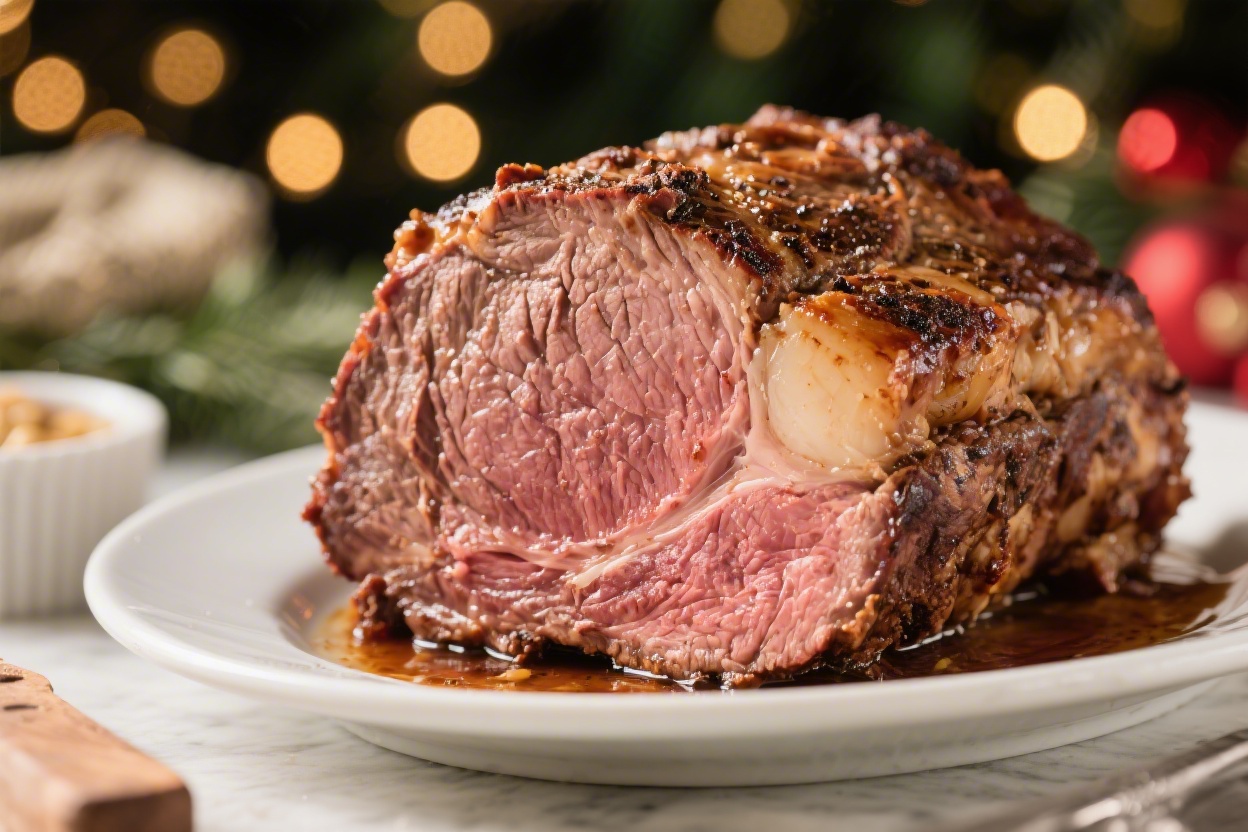
Nothing says celebration quite like a prime rib roast. It’s rich, tender, and full of big, beefy flavor that feels special without being fussy. With a few smart steps, you can get a juicy roast with a deep crust and rosy center every time.
This method keeps things simple and reliable, so you’re not glued to the oven or guessing about doneness. If you’re planning a holiday meal or a standout Sunday dinner, this roast delivers.
Contents
- 1 What Makes This Recipe So Good
- 2 Ingredients
- 3 Instructions
- 4 Keeping It Fresh
- 5 Why This is Good for You
- 6 What Not to Do
- 7 Recipe Variations
- 8 FAQ
- 8.1 How big of a roast do I need per person?
- 8.2 Should I leave the bones on or go boneless?
- 8.3 What if I don’t have a roasting rack?
- 8.4 Can I make gravy instead of au jus?
- 8.5 How do I ensure even pink from edge to edge?
- 8.6 What temperature is safe for beef?
- 8.7 Can I cook it ahead?
- 8.8 My crust isn’t dark enough—now what?
- 9 Final Thoughts
What Makes This Recipe So Good
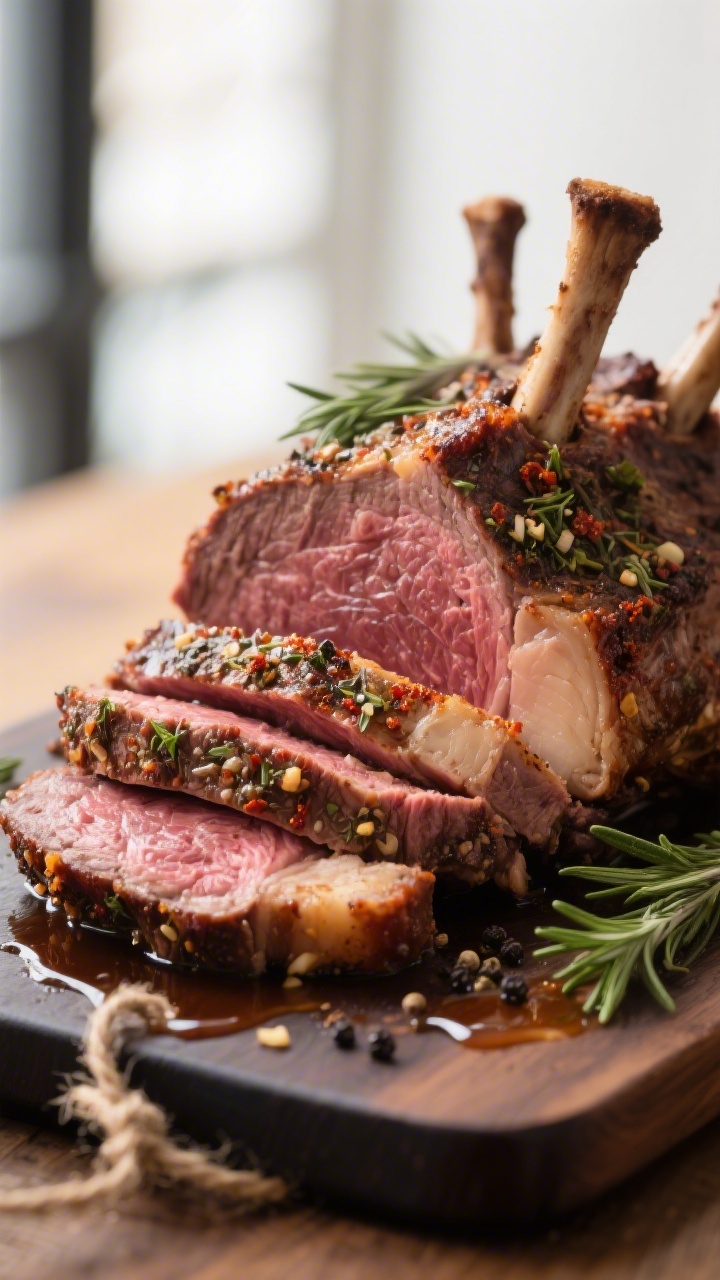
- Juicy interior, crisp crust: A high-heat sear followed by a lower roast gives you a caramelized exterior and a tender center.
- Foolproof timing: A quick dry brine and a meat thermometer take the guesswork out of cooking prime rib.
- Simple seasoning: Garlic, salt, pepper, and herbs let the beef shine.
- Flexible doneness: You can target rare to medium doneness easily, depending on your guests’ preferences.
- Make-ahead friendly: Season ahead, let it chill uncovered, and you’re halfway to perfect texture and flavor.
Ingredients
- 1 bone-in prime rib roast (4–6 bones, about 8–12 pounds), or boneless if you prefer
- 2 tablespoons kosher salt (Diamond Crystal; use less if using Morton’s)
- 2 teaspoons freshly ground black pepper
- 1 tablespoon garlic powder
- 4 cloves fresh garlic, minced
- 2 tablespoons fresh rosemary, finely chopped (or 2 teaspoons dried)
- 1 tablespoon fresh thyme leaves, chopped (or 1 teaspoon dried)
- 2–3 tablespoons olive oil or softened unsalted butter
- Optional: 1 teaspoon smoked paprika for subtle warmth
- For the pan: 1 cup low-sodium beef broth or water
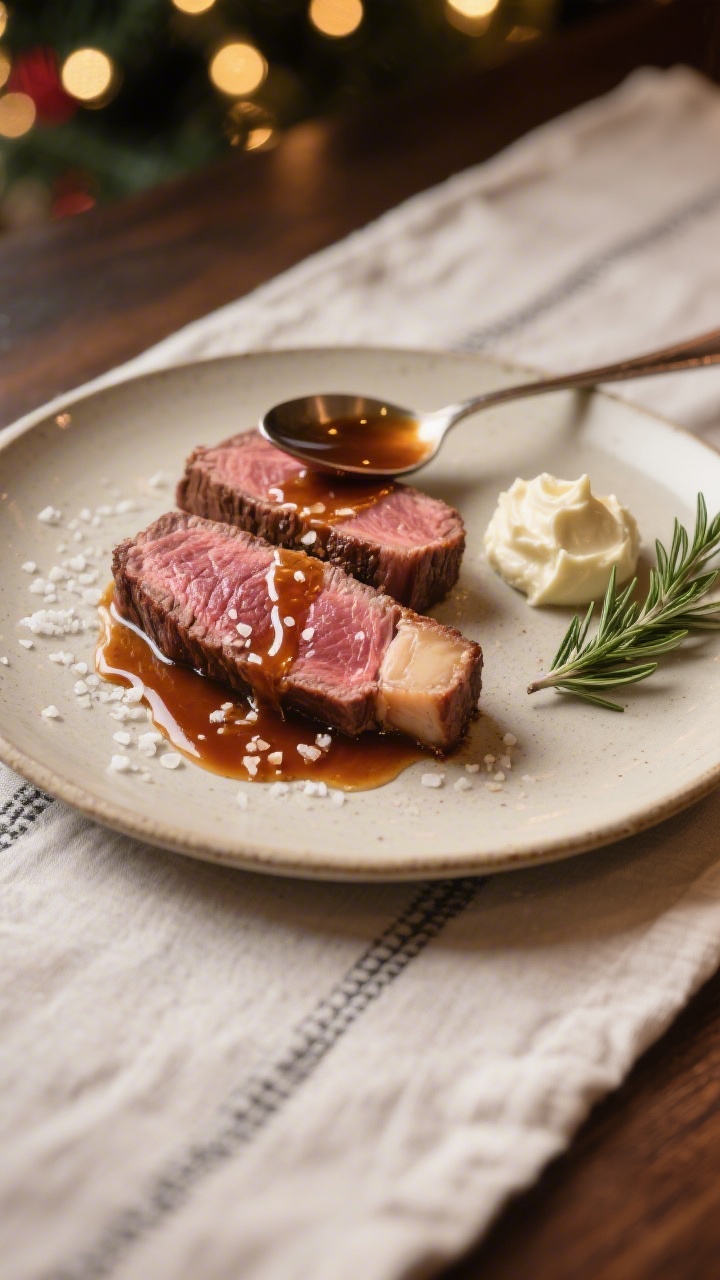
- For serving: Flaky sea salt, creamy horseradish, or au jus
Instructions
- Prep the roast (day before): Pat the beef dry with paper towels. If it’s bone-in and not already tied, ask your butcher to tie the bones back on or tie them yourself with kitchen twine.Rub all over with kosher salt. Place on a rack set over a sheet pan, uncovered, in the fridge for 12–24 hours. This dry brine seasons the meat and helps the crust form.
- Bring to room temp: Take the roast out of the fridge 1–2 hours before cooking.This helps it cook evenly.
- Heat the oven: Preheat to 450°F (232°C). Position a rack in the lower third so the roast sits centered.
- Season and oil: In a small bowl, mix black pepper, garlic powder, minced garlic, rosemary, thyme, and olive oil or butter. Rub it all over the roast, pressing it into the surface.If using smoked paprika, add it now. Keep the fat cap on top.
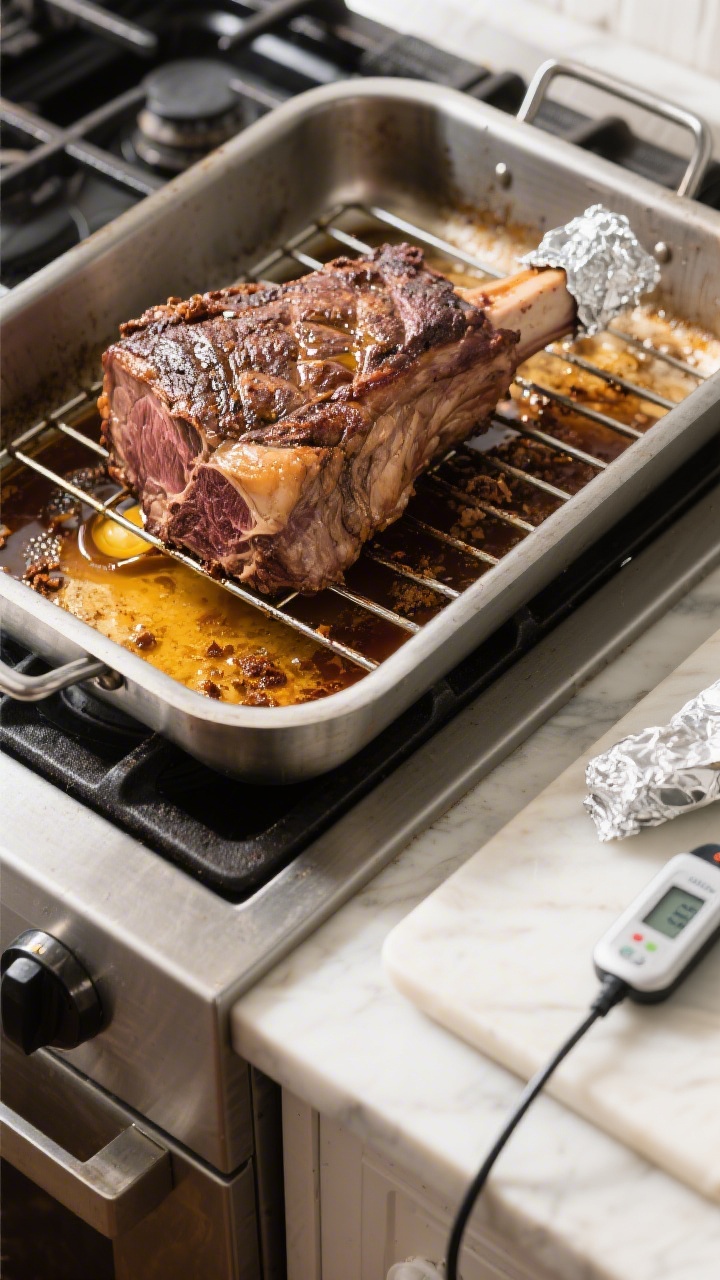
- Set up the pan: Place the roast on a roasting rack inside a sturdy roasting pan. Pour beef broth or water into the pan to prevent drips from burning and to jump-start pan juices.
- Initial high-heat roast: Roast at 450°F for 20–25 minutes until the exterior starts to brown and sizzle.This creates a flavorful crust.
- Lower the heat: Reduce oven to 325°F (163°C). Continue roasting until it reaches your target internal temperature. Use a probe thermometer inserted into the center, avoiding bone.
- Know your temps: Pull the roast at 118–120°F for rare, 125°F for medium-rare, or 132°F for medium.It will rise 5–7°F as it rests. For most holiday tables, pull at 125°F for a perfect medium-rare finish around 130–132°F.
- Rest well: Transfer the roast to a board and tent loosely with foil. Rest 30–45 minutes.This is important—juices redistribute and the roast becomes tender and sliceable.
- Make quick au jus: While the roast rests, set the pan on the stove over medium heat. Skim excess fat, leaving about 2 tablespoons. Add a splash more broth, scrape up browned bits, and simmer 3–5 minutes.Season with salt and pepper to taste. Strain if you like.
- Slice and serve: Remove twine. If bone-in, slide a knife along the bones to remove the roast, then slice into 1/2- to 3/4-inch slices across the grain.Sprinkle with a little flaky salt, and serve with au jus and horseradish.
Keeping It Fresh
- Storage: Refrigerate leftovers in an airtight container for up to 4 days. Keep slices intact rather than cubed to retain moisture.
- Reheating: Warm gently. Place slices in a 250°F oven, covered, for 10–15 minutes, or heat in a covered skillet with a splash of broth over low heat.Avoid microwaving on high—it dries the meat.
- Freezing: Wrap tightly in plastic, then foil, and freeze up to 2 months. Thaw overnight in the fridge.
- Use leftovers: Try steak sandwiches, hash with eggs, or thin slices over a crisp salad with creamy dressing.
Why This is Good for You
- High-quality protein: Prime rib offers complete protein that supports muscle repair and satiety.
- Iron and B vitamins: It’s rich in iron, zinc, B12, and niacin, which support energy and immune function.
- Satisfying and balanced: Pair with roasted vegetables and a fresh salad for fiber and micronutrients. A small portion goes a long way.
- Homemade control: You manage the salt, fat, and seasoning, making it better than many restaurant versions.
What Not to Do
- Don’t skip the rest: Cutting too soon will spill precious juices onto the board instead of keeping them in the meat.
- Don’t rely on time alone: Ovens vary. Use a thermometer for consistent results.
- Don’t over-salt with the wrong brand: Kosher salts vary in crystal size.If using Morton’s, use about 25–30% less than Diamond Crystal.
- Don’t roast straight from the fridge: Cold centers cook unevenly and can overshoot on the exterior.
- Don’t trim off the fat cap: It bastes the meat and builds flavor and crust.
Recipe Variations
- Herb-crusted: Add finely chopped parsley and a little Dijon mustard under the herb rub for extra fragrance and adhesion.
- Garlic-stud: Make small slits across the surface and tuck in slivers of garlic and rosemary. Brush with olive oil and proceed.
- Coffee and pepper rub: Mix 1 tablespoon finely ground coffee with black pepper and a pinch of brown sugar for a subtle, toasty crust.
- Reverse sear: Roast low at 225°F until 10°F below your target, rest 20 minutes, then blast at 500°F for 6–10 minutes to finish the crust.
- Boneless approach: Cook the same way, but start checking temperature a bit earlier. Boneless roasts cook slightly faster.
- Smoker finish: Smoke at 225°F with oak or hickory until nearly done, then finish in a hot oven for a crust.Expect a pink smoke ring and deep flavor.
FAQ
How big of a roast do I need per person?
Plan about 1 pound per person for bone-in roasts, or 3/4 pound per person for boneless. Holiday meals with lots of sides can stretch a bit further.
Should I leave the bones on or go boneless?
Both are great. Bone-in helps insulate the meat and makes a dramatic presentation.
Boneless is easier to slice. You can have the butcher cut the bones off and tie them back on for the best of both worlds.
What if I don’t have a roasting rack?
Make a bed of roughly chopped onions, carrots, and celery under the roast. It lifts the meat and flavors the drippings for an even better au jus.
Can I make gravy instead of au jus?
Yes.
After skimming fat, whisk 1–2 tablespoons flour into the pan over medium heat, cook 1 minute, then slowly add broth, whisking, until smooth and slightly thickened. Season to taste.
How do I ensure even pink from edge to edge?
Use the reverse-sear method or keep the oven lower after the initial sear. A steady 250–275°F cook gives a more uniform doneness with less gray banding.
What temperature is safe for beef?
The USDA recommends 145°F with a rest.
Many prefer prime rib at medium-rare around 130–135°F after resting. Choose based on your comfort level, and always rest the meat.
Can I cook it ahead?
You can cook it slightly under your target, rest, then rewarm gently at 250°F until it reaches your desired serving temp. It won’t be quite as perfect as fresh, but it works for timing.
My crust isn’t dark enough—now what?
Increase heat to 450–500°F for the last 5–10 minutes, or give it a quick broil while watching closely.
Don’t walk away.
Final Thoughts
A great prime rib roast is more about technique than tricks. Season well, control temperature, use a thermometer, and give it time to rest. The result is a juicy, rosy centerpiece with a crackling crust that feels special without stress.
Serve it with simple sides, pass the au jus and horseradish, and enjoy the kind of meal people remember.
Printable Recipe Card
Want just the essential recipe details without scrolling through the article? Get our printable recipe card with just the ingredients and instructions.