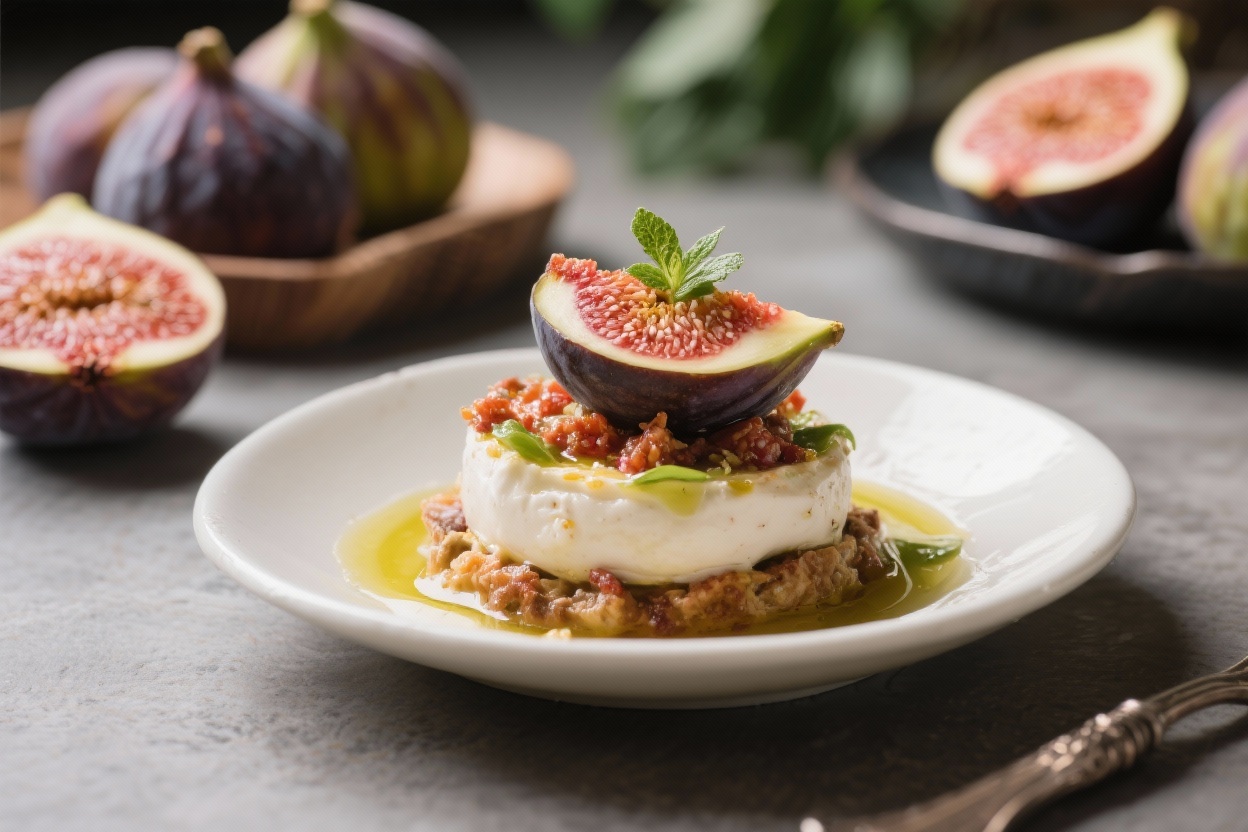
Fresh fig season is short, so when they’re at their peak, it’s worth making the most of them. Sweet, floral, and naturally jammy, figs shine in both savory and sweet dishes. This guide gives you a handful of easy, flexible recipes you can mix and match during fig season.
You’ll get ideas for a quick salad, a simple crostini, an easy roast, and a no-bake dessert. Everything is straightforward, uses common pantry items, and highlights the figs without fuss.
Contents
What Makes This Recipe So Good
- Peak-season flavor: Fresh figs taste best when they’re soft, plump, and slightly yielding. These recipes keep the focus on their natural sweetness.
- Minimal prep: Most steps are quick—slice, drizzle, toast, and you’re done.
- Balanced flavors: Figs love salty cheese, peppery greens, toasty nuts, and tangy vinaigrette.These pairings make every bite pop.
- Flexible format: Use the same ingredients across a salad, crostini, roast, or dessert. It’s easy to scale for a weeknight or a party.
- No exotic tools: Just a knife, baking sheet, and skillet. Optional grill or toaster for extra flair.
Ingredients
These ingredients cover four core recipes: a Fig and Arugula Salad, Fig and Goat Cheese Crostini, Roasted Chicken with Figs and Shallots, and Honeyed Yogurt with Figs and Pistachios.
Mix and match based on what you have.
- Fresh ripe figs (8–12, depending on recipe)
- Arugula or mixed greens (4 cups)
- Goat cheese or feta (4–6 ounces)
- Ricotta or plain Greek yogurt (1 cup)
- Baguette or crusty bread (1 loaf), sliced
- Extra-virgin olive oil
- Balsamic vinegar or balsamic glaze
- Honey or maple syrup
- Lemon (1), for juice and zest
- Shallots (2), thinly sliced
- Chicken thighs, bone-in, skin-on (4–6)
- Fresh thyme or rosemary
- Pistachios or walnuts, roughly chopped (1/3 cup)
- Sea salt and freshly ground black pepper
- Optional: Prosciutto, burrata, blue cheese, chili flakes, vanilla, cinnamon
Step-by-Step Instructions
1) Fig and Arugula Salad with Goat Cheese and Pistachios
- Prep the figs: Rinse gently, pat dry, and trim the stems. Slice into halves or quarters.
- Make the dressing: Whisk 3 tablespoons olive oil, 1 tablespoon balsamic, 1 teaspoon honey, a squeeze of lemon, salt, and pepper.
- Assemble: Toss arugula with half the dressing. Top with figs, crumbled goat cheese, and pistachios.
- Finish: Drizzle remaining dressing and add a crack of pepper.Serve immediately.
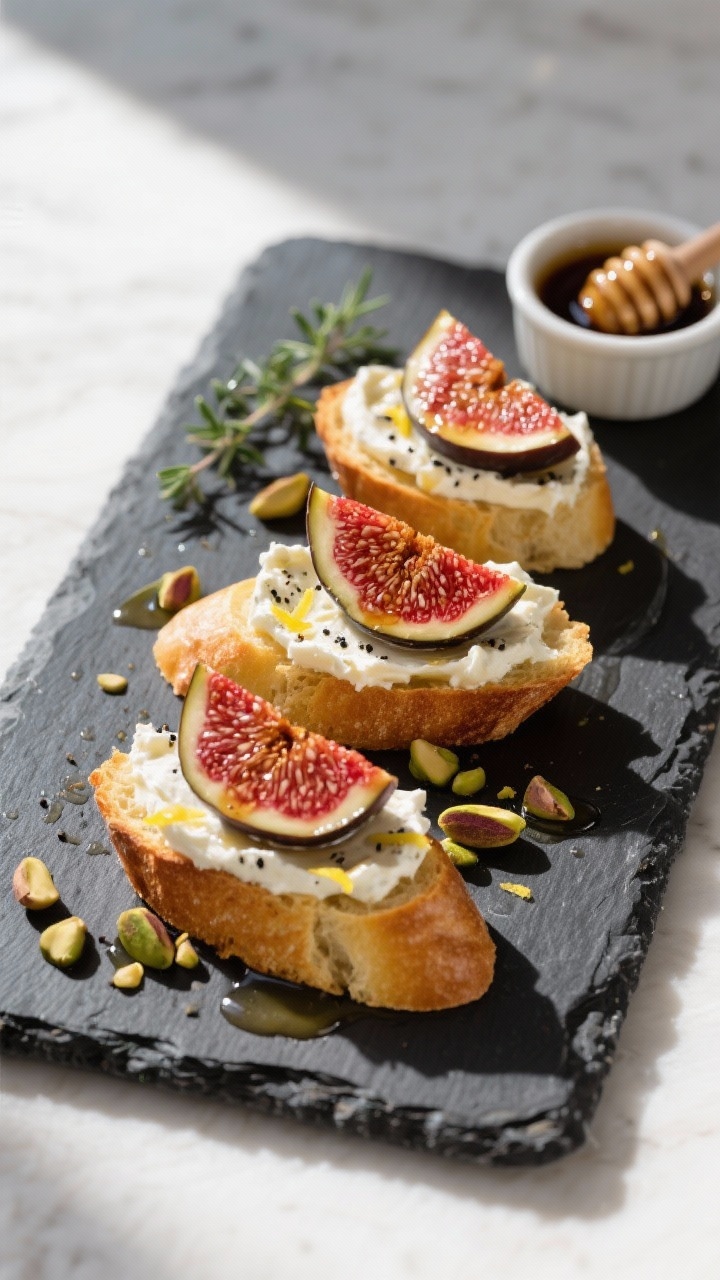
2) Fig and Goat Cheese Crostini
- Toast the bread: Brush sliced baguette with olive oil. Toast in a 400°F (200°C) oven for 6–8 minutes until golden.
- Spread: Mix goat cheese with a touch of lemon zest and black pepper. Spread on warm crostini.
- Top: Add fig slices and a light drizzle of honey.Finish with chopped pistachios or a few thyme leaves.
- Optional: Add a paper-thin slice of prosciutto under the figs for a salty contrast.
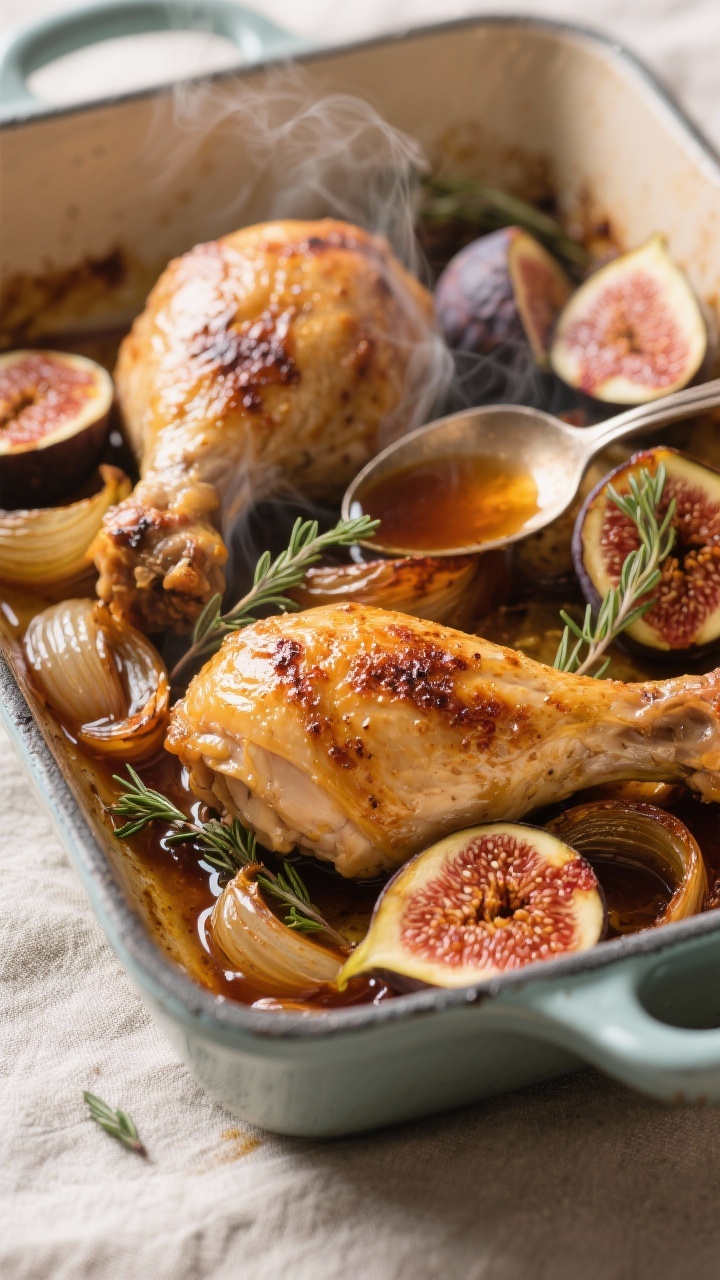
3) Roasted Chicken with Figs and Shallots
- Season chicken: Pat dry. Rub with olive oil, salt, pepper, and chopped rosemary or thyme.
- Set the pan: In a baking dish, scatter sliced shallots and a few sprigs of herbs. Nestle the chicken on top.
- Roast: Bake at 425°F (220°C) for 30 minutes.
- Add figs: Add halved figs around the chicken.Drizzle 1 tablespoon balsamic and 1 teaspoon honey over the pan. Roast 10–15 more minutes, until chicken is 165°F (74°C) and the figs are jammy.
- Serve: Spoon pan juices over the chicken. Great with roasted potatoes or a simple salad.
4) Honeyed Yogurt with Figs and Pistachios
- Sweeten the yogurt: Stir 1 cup Greek yogurt with 1–2 teaspoons honey and a pinch of vanilla or cinnamon.
- Top: Add sliced figs, chopped pistachios, and a final drizzle of honey.
- Make it special: Add lemon zest or a few flakes of sea salt for contrast.
Storage Instructions
- Fresh figs: Keep in a single layer in the fridge.Use within 2–3 days for best texture. Do not wash until ready to use.
- Salad: Best eaten right away. If prepping ahead, keep dressing separate and slice figs just before serving.
- Crostini components: Toast bread up to a day ahead and store airtight.Assemble just before serving.
- Roasted chicken: Refrigerate leftovers in a sealed container for up to 3 days. Reheat gently so figs don’t burn.
- Honeyed yogurt: Store the yogurt base for 3–4 days. Add figs and nuts right before eating to keep them fresh and crunchy.
Why This is Good for You
- Fiber-rich: Figs support digestion and help keep you satisfied.
- Natural sweetness: They add sweetness without heavy refined sugar, especially when paired with yogurt or salad greens.
- Balanced plates: Pairing figs with protein (chicken, yogurt) and healthy fats (olive oil, nuts) creates a steady, satisfying meal.
- Micronutrients: Figs offer potassium and antioxidants, while greens and nuts add vitamins and minerals.
Common Mistakes to Avoid
- Using underripe figs: Hard figs lack flavor.Choose soft, fragrant fruit that yields slightly to pressure.
- Overdressing salads: Too much vinaigrette drowns the figs. Start light and add more only if needed.
- Assembling crostini too early: The bread gets soggy. Spread and top right before serving.
- Overcooking figs: In the roast, add figs toward the end so they stay plump and jammy, not shriveled.
- Skipping acid: A splash of lemon or balsamic brightens the figs and balances sweetness.
Alternatives
- Cheese swaps: Use feta, burrata, blue cheese, or ricotta instead of goat cheese.Each brings a different kind of creaminess or tang.
- Greens: Arugula is peppery, but baby spinach or little gem lettuce works well too.
- Nuts and seeds: Walnuts, almonds, pecans, or toasted pumpkin seeds add crunch if pistachios aren’t on hand.
- Sweeteners: Maple syrup stands in for honey. Balsamic glaze also adds sweetness and tang.
- Proteins: Swap chicken thighs for pork tenderloin in the roast, or add thin slices of prosciutto to salads and crostini.
- Dessert twist: Layer figs over store-bought vanilla ice cream with chopped nuts and a thread of honey for a two-minute treat.
FAQ
How can I tell when fresh figs are ripe?
Look for figs that are soft to the touch, fragrant, and slightly wrinkled near the stem. They should not be hard.
A ripe fig may have a tiny drop of nectar at the base.
Do I need to peel figs?
No. The skin is thin and edible. Just rinse, pat dry, and trim the stem.
If the skin seems very thick, slice the figs to expose the soft interior.
Can I use dried figs instead?
You can, but the results will be different. Rehydrate dried figs in warm water or tea for 10–15 minutes and pat dry. They work best in the roast or chopped into salads.
What if I can’t find goat cheese?
Use feta for a salty kick, ricotta for mild creaminess, or blue cheese for bold flavor.
Adjust salt and honey to keep the balance right.
How long do figs last?
Fresh figs are delicate. Store them in the fridge and use within 2–3 days. If they become overly soft, use them in the roast or a quick compote.
Can I make the roast with boneless chicken?
Yes.
Reduce cooking time and check for doneness earlier. Boneless thighs usually cook in 20–25 minutes at 425°F (220°C); add figs for the last 8–10 minutes.
What wines pair well with fig dishes?
Try a crisp Sauvignon Blanc with the salad, a light Pinot Noir with the roast, and a Moscato or late-harvest Riesling with dessert. Sparkling wine works across the board.
Final Thoughts
Fresh figs deserve simple treatment and good company on the plate.
With a few pantry staples—olive oil, lemon, cheese, and nuts—you can turn a small basket of figs into multiple meals and snacks. Keep the flavors balanced, handle the fruit gently, and serve soon after slicing. When figs are in season, let them lead the way and keep everything else effortless.
Printable Recipe Card
Want just the essential recipe details without scrolling through the article? Get our printable recipe card with just the ingredients and instructions.