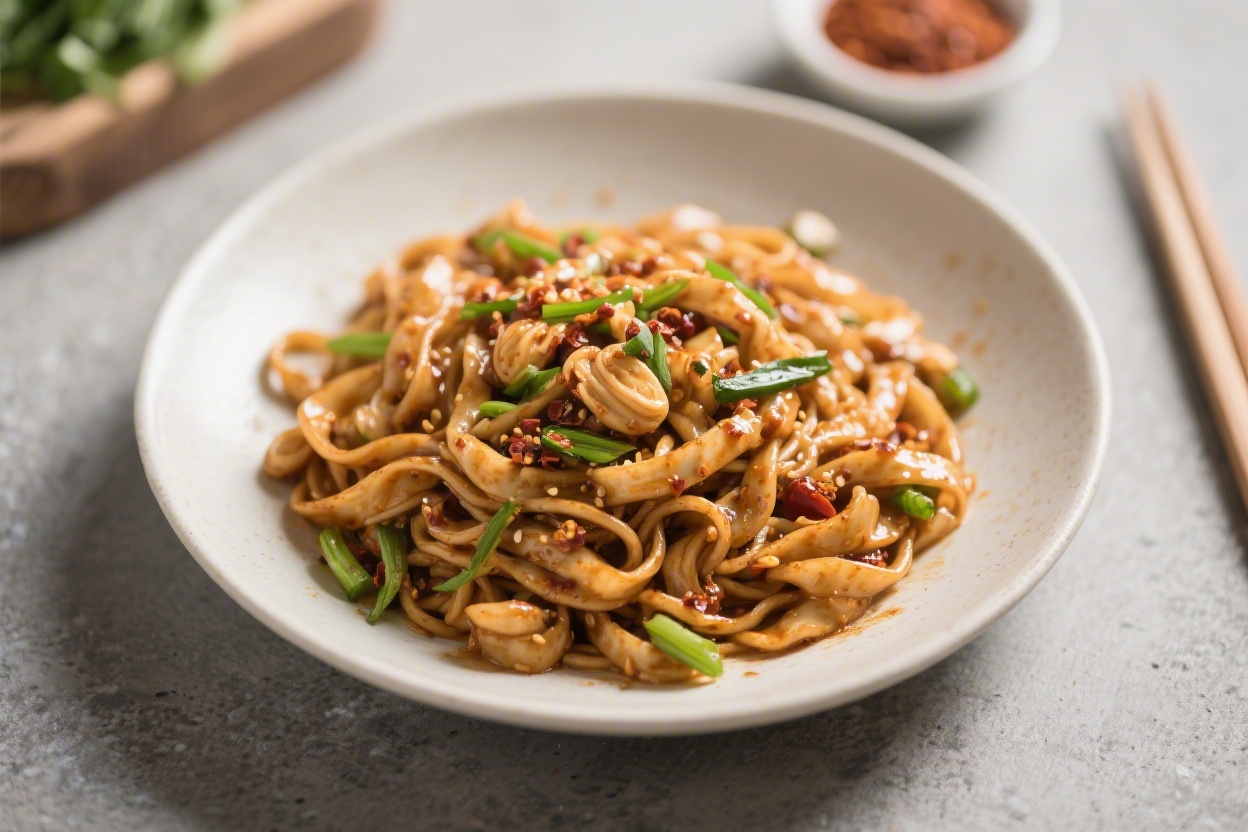
These spicy peanut noodles are the kind of dish you crave on a busy weeknight: bold, creamy, and ready in minutes. The sauce is silky and richly flavored, with a kick that wakes everything up. It clings to the noodles just right and plays well with crunchy veggies and fresh herbs.
You don’t need fancy ingredients or special techniques—just a few pantry staples and about 20 minutes. If you love meals that taste like takeout but are easier, cheaper, and brighter, this recipe is for you.
Contents
What Makes This Recipe So Good
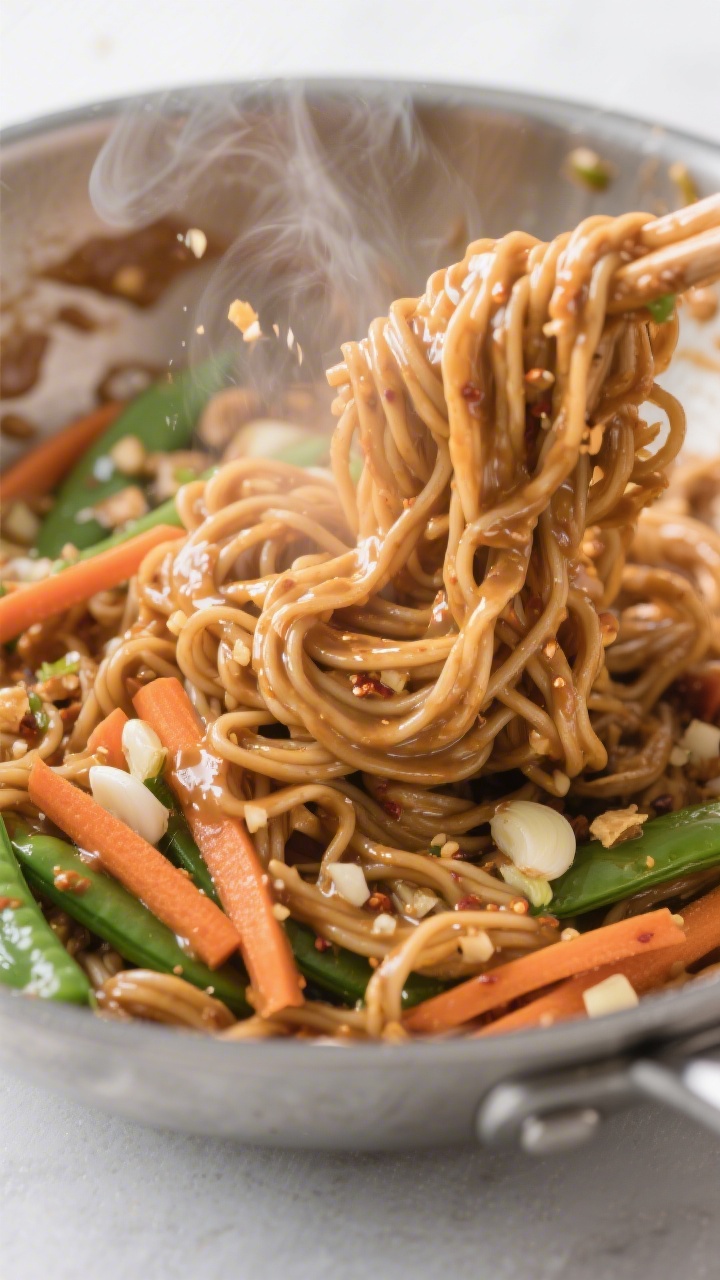
- Fast and fuss-free: Ready in 20 minutes, with minimal chopping and one pot for noodles.
- Packed with flavor: Creamy peanut butter, chili heat, tangy lime, and savory soy combine into a well-balanced sauce.
- Super flexible: Use any noodles you have and toss in whatever crunchy vegetables you like.
- Meal-prep friendly: The sauce keeps well and can be made ahead for faster weeknights.
- Comforting yet fresh: Rich, nutty flavors balanced with crisp veggies and herbs so it never feels heavy.
What You’ll Need
- Noodles: 10–12 oz dried noodles (spaghetti, linguine, rice noodles, soba, or ramen without the seasoning packet)
- Peanut butter: 1/2 cup creamy peanut butter (natural or conventional; see tips below)
- Soy sauce or tamari: 1/4 cup for salty, umami depth
- Rice vinegar: 2 tablespoons for brightness (or use lime juice)
- Lime juice: 1 tablespoon fresh, plus more to taste
- Chili heat: 1–2 tablespoons chili-garlic sauce or sriracha; or 1–2 teaspoons chili flakes for a drier heat
- Sweetener: 1–2 tablespoons honey, maple syrup, or brown sugar to balance
- Sesame oil: 1 tablespoon toasted for aroma
- Garlic: 2–3 cloves, minced (or 1 teaspoon garlic powder if you’re in a rush)
- Ginger: 1 teaspoon fresh grated or 1/2 teaspoon ground
- Warm water: 1/3–1/2 cup to thin the sauce to a pourable consistency
- Vegetables: 2 cups total of thinly sliced bell peppers, cucumber, carrots, snap peas, or shredded cabbage
- Herbs: A handful of cilantro, scallions, or Thai basil for freshness
- Crunch: 1/4 cup roasted peanuts, chopped; or toasted sesame seeds
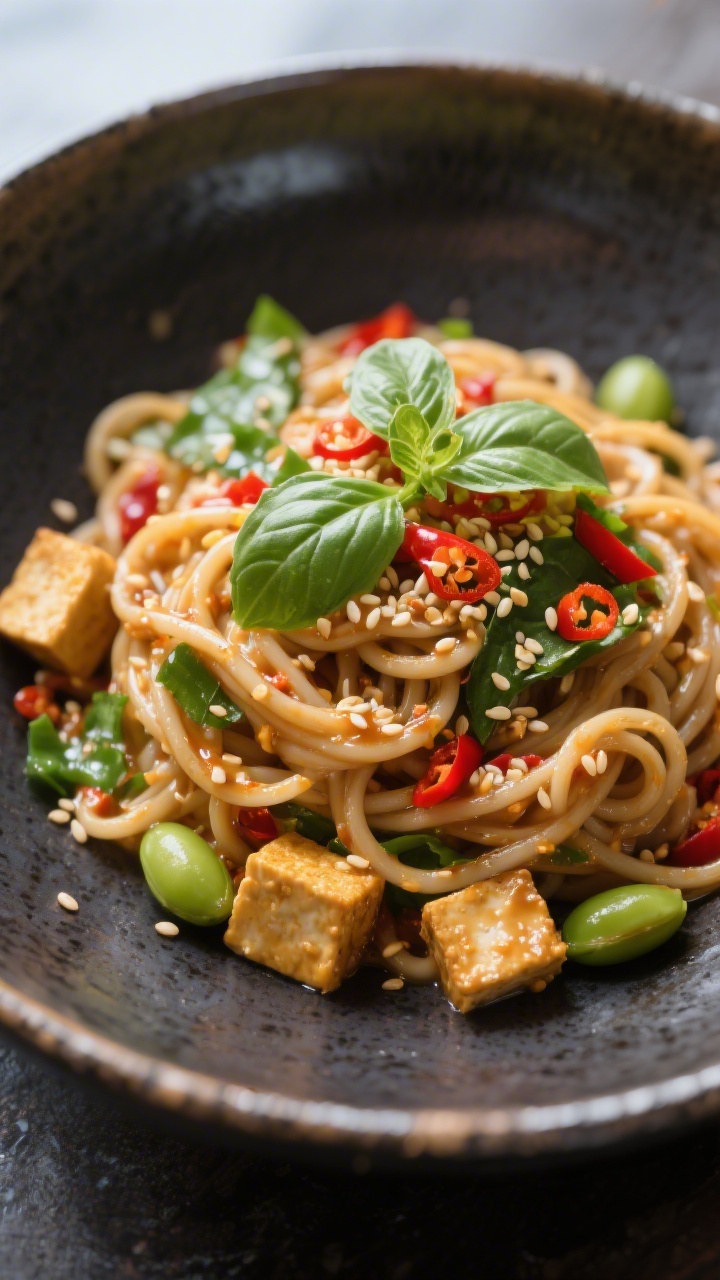
- Optional protein: Cooked shredded chicken, baked tofu, shrimp, or edamame
- Optional extras: Fish sauce (1–2 teaspoons) for depth, white pepper for gentle heat
How to Make It
- Cook the noodles: Boil according to package directions until just tender. Reserve 1/2 cup of the starchy cooking water, then drain and rinse briefly if using noodles that tend to stick (like rice noodles).
- Whisk the sauce: In a bowl, combine peanut butter, soy sauce, rice vinegar, lime juice, chili-garlic sauce, sweetener, sesame oil, garlic, and ginger.Add warm water a little at a time, whisking until smooth and slightly loose. It should be creamy and pourable.
- Taste and adjust: Balance is key. Add more lime for brightness, more soy for salt, more sweetener to round out sharp edges, or more chili for heat.
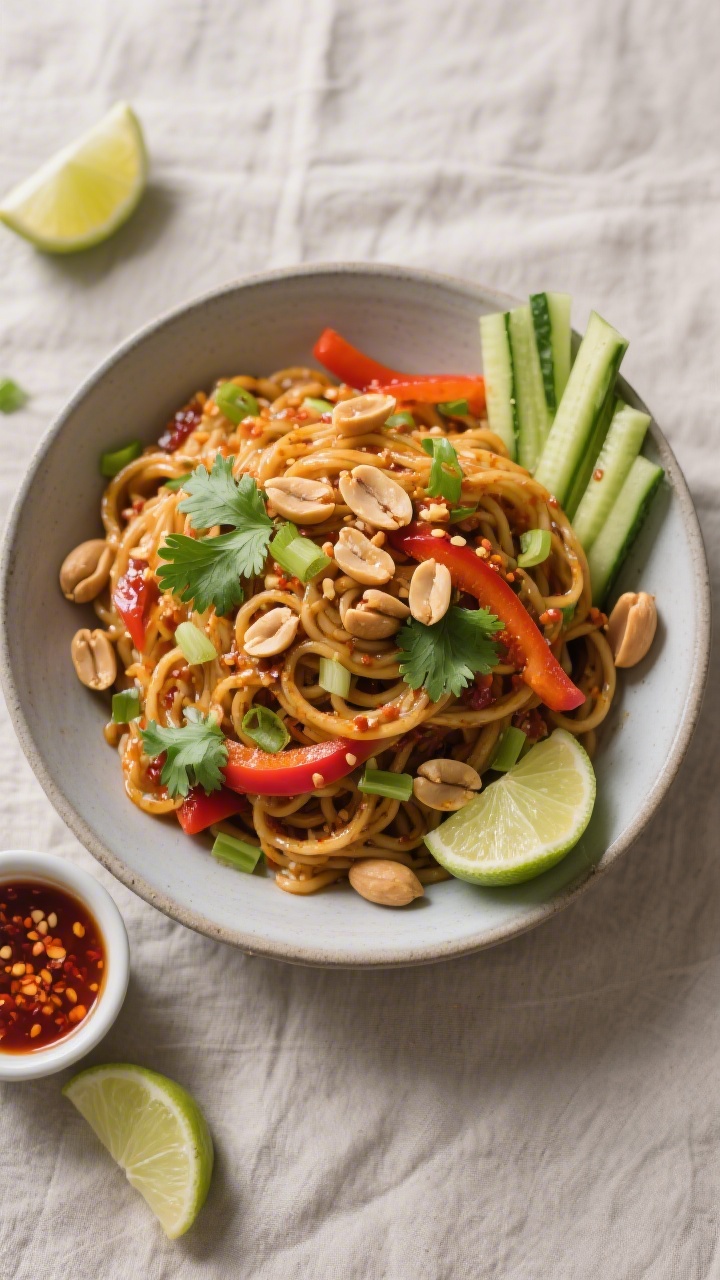
- Toss everything together: In a large bowl, add warm noodles, vegetables, and protein if using.Pour in the sauce and toss until every strand is coated. If it’s too thick, splash in reserved cooking water to loosen.
- Finish with freshness: Top with herbs and chopped peanuts. A final squeeze of lime wakes it up.
- Serve warm or cold: These noodles are delicious straight away, slightly warm, or chilled as a hearty salad.
Keeping It Fresh
- Storage: Refrigerate leftovers in an airtight container for up to 3–4 days.The sauce thickens as it chills—just add a splash of water or lime juice and toss.
- Make-ahead sauce: Whisk the sauce up to 1 week in advance and store in a jar. Thin with warm water before using.
- Prep smart: Keep noodles, veggies, and protein stored separately if you want to maintain maximum crunch. Combine right before serving.
- Lunch box tip: Pack with extra lime wedges and peanuts so you can refresh the texture and flavor right before eating.
Health Benefits
- Protein and healthy fats: Peanut butter and peanuts add plant-based protein and monounsaturated fats that help keep you full.
- Fiber and vitamins: Colorful veggies contribute fiber, vitamin C, and phytonutrients for overall wellness.
- Customizable nutrition: Use whole-grain or buckwheat noodles for extra fiber, and add tofu, chicken, or edamame for more protein.
- Reduced sodium options: Choose low-sodium soy sauce and season to taste so you control the salt.
Pitfalls to Watch Out For
- Too-thick sauce: Peanut butter stiffens quickly.Thin gradually with warm water until silky. Don’t be shy about adding more.
- Under-seasoning: Taste as you go. The right balance of salty, tangy, sweet, and spicy makes the dish sing.
- Soggy noodles: Don’t overcook.Aim for just tender, then toss with sauce promptly to prevent clumping.
- Heat level surprises: Different chili sauces vary. Start small and build up, especially if serving kids or guests.
- Separating sauce: Natural peanut butter can split. Whisk well and use warm water to emulsify.
Recipe Variations
- Sesame boost: Add 1 tablespoon tahini and extra toasted sesame oil for deeper nuttiness.
- Coconut twist: Swap half the water for light coconut milk for a richer, creamier sauce.
- Extra-green version: Toss in steamed broccoli, edamame, and spinach for a veggie-heavy bowl.
- Chicken peanut noodles: Shred rotisserie chicken and warm it gently in the sauce before tossing with noodles.
- Tofu stir-in: Crisp up cubed firm tofu in a skillet with a touch of oil and soy sauce, then add to the noodles.
- Gluten-free: Use rice noodles or gluten-free spaghetti and tamari instead of soy sauce.
- No-peanut option: Use almond butter, cashew butter, or sunflower seed butter and adjust sweetness and salt to taste.
- Cold noodle salad: Chill the noodles completely, toss with extra veggies and herbs, and finish with a zippy lime-forward sauce.
FAQ
Can I make these noodles ahead of time?
Yes.
Cook the noodles and prep the sauce up to a day ahead. Store them separately and toss together right before serving, thinning the sauce as needed.
What kind of noodles work best?
Spaghetti is reliable and widely available. Rice noodles and soba are great too.
Use what you like—just cook to al dente and avoid over-rinsing so the sauce adheres well.
Is this recipe spicy?
It’s moderately spicy as written. Adjust the heat by reducing or increasing the chili-garlic sauce, or add a pinch of chili flakes at the end for extra kick.
Can I use crunchy peanut butter?
Absolutely. It adds texture.
If you prefer a smoother sauce, use creamy peanut butter and add chopped peanuts on top for crunch.
How do I prevent the noodles from clumping?
Drain and toss with a small splash of sesame oil or reserved cooking water. Then add the sauce while the noodles are still slightly warm so it coats evenly.
What proteins pair well?
Baked tofu, shredded chicken, shrimp, or edamame all work. Season lightly with soy or salt before mixing into the noodles for best flavor.
What if my sauce tastes flat?
Add a squeeze of lime for brightness, a dash more soy for salt, and a bit of sweetener to round it out.
Tiny adjustments go a long way.
Can I make it nut-free?
Yes. Use sunflower seed butter and omit peanuts. Check labels on sauces to ensure they’re nut-free.
Final Thoughts
Spicy peanut noodles are a dependable go-to: bold flavor, simple prep, and endless flexibility.
Once you mix the core sauce a few times, you’ll start adjusting it by feel, turning this into a true back-pocket recipe. Keep noodles in the pantry, peanut butter in the cupboard, and a couple of limes on hand, and you’re never far from a fast, satisfying meal. Whether you serve it warm, cold, veggie-packed, or protein-heavy, it delivers every time.