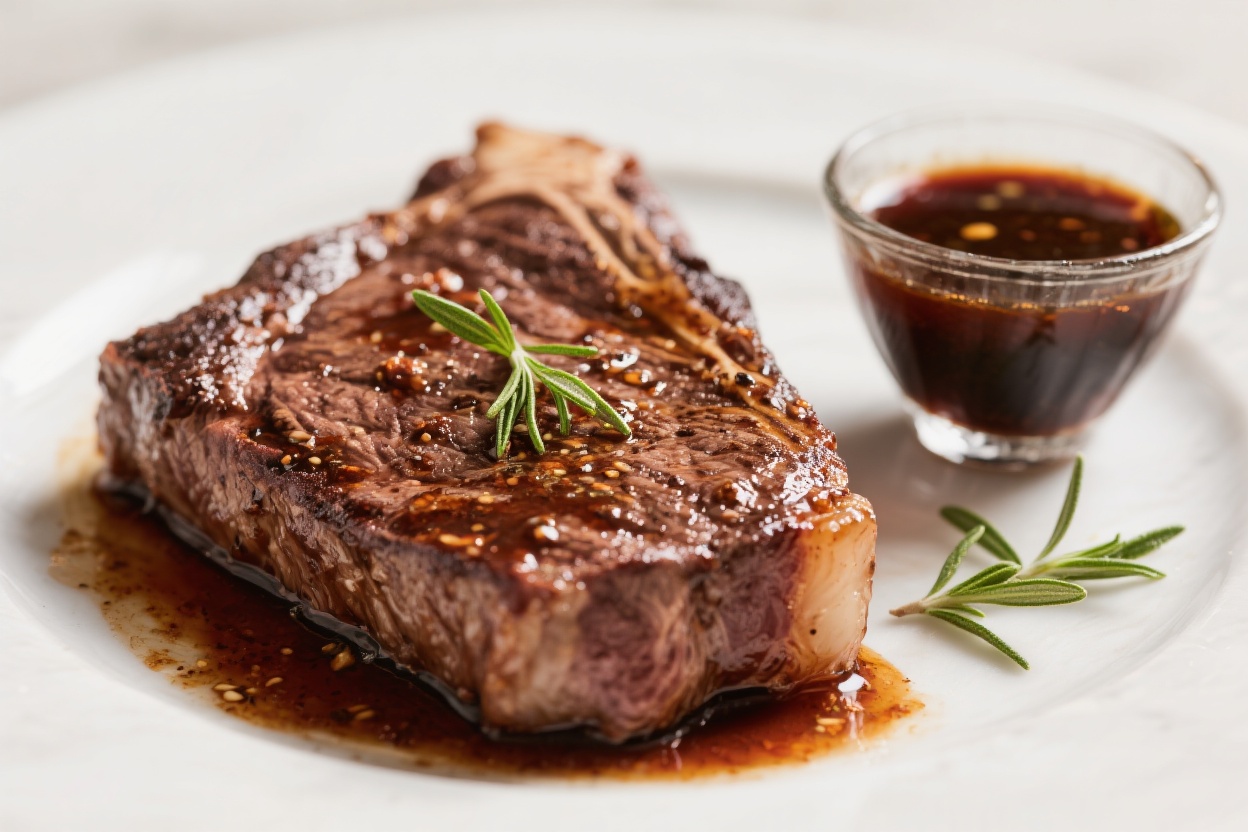
If you want a steak that tastes like it came from a great steakhouse, this marinade is your shortcut. Worcestershire sauce brings deep, savory flavor without overpowering the meat. It tenderizes while adding a touch of tang, a hint of sweetness, and that hard-to-describe “umami” richness.
You’ll get a beautifully flavored crust on the grill or in a skillet, and juicy, tender bites from edge to center. It’s simple to mix, easy to use, and works on a weeknight or for a special occasion.
Contents
- 1 What Makes This Special
- 2 Shopping List
- 3 Instructions
- 4 How to Store
- 5 Health Benefits
- 6 Common Mistakes to Avoid
- 7 Recipe Variations
- 8 FAQ
- 8.1 How long should I marinate steak with Worcestershire?
- 8.2 Can I use this marinade for chicken or pork?
- 8.3 Do I need to salt the steak if the marinade has soy and Worcestershire?
- 8.4 Should I poke holes in the steak before marinating?
- 8.5 Can I turn the leftover marinade into a sauce?
- 8.6 What’s the best cut of steak for this marinade?
- 8.7 How do I get a good crust without a grill?
- 9 Wrapping Up
What Makes This Special
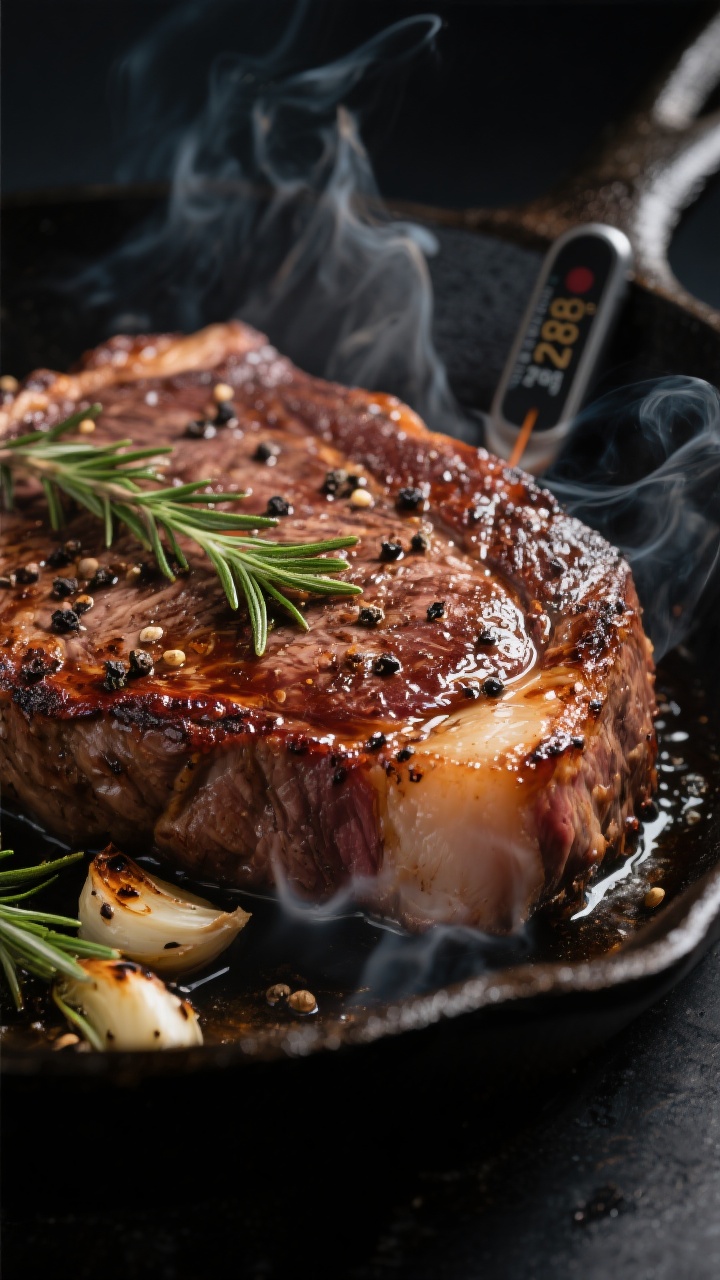
This marinade leans on Worcestershire sauce for balanced umami—salty, tangy, and slightly sweet. A bit of acid softens the steak’s fibers while oil carries flavor and helps with browning.
Fresh garlic and herbs wake everything up without stealing the spotlight from the beef. The result is a steak that tastes bold and full, not salty or sticky. Best of all, you can make it with pantry staples in about five minutes.
Shopping List
- Steak: 1.5 to 2 pounds of ribeye, strip, sirloin, flank, or skirt
- Worcestershire sauce: 1/3 cup
- Soy sauce: 2 tablespoons (regular or low-sodium)
- Olive oil: 2 tablespoons (or neutral oil)
- Balsamic vinegar or red wine vinegar: 1 tablespoon
- Dijon mustard: 1 teaspoon
- Brown sugar or honey: 1 teaspoon
- Garlic: 3 cloves, minced (or 1 teaspoon garlic powder)
- Black pepper: 1 teaspoon, freshly ground
- Onion powder: 1/2 teaspoon
- Smoked paprika: 1/2 teaspoon (optional, for subtle smokiness)
- Fresh herbs: 1 tablespoon chopped rosemary or thyme (optional)
- Kosher salt: 1/2 to 1 teaspoon, to taste (adjust if using regular soy sauce)
- Lemon zest: 1/2 teaspoon (optional, bright finish)
Instructions
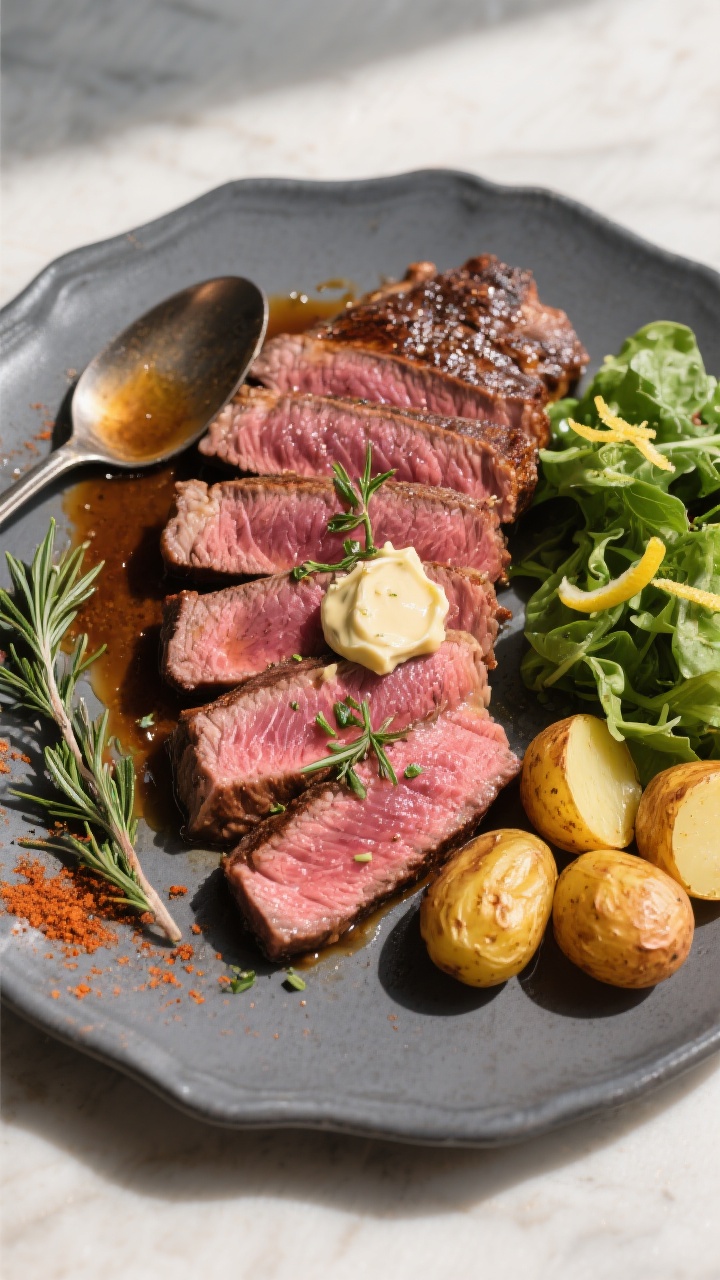
- Mix the marinade. In a medium bowl or measuring cup, whisk together Worcestershire, soy sauce, olive oil, vinegar, Dijon, brown sugar, garlic, black pepper, onion powder, smoked paprika, herbs, salt, and lemon zest if using.
- Prep the steak. Pat the steak dry with paper towels.This helps the marinade stick and encourages a great sear later.
- Marinate. Place the steak in a large zip-top bag or shallow dish. Pour the marinade over, turning to coat. Press out extra air, seal, and refrigerate for at least 30 minutes and up to 24 hours.For flank or skirt steak, 2–8 hours is ideal. For thicker cuts like ribeye or strip, 1–12 hours works well.
- Bring to room temp. Remove the steak from the fridge about 30 minutes before cooking. This helps it cook evenly.
- Preheat your pan or grill. Heat a cast-iron skillet over medium-high or preheat the grill to 450–500°F.You want it hot enough to sear quickly.
- Blot excess marinade. Lift the steak from the marinade and let the excess drip off. Pat lightly with paper towels. Brush with a thin film of oil if cooking in a skillet.
- Cook. Sear 3–5 minutes per side for thinner cuts, or 4–6 minutes per side for thicker steaks, depending on thickness and desired doneness.Aim for 125–130°F for medium-rare, 135°F for medium. Use a meat thermometer for accuracy.
- Rest. Transfer to a plate and rest for 5–10 minutes so the juices redistribute.
- Slice and serve. For flank or skirt, slice thinly against the grain. Spoon any resting juices over the top.Serve with roasted potatoes, a crisp salad, or grilled vegetables.
How to Store
- Marinade only: Mix and refrigerate in a sealed jar for up to 5 days. Shake before using.
- Raw steak in marinade: Keep refrigerated for up to 24 hours. Do not reuse marinade on cooked food unless you boil it for 2–3 minutes.
- Cooked steak: Store leftovers in an airtight container for 3–4 days.Reheat gently in a skillet over low heat or slice cold for salads and wraps.
- Freezer option: Add the marinade and raw steak to a freezer bag and freeze for up to 2 months. Thaw in the fridge overnight before cooking.
Health Benefits
- Protein-rich: Steak provides complete protein for muscle repair and satiety.
- Iron and B12: Beef is a strong source of heme iron and vitamin B12 for energy and red blood cell health.
- Portion control friendly: A flavorful marinade helps smaller portions feel satisfying without heavy sauces.
- Balanced sodium tips: Using low-sodium soy sauce and moderating added salt keeps sodium in check while maintaining big flavor.
- Healthy fats: Olive oil adds heart-friendly monounsaturated fats and improves absorption of fat-soluble flavors.
Common Mistakes to Avoid
- Over-marinating: Acid can make the exterior mushy. Stick to the time ranges above, especially for thinner cuts.
- Cooking straight from the fridge: Cold steak cooks unevenly.Let it warm up for 30 minutes.
- Wet surface: Excess marinade steams the meat. Pat dry for a proper sear.
- Skipping the rest: Cutting too soon causes juices to run out. Rest the steak before slicing.
- Too much salt: Worcestershire and soy both contain sodium.Taste the marinade if you’re unsure and adjust.
Recipe Variations
- Garlic-Butter Finish: Add a pat of garlic butter on the steak while it rests for a rich, steakhouse vibe.
- Chili-Kick: Mix in 1 teaspoon crushed red pepper flakes or a dash of hot sauce for heat.
- Citrus-Twist: Swap the vinegar for fresh lime juice and add cilantro for a bright, fajita-style flavor.
- Maple-Bourbon: Replace brown sugar with maple syrup and add 1 tablespoon bourbon for a smoky-sweet note.
- Herb-Forward:</-strong> Double the rosemary and thyme, and add chopped parsley at the end for freshness.
- Coffee Rub + Marinade: For thicker cuts, dust lightly with fine coffee grounds before marinating for deeper crust and complexity.
FAQ
How long should I marinate steak with Worcestershire?
Anywhere from 30 minutes to 12 hours works for most cuts. Thinner cuts like flank or skirt do best at 2–8 hours, while thicker cuts can handle up to 12 hours. Avoid going past 24 hours.
Can I use this marinade for chicken or pork?
Yes.
It’s great on chicken thighs (1–6 hours) and pork chops (1–8 hours). Adjust the marinating time based on thickness and always cook to safe internal temperatures.
Do I need to salt the steak if the marinade has soy and Worcestershire?
Often, no or just a little. Start with 1/2 teaspoon kosher salt in the marinade if using low-sodium soy.
If using regular soy, you may skip added salt and season lightly before cooking if needed.
Should I poke holes in the steak before marinating?
Not necessary. Poking can release juices and make the texture uneven. Pat dry, marinate, and let time do the work.
Can I turn the leftover marinade into a sauce?
Yes, but boil it for at least 2–3 minutes to make it safe.
For a richer sauce, add a knob of butter and reduce until slightly thickened.
What’s the best cut of steak for this marinade?
It shines on flank and skirt for slicing, and adds depth to sirloin, strip, and ribeye. Choose good marbling for juiciness and flavor.
How do I get a good crust without a grill?
Use a heavy cast-iron skillet, get it very hot, pat the steak dry, and sear in a thin layer of oil. Avoid overcrowding the pan and don’t move the steak too soon.
Wrapping Up
This Steak Marinade with Worcestershire keeps things simple while delivering big, steakhouse-level flavor.
It’s flexible, fast to mix, and forgiving enough for busy nights. With a hot pan, a quick rest, and a sharp knife, you’ll serve a juicy, well-seasoned steak that tastes like you worked a lot harder than you did. Keep this marinade in your back pocket—it’s a reliable way to make great steak, any time.