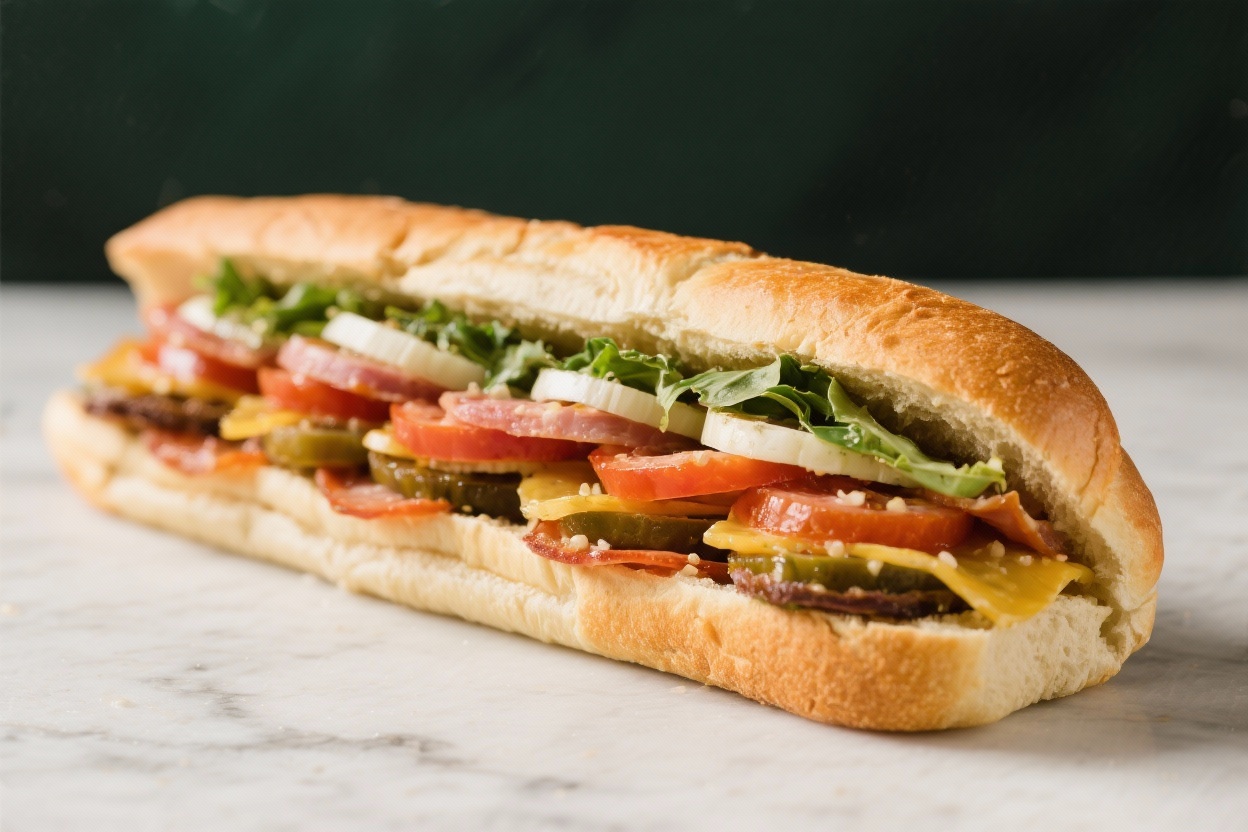
The Italian hoagie is a no-nonsense sandwich with big personality. It’s salty, tangy, fresh, and satisfying—perfect for lunch, game day, or a laid-back dinner. This version sticks close to the classic deli style: good bread, quality meats, crisp veggies, and a simple oil and vinegar dressing.
The magic is in the balance and the layering. If you want something that tastes like the real deal, this is it.
Contents
What Makes This Special
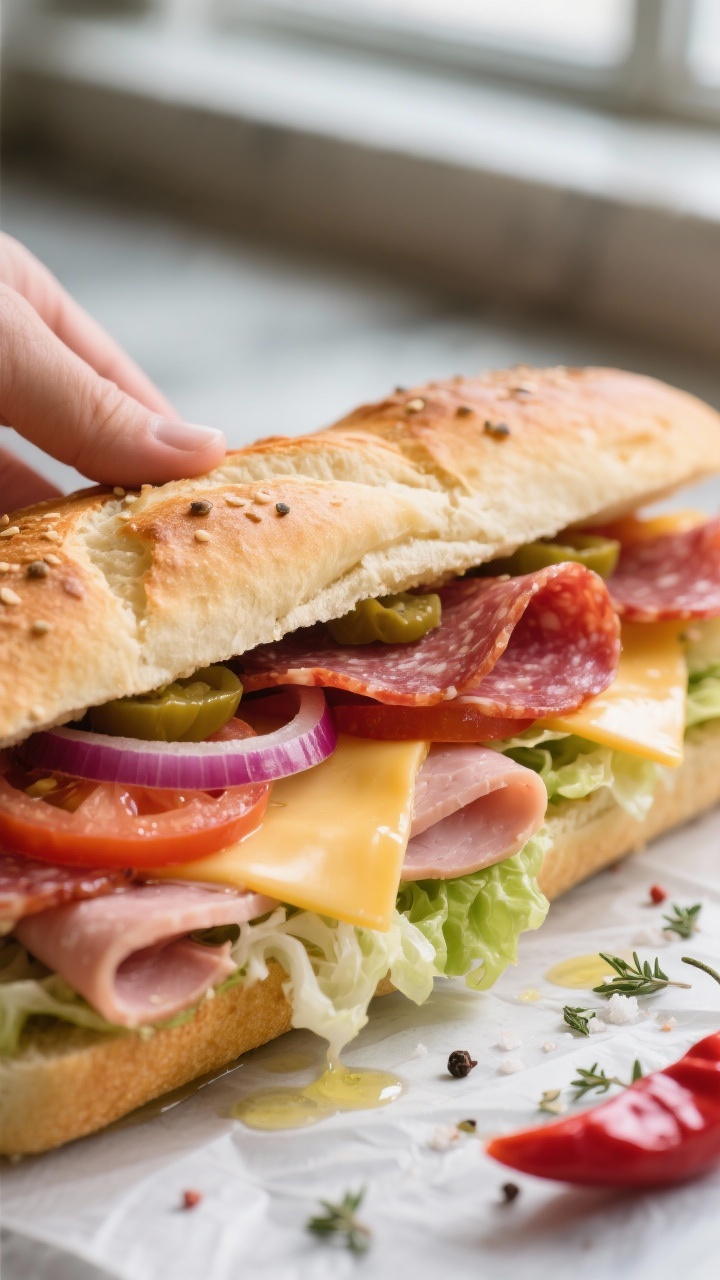
This hoagie gets its character from a few simple choices done right. The bread should be crusty on the outside and soft inside to hold the fillings without getting soggy.
The meat combination—usually a trio of Italian cold cuts—brings depth and a little spice. Sharp provolone adds bite, while the oil, vinegar, and oregano tie everything together. Freshness matters, but so does the order you stack everything.
That layering keeps the sandwich neat and full of flavor in every bite.
What You’ll Need
- 1 large Italian hoagie roll (10–12 inches), or two smaller rolls
- 4–5 slices Genoa salami
- 4–5 slices capicola (or hot ham for a milder option)
- 4–5 slices mortadella
- 3–4 slices sharp provolone
- 1 cup shredded iceberg lettuce
- 1 small ripe tomato, thinly sliced
- 1/4 small red onion, paper-thin slices
- Pickled hot cherry peppers or banana peppers, sliced (optional but classic)
- 2 tablespoons extra-virgin olive oil
- 1 tablespoon red wine vinegar
- 1/2 teaspoon dried oregano
- Kosher salt and freshly ground black pepper, to taste
- A pinch of dried chili flakes (optional)
- Mayonnaise or spicy mustard (optional, to taste; not traditional but common)
Step-by-Step Instructions
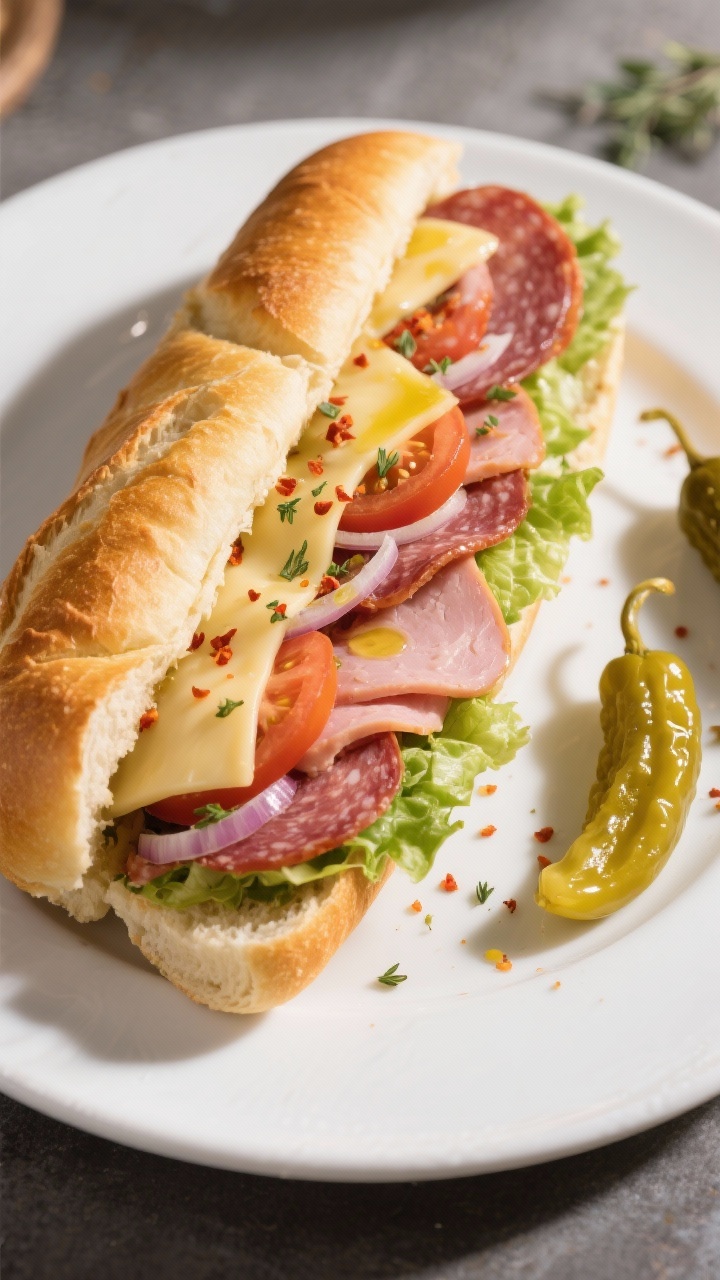
- Prep the roll. Split the hoagie roll lengthwise, leaving a hinge. Pull out a little of the soft interior to make room for fillings. This helps prevent overflow and keeps the sandwich tidy.
- Season the bread. Drizzle half the olive oil and vinegar inside the roll.Sprinkle with a pinch of oregano, salt, and pepper. This lightly seasons the bread and adds flavor from the ground up.
- Lay down the cheese. Add the provolone to the bottom half of the roll. Cheese acts like a moisture barrier, helping the bread stay firm.
- Add the meats in layers. Start with salami, then capicola, then mortadella.Overlap the slices slightly and distribute evenly from end to end. You want each bite to feel balanced.
- Top with veggies. Add the onion slices first, then tomato, then shredded lettuce. This order keeps the tomatoes from sliding and lets the lettuce catch the dressing.
- Dress it right. Drizzle the remaining olive oil and vinegar over the lettuce.Add another pinch of oregano, plus salt, pepper, and chili flakes if you like heat. If you’re using pickled peppers, scatter them over the top.
- Optional condiments. If you want a touch of mayo or mustard, spread a thin layer on the top half of the roll. Keep it light so it doesn’t overpower the classic flavors.
- Close and set. Fold the sandwich closed and press gently.Let it sit for 3–5 minutes so the flavors settle and the dressing soaks slightly into the lettuce, not the bread.
- Slice and serve. Cut on a slight diagonal for easier eating. Serve with chips or a pickle, and you’re good to go.
Keeping It Fresh
To prevent sogginess, assemble close to serving time. If you need to prep ahead, keep the bread, meats, and cheese separate from the wet ingredients.
Wrap the roll and the layered meats/cheese in parchment or foil, and store the lettuce, tomatoes, onions, and dressing in small containers. Assemble just before eating, and add the dressing last.
If you’re packing it for lunch, go lighter on the vinegar, tuck tomato slices between meat and cheese, and wrap the hoagie tightly in parchment. A firm wrap helps the sandwich hold together and keeps the bread from absorbing too much moisture.
Benefits of This Recipe
- Simple and fast: No cooking required.You can make it in under 10 minutes.
- Customizable: Adjust heat, cheese sharpness, and veggie amounts to your taste.
- Budget-friendly: Deli meats and pantry staples stretch into multiple meals.
- Balanced flavors: Salty, tangy, and fresh, with a satisfying crunch from lettuce and onions.
- Good for groups: Scale up easily and slice into halves or thirds for parties.
Common Mistakes to Avoid
- Using soft or sweet bread: Choose a sturdy Italian roll with a crisp crust. Sweet or fluffy bread throws off the flavor and texture.
- Overdressing: Too much oil and vinegar can make the sandwich soggy. A light drizzle is enough.
- Skipping the oregano: That little sprinkle is classic and ties the whole flavor profile together.
- Thick tomato slices: Thin slices prevent sliding and keep the sandwich neat.
- Unbalanced layering:</-strong> If all the meat is on one end or the veggies are piled unevenly, you’ll get messy, uneven bites.
Variations You Can Try
- Extra-spicy: Use hot capicola, add more cherry peppers, and sprinkle chili flakes inside.
- Mild and kid-friendly: Swap sharp provolone for mild provolone or mozzarella and skip the onions and peppers.
- Toasted style: Lightly toast the cut sides of the roll for a warmer, crisp bite.Add cheese first so it softens slightly.
- Herb-forward: Mix a pinch of garlic powder and dried basil into the oil and vinegar for a bolder dressing.
- Loaded veggie: Add thin cucumber slices, roasted red peppers, or marinated artichokes for extra crunch and tang.
- The “pros-only” stack: Double the meats but keep the dressing minimal, then press the hoagie under a heavy pan for 5 minutes to compact it.
FAQ
What is the best bread for an Italian hoagie?
Use a crusty Italian roll or a seeded hoagie roll with a chewy interior. It should be sturdy enough to handle the dressing and fillings without falling apart.
Can I substitute the meats?
Yes. If you can’t find capicola or mortadella, use hot ham and regular ham or soppressata.
Aim for three types with different textures and flavors for balance.
Is mayo traditional on an Italian hoagie?
Not traditionally, but many delis offer it. If you use mayo, go light and keep the oil and vinegar—it’s the signature flavor of this sandwich.
What cheese works best?
Sharp provolone is the standard because it stands up to the meats and dressing. Mild provolone or mozzarella works if you prefer something gentler.
How do I keep the hoagie from getting soggy?
Layer cheese against the bread, dress the lettuce instead of the bread, and assemble close to serving time.
If packing ahead, keep wet ingredients separate and add them later.
Can I make this gluten-free?
Yes. Use a high-quality gluten-free roll with a firm crust, and be sure your deli meats and condiments are labeled gluten-free.
What’s the difference between a hoagie and a sub?
They’re essentially the same style of sandwich, but “hoagie” is the term commonly used in Philadelphia. The classic Italian version follows the ingredients and dressing listed here.
In Conclusion
A great Italian hoagie comes down to good bread, quality cold cuts, sharp cheese, and a simple dressing.
Keep the layering tidy, don’t drown it in oil and vinegar, and slice everything thin. With a few smart steps, you’ll get that classic deli flavor at home—clean, bright, and deeply satisfying. Make one once, and it’ll become part of your regular lunch lineup.
Printable Recipe Card
Want just the essential recipe details without scrolling through the article? Get our printable recipe card with just the ingredients and instructions.