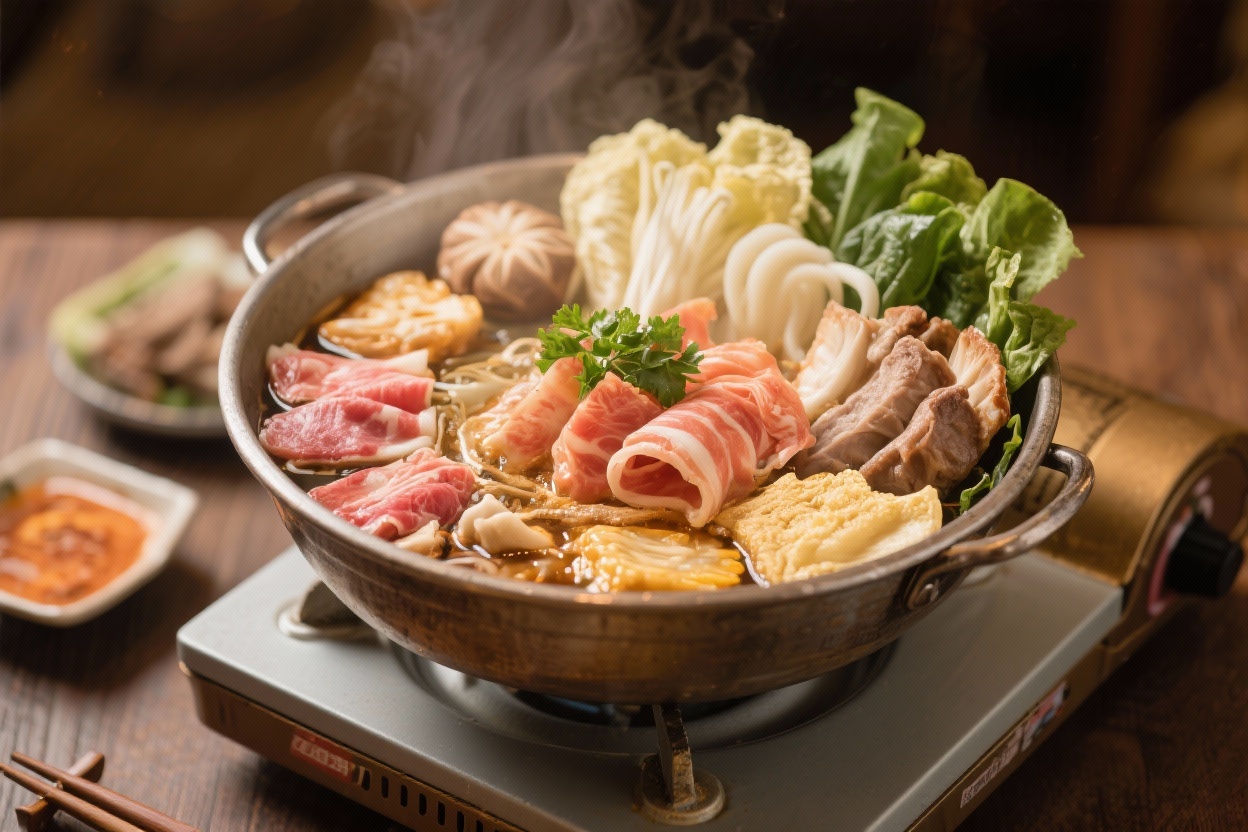
Shabu shabu is the kind of meal that turns dinner into an experience. It’s simple, interactive, and deeply satisfying. You cook thin slices of meat and crisp vegetables right at the table, swishing them in a light, savory broth, then dipping and eating as you go.
It’s cozy for winter nights, but fresh enough for any time of year. If you’ve never tried making it at home, you’ll be surprised by how straightforward and relaxing it can be.
Contents
What Makes This Recipe So Good
- Restaurant-style at home: You get the same clean flavors and tender textures without special equipment, just a pot and a portable burner if you have one.
- Light but satisfying: The broth is gentle and umami-rich, and the focus is on fresh ingredients cooked quickly.
- Customizable: Mix and match vegetables, proteins, and dipping sauces to suit your taste or dietary needs.
- Interactive and social: Everyone cooks their own bites—great for small gatherings or a fun weeknight dinner.
- Minimal prep, quick cooking: Once everything is sliced and set out, the cooking is fast and easy.
What You’ll Need
- Protein: 1–1.5 pounds very thinly sliced beef (ribeye or sirloin), pork loin, or a mix. Ask your butcher for shabu shabu slices, or partially freeze and slice thin at home.
- Broth base: 6 cups water, 1 piece kombu (dried kelp, about 4–6 inches).Optional: a handful of katsuobushi (bonito flakes) for extra depth.
- Vegetables and add-ins:
- 1 small Napa cabbage, cut into bite-size pieces
- 1 bunch shungiku (edible chrysanthemum greens) or spinach
- 1 block firm tofu, cut into cubes
- 1–2 carrots, thinly sliced
- 1 small daikon, peeled and thinly sliced or julienned
- 1 pack enoki mushrooms, trimmed; and/or shiitake mushrooms, sliced
- 2–3 green onions, cut into 2-inch pieces
- Fresh udon noodles or steamed rice, for serving
- Dipping sauces:
- Ponzu sauce (citrus soy)
- Goma dare (sesame sauce)
- Condiments: Grated daikon, grated ginger, thinly sliced green onions, shichimi togarashi (optional).
- Equipment: Wide pot, portable burner (optional), chopsticks or tongs, small individual dipping bowls.
How to Make It
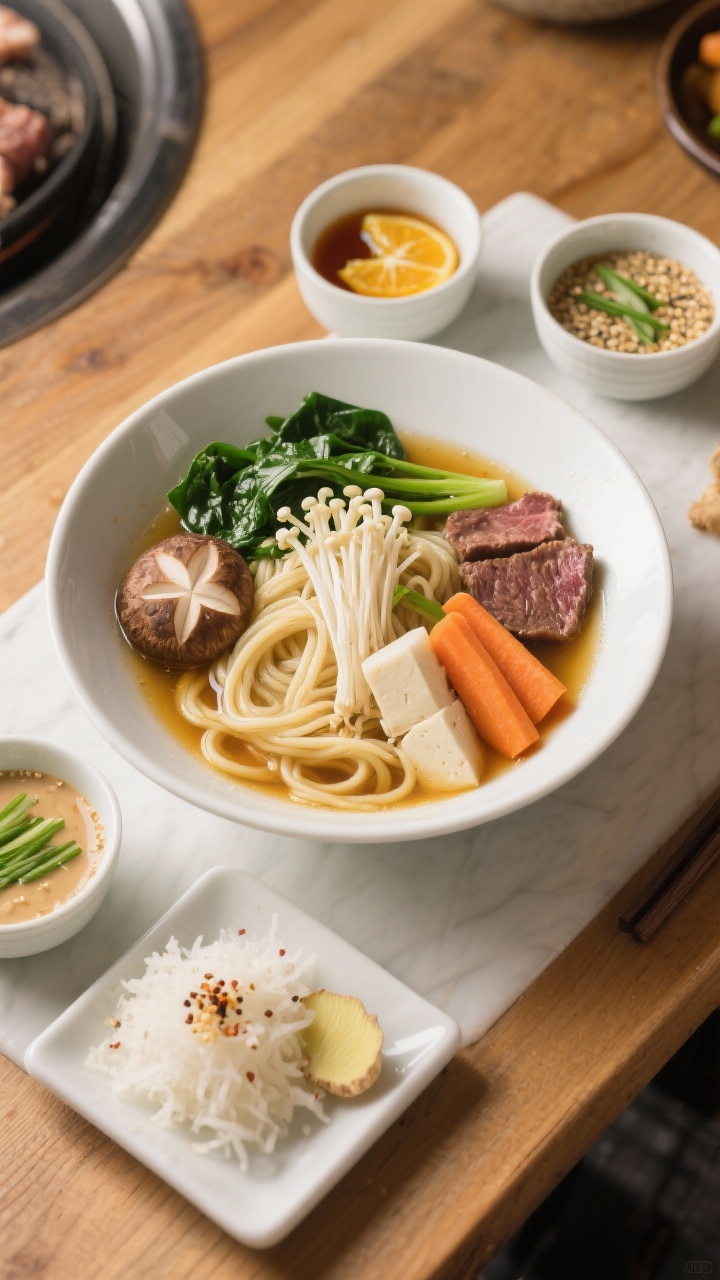
- Prep the kombu broth: Place kombu in a pot with 6 cups cold water. Let it soak 20–30 minutes to soften and release flavor.
- Warm and remove kombu: Bring the pot to a gentle simmer over medium heat. Just before it boils, remove the kombu.If using, add a small handful of bonito flakes, simmer 1 minute, then strain. Return clear broth to the pot.
- Arrange ingredients: Place sliced meat, vegetables, tofu, and mushrooms on separate plates or a large platter. Set out ponzu and sesame sauce in small bowls, plus condiments.
- Heat the broth at the table: Set the pot on a portable burner or keep it on the stove on low simmer.You want a steady, gentle heat—not a rolling boil.
- Start with sturdier vegetables: Add a few pieces of Napa cabbage, carrots, daikon, and tofu to the broth. Let them soften slightly; this also builds flavor for the meat.
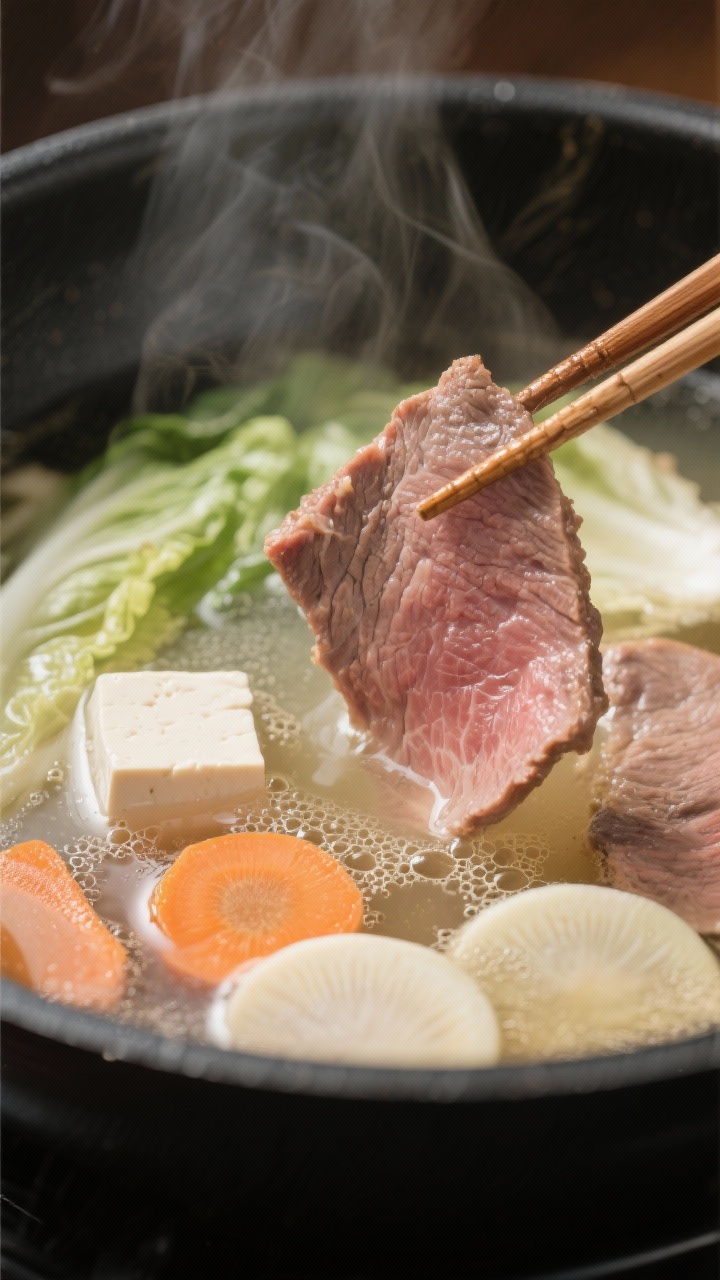
- Swish the meat: Using chopsticks, dip a slice of beef or pork into the simmering broth and swish it back and forth for 5–10 seconds until just cooked. It should turn pale and tender.
- Dip and eat: Transfer the cooked meat to your bowl, dip into ponzu or sesame sauce, and enjoy.Add mushrooms, greens, and more vegetables as you go.
- Keep it moving: Continue cooking in small batches. Skim any foam from the broth with a spoon to keep it clear.
- Finish with noodles: When you’re almost done, add udon noodles to the enriched broth and cook until tender. Ladle into bowls for a comforting finish.
- Taste and adjust: If the broth becomes too salty from dipping, add a splash of hot water.If it needs brightness, serve with extra ponzu on the side.
Keeping It Fresh
- Prep ahead: Slice vegetables and tofu up to a day in advance. Store in airtight containers and keep greens separate so they stay crisp.
- Meat storage: Keep thinly sliced meat covered and very cold until cooking. If slicing at home, partially freeze the meat for 30–60 minutes so it’s easier to cut thin.
- Leftovers: Strain the broth, cool quickly, and refrigerate up to 2 days.Reheat gently and add fresh greens or noodles for a quick soup.
- Sauces: Keep ponzu and sesame sauce covered and chilled. Use within a week if homemade, or follow store-bought labels.
Health Benefits
- Lean protein, low oil: Meat cooks in broth instead of oil, keeping calories lower while delivering quality protein.
- Vegetable-rich: Napa cabbage, mushrooms, and greens add fiber, vitamins, and minerals without heaviness.
- Hydrating and gentle: The warm, light broth is easy on digestion and comforting when you’re craving something simple.
- Customizable for needs: Choose lean cuts, tofu, or seafood. Swap in low-sodium ponzu if you’re watching salt.
Common Mistakes to Avoid
- Boiling the broth hard: A rolling boil toughens meat and clouds the broth.Keep it at a gentle simmer.
- Overcrowding the pot: Cook in small batches. Too much at once drops the temperature and makes everything cook unevenly.
- Thick meat slices: Shabu shabu relies on very thin slices. If they’re too thick, they’ll be chewy and slow to cook.
- Skipping kombu: Kombu adds clean, savory depth.Water alone makes the dish taste flat.
- Only using one sauce: Ponzu and sesame each bring different flavors. Having both makes the meal more balanced and interesting.
Recipe Variations
- Seafood shabu shabu: Use thinly sliced fish (snapper, halibut), shrimp, scallops, or squid. Add them toward the end to avoid overcooking.
- Chicken version: Thin slices of chicken thigh stay tender.Make sure they’re cooked through—slightly longer than beef or pork.
- Vegetarian: Double the mushrooms (shiitake, enoki, shimeji) and tofu. Use kombu and dried shiitake to build a rich vegetarian broth.
- Spicy twist: Serve with chili oil, yuzu kosho, or add a mild spoonful of miso and a pinch of shichimi togarashi at the table.
- Noodle swap: Try glass noodles or soba instead of udon for a lighter finish.
FAQ
Can I make shabu shabu without a portable burner?
Yes. Keep the pot on the stove over a low simmer.
Bring platters to the stovetop and cook in batches, then bring bowls back to the table. It’s a little less interactive, but still delicious.
What cut of beef is best?
Ribeye and sirloin are classic because they’re flavorful and tender when sliced thin. Short plate or brisket works too if you prefer a richer bite.
Ask for paper-thin slices.
Do I need ponzu and sesame sauce, or is one enough?
You can use just one, but having both balances the meal. Ponzu is bright and citrusy; sesame is creamy and nutty. They complement different vegetables and meats.
How thin should the meat be?
Aim for about 1–2 millimeters.
If slicing at home, partially freeze the meat so it firms up, then use a sharp knife to get even, thin pieces.
Can I use store-bought broth?
You can, but keep it mild. A simple kombu dashi lets the ingredients shine. If using store-bought, choose a light dashi or unsalted broth and adjust salt with sauce at the table.
What should I do with the leftover broth?
Strain it and save it for the next day.
It’s packed with flavor from meat and vegetables. Add fresh greens or noodles for a quick, satisfying soup.
Is shabu shabu gluten-free?
It can be. Use gluten-free ponzu or tamari-based sauces, and check your noodles.
The core ingredients—meat, vegetables, kombu—are naturally gluten-free.
Final Thoughts
Shabu shabu proves that simple ingredients and gentle cooking can feel special. With a clean broth, thinly sliced meat, and crisp vegetables, you get a meal that’s light, flavorful, and hands-on. Set everything out, keep the heat steady, and cook as you eat.
It’s a calm, satisfying ritual that’s easy to make part of your weeknight routine or a relaxed dinner with friends.