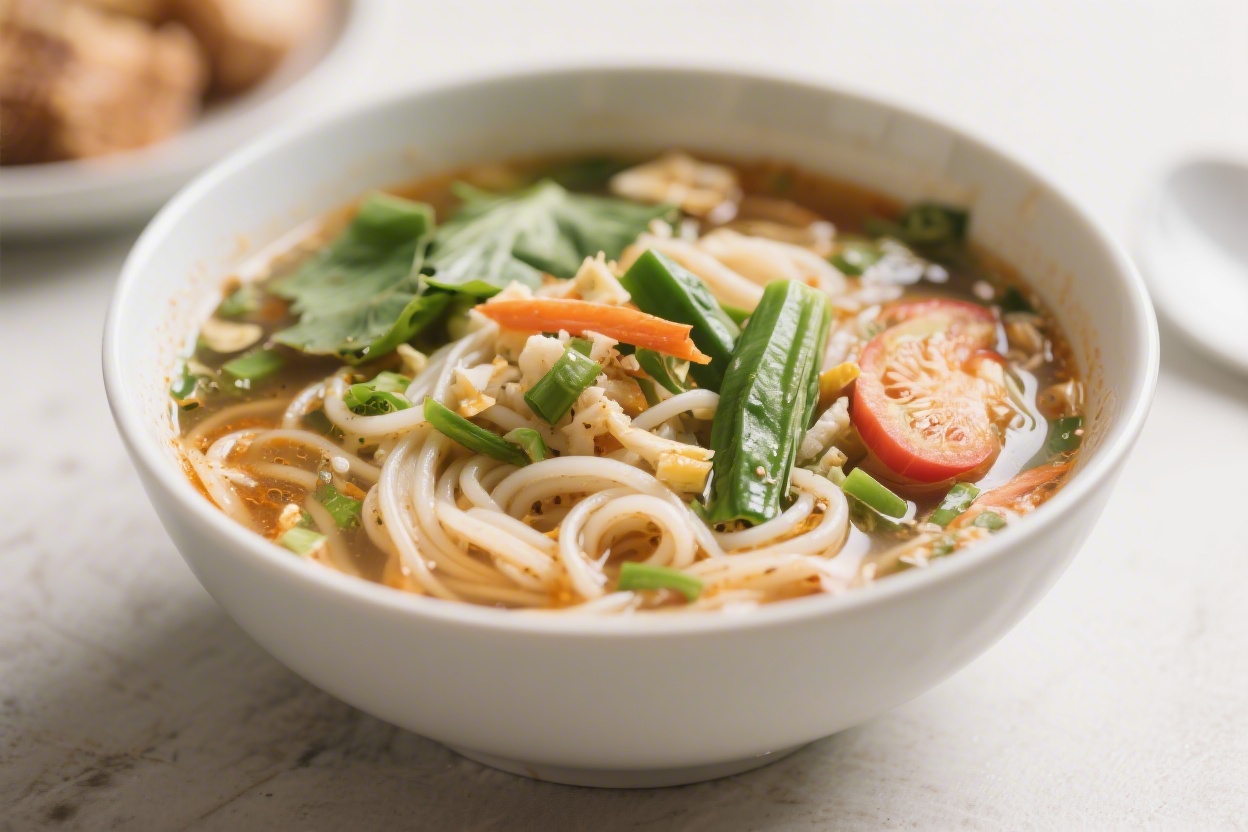
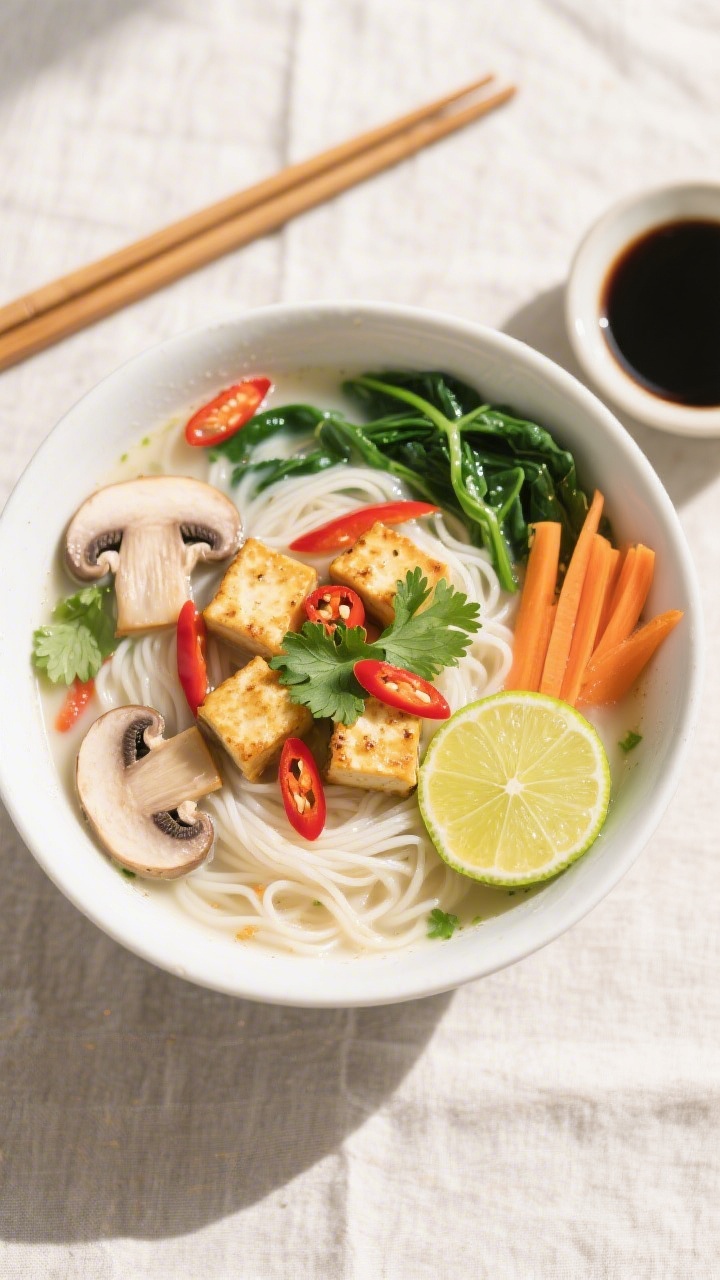
This Vegan Thai Noodle Soup is the kind of cozy bowl you crave on a chilly evening or after a long day. It’s rich with coconut milk, bright with lime, and layered with classic Thai aromatics. The broth is deeply satisfying yet light enough to keep you feeling good.
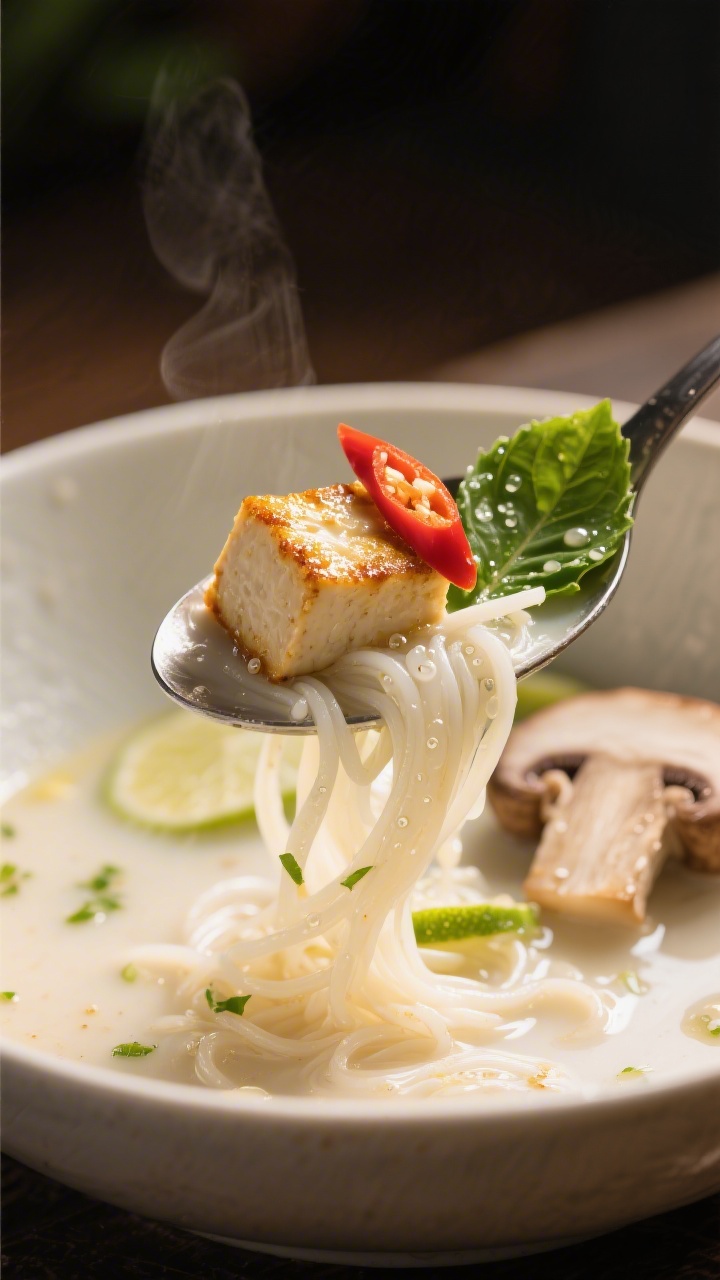
You’ll get a tangle of tender rice noodles, crisp-tender veggies, and cubes of tofu that soak up all the flavor. It’s simple to make, easy to customize, and tastes like a warm hug in a bowl.
Contents
What Makes This Recipe So Good
- Balanced flavor: Creamy coconut milk, tangy lime, savory soy sauce or tamari, and a touch of heat from curry paste come together beautifully.
- Quick and weeknight-friendly: Ready in about 30 minutes with minimal prep.
- Customizable: Use whatever veggies you have—mushrooms, bell peppers, spinach, bok choy, or snap peas all work.
- Comforting but light: It satisfies like comfort food without feeling heavy.
- Fully vegan and dairy-free: No compromises on flavor or texture.
What You’ll Need
- Rice noodles: Flat or thin rice noodles (pad Thai or vermicelli style).
- Extra-firm tofu: Pressed and cubed for better texture.
- Coconut milk: Full-fat for a rich broth, or light for a leaner version.
- Vegetable broth: Low-sodium works best so you can control seasoning.
- Thai red curry paste: Adds heat and depth; check the label to ensure it’s vegan.
- Aromatics: Garlic, ginger, and shallot (or onion).
- Lemongrass (optional but great): Light, citrusy note; use fresh or paste.
- Vegetables: Sliced mushrooms, bell pepper, carrots, and baby spinach or bok choy.
- Soy sauce or tamari: For savory umami; tamari keeps it gluten-free.
- Lime juice: Bright acidity to finish.
- Brown sugar or coconut sugar: Just a touch to balance the heat and citrus.
- Oil: Neutral oil like avocado or grapeseed for sautéing.
- Fresh herbs: Cilantro and Thai basil for garnish.
- Chili slices or chili flakes (optional): For extra heat.
- Salt and pepper: To taste.
Instructions
- Prep the tofu: Press extra-firm tofu for 15–20 minutes to remove excess moisture. Cut into bite-size cubes and pat dry.
- Sear the tofu: Heat 1–2 tablespoons of oil in a large pot or Dutch oven over medium-high.Add tofu and cook until golden on at least two sides, 5–7 minutes. Season lightly with salt. Transfer to a plate.
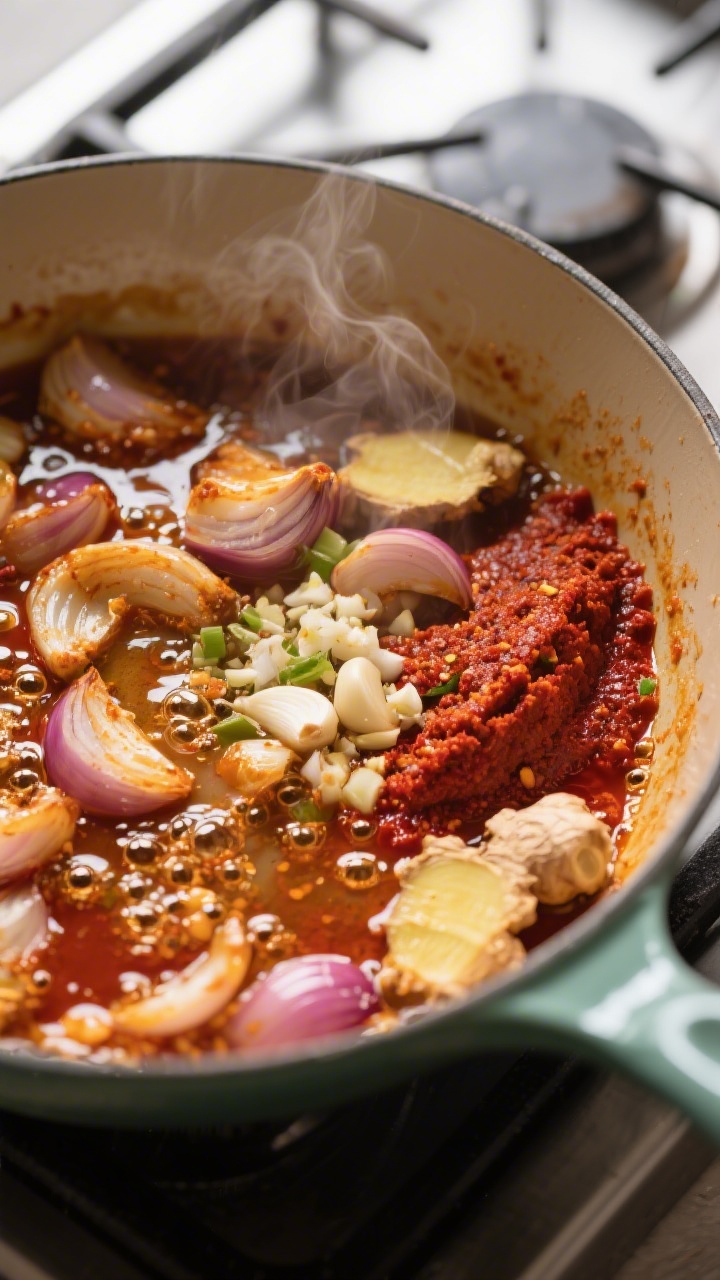
- Sauté aromatics: In the same pot, lower heat to medium.Add a bit more oil if needed, then sauté shallot (or onion) for 2–3 minutes until softened. Add minced garlic and ginger, and lemongrass if using. Cook 30–60 seconds until fragrant.
- Stir in curry paste: Add red curry paste and cook for 1 minute, stirring to bloom the spices.
- Build the broth: Pour in vegetable broth and bring to a gentle simmer.Add coconut milk, 1–2 tablespoons soy sauce or tamari, and 1 teaspoon sugar. Stir well and taste, adjusting salt as needed.
- Add vegetables: Add mushrooms, bell pepper, and carrots. Simmer 5–7 minutes until just tender but still vibrant.
- Cook noodles: While the soup simmers, cook rice noodles according to package directions until just al dente.Drain and rinse briefly under cool water to stop cooking.
- Finish the soup: Stir in the seared tofu and leafy greens (spinach or bok choy). Cook 1–2 minutes until greens wilt.
- Season and brighten: Turn off heat. Add lime juice to taste (start with half a lime, add more as you like).Adjust soy/tamari, sugar, and salt for balance. The broth should taste creamy, savory, tangy, and slightly sweet with gentle heat.
- Assemble: Divide noodles among bowls. Ladle hot soup over the noodles.Top with cilantro, Thai basil, and chili slices if you like more spice.
Storage Instructions
- Keep noodles separate: Store the broth and veggies in one container and the cooked noodles in another to prevent sogginess.
- Refrigeration: Broth and veggies keep well for 3–4 days in an airtight container. Noodles keep for 2–3 days.
- Freezing: Freeze the broth (without noodles and delicate greens) for up to 2 months. Add fresh greens and cooked noodles when reheating.
- Reheating: Warm the broth gently on the stove.Add noodles just before serving to heat through.
Why This Is Good for You
- Plant-powered protein: Tofu delivers complete protein and minerals like iron and calcium (especially if calcium-set).
- Fiber and micronutrients: Mixed vegetables bring fiber, vitamin C, beta carotene, and antioxidants.
- Healthy fats: Coconut milk provides satiating fats that help you absorb fat-soluble vitamins.
- Hydration and warmth: A broth-based meal keeps you hydrated while feeling comforting and soothing.
Pitfalls to Watch Out For
- Soggy noodles: Don’t store noodles in the broth. Keep them separate and combine when serving.
- Curdled texture: Boiling vigorously after adding coconut milk can create an odd texture. Keep the heat to a gentle simmer.
- Bland broth: Taste and adjust.You want a balance of salty (soy/tamari), sour (lime), sweet (sugar), and creamy (coconut).
- Non-vegan curry paste: Some red curry pastes contain shrimp paste. Check labels or choose a clearly vegan brand.
- Overcooked veggies: Add greens at the end and simmer other vegetables just until tender to keep color and crunch.
Alternatives
- Protein swaps: Use tempeh, edamame, or chickpeas instead of tofu. For a meaty texture, try seared oyster mushrooms.
- Noodle options: Replace rice noodles with soba, udon, or zucchini noodles.For gluten-free, stick to rice noodles or certified GF soba.
- Milder version: Reduce curry paste and skip fresh chilis. Add extra coconut milk for a softer heat.
- Veggie variations: Try broccoli, snow peas, baby corn, or kale. Frozen veggies work in a pinch—add near the end.
- Broth twist: Add a splash of vegan fish sauce alternative for deeper umami or a teaspoon of miso at the end (don’t boil miso).
- Creaminess adjust: Use light coconut milk for a leaner soup or swirl in a bit of cashew cream for extra richness.
FAQ
Can I make this gluten-free?
Yes.
Use rice noodles and tamari (or coconut aminos) instead of soy sauce. Also confirm your curry paste is gluten-free.
How spicy is this soup?
It’s as spicy as your curry paste and chilis. Start with 1 tablespoon curry paste for mild and add more to taste.
Do I have to press the tofu?
Pressing improves texture and helps it brown.
If you’re short on time, pat it very dry and cook a bit longer for color.
Can I use low-fat coconut milk?
Yes. The soup will be lighter and less creamy but still tasty. You can add a splash more to compensate.
What if I don’t have lemongrass?
Skip it or add extra lime zest and a little more ginger for brightness.
It won’t be exactly the same, but it will still be delicious.
How do I prevent the noodles from clumping?
Rinse cooked rice noodles briefly under cool water and toss with a tiny bit of oil. Add them to bowls first, then pour hot broth over to separate.
Can I meal-prep this?
Absolutely. Store broth and noodles separately, keep herbs and lime on the side, and assemble just before eating for best texture and flavor.
Wrapping Up
This Vegan Thai Noodle Soup is a weeknight hero—simple steps, big flavor, and plenty of room to make it your own.
Keep the balance of salty, sour, sweet, and creamy in mind, and you’ll end up with a bowl that hits every note. Whether you load it with greens, keep it mild, or turn up the heat, it’s a reliable, comforting dish you’ll want on repeat. Make it once, and it’ll become part of your regular rotation.
Enjoy every cozy, fragrant spoonful.