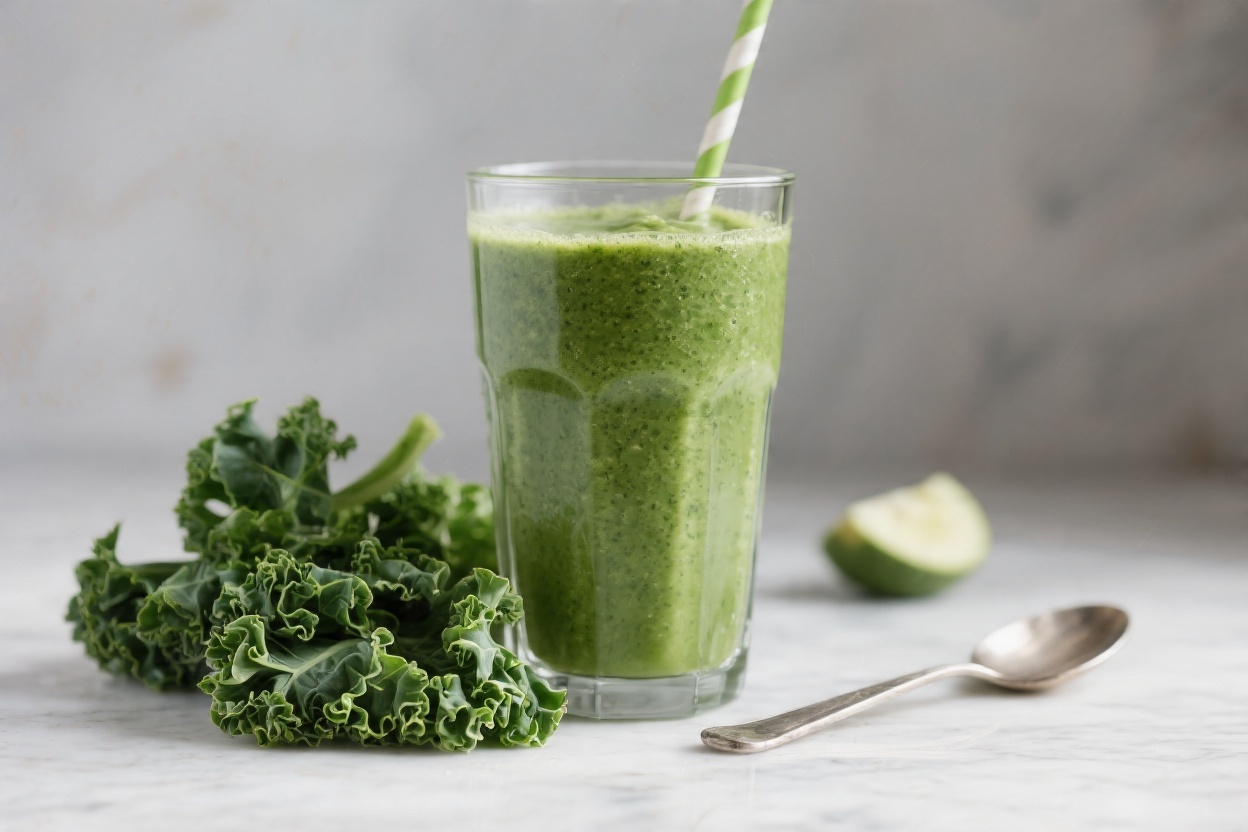
Kale smoothies have a reputation for being “healthy,” but they can also be genuinely delicious. This version balances leafy greens with fruit, creaminess, and a touch of brightness. It blends up fast, tastes refreshing, and keeps you full without feeling heavy.
Whether you’re starting your morning or looking for a midday boost, this smoothie hits the spot. It’s simple, flexible, and easy to tweak to your taste.
Why This Recipe Works
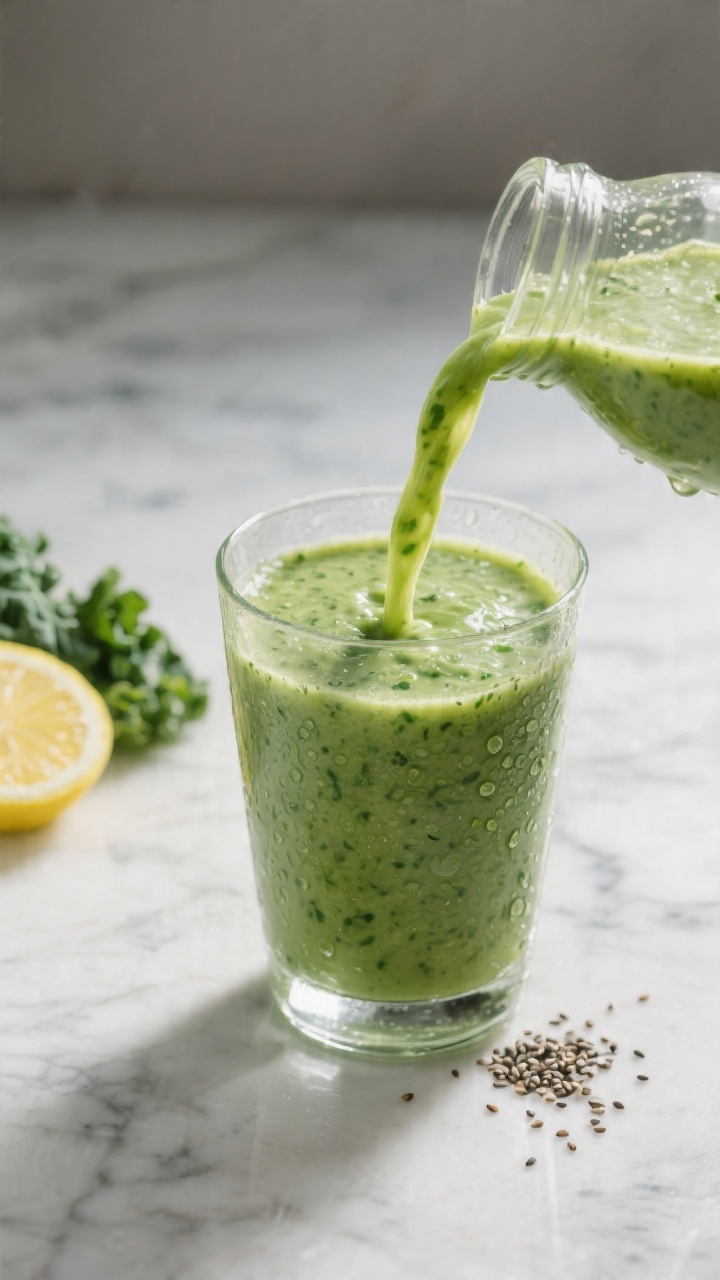
This smoothie pairs kale with banana and pineapple for natural sweetness, which helps tame kale’s slightly bitter edge. A base of almond milk and Greek yogurt creates a smooth, creamy texture without weighing it down.
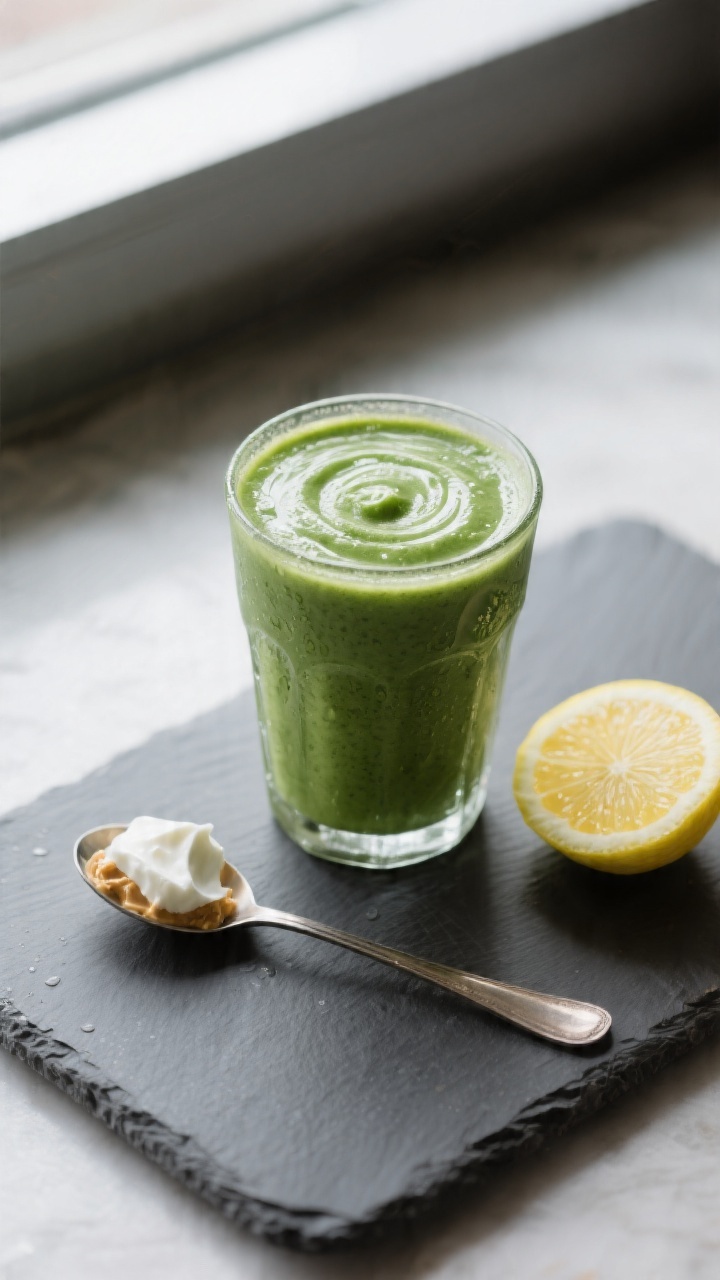
Fresh lemon juice brightens the flavors and keeps things lively. A small spoonful of nut butter adds healthy fats and staying power. The result is a balanced drink that feels both wholesome and satisfying.
What You’ll Need
- 2 packed cups kale (stems removed; curly or lacinato)
- 1 ripe banana (fresh or frozen)
- 1 cup frozen pineapple chunks (or mango)
- 1/2 cup plain Greek yogurt (or a dairy-free yogurt)
- 3/4 to 1 cup unsweetened almond milk (or oat, soy, or dairy milk)
- 1 tablespoon almond butter (or peanut, cashew, or sunflower seed butter)
- 1 to 2 teaspoons fresh lemon juice (to taste)
- 1 to 2 teaspoons honey or maple syrup (optional, adjust to taste)
- Ice (a handful if using fresh fruit and you want it colder)
- Optional boosts: 1 tablespoon chia seeds or ground flaxseed, a small knob of fresh ginger, a scoop of protein powder, or a pinch of cinnamon
Instructions
- Prep the kale. Strip the leaves from the stems, then roughly chop or tear.Rinse and pat dry. If you’re new to kale smoothies, start with 1.5 cups and increase next time.
- Layer the blender. Add almond milk first, followed by kale, banana, pineapple, yogurt, and nut butter. Liquids on the bottom help the blades catch the greens.
- Add flavor lifts. Squeeze in lemon juice.Add honey or maple syrup only if you like it sweeter. Toss in any optional boosts you enjoy.
- Blend until very smooth. Start on low to break down the kale, then increase to high for 45–60 seconds. Scrape down the sides and blend again if needed.
- Adjust texture. If it’s too thick, splash in more almond milk.If it’s too thin, add a few ice cubes or extra frozen fruit and blend again.
- Taste and tweak. Add another squeeze of lemon for brightness or a touch more sweetener if the kale still dominates. Blend briefly to combine.
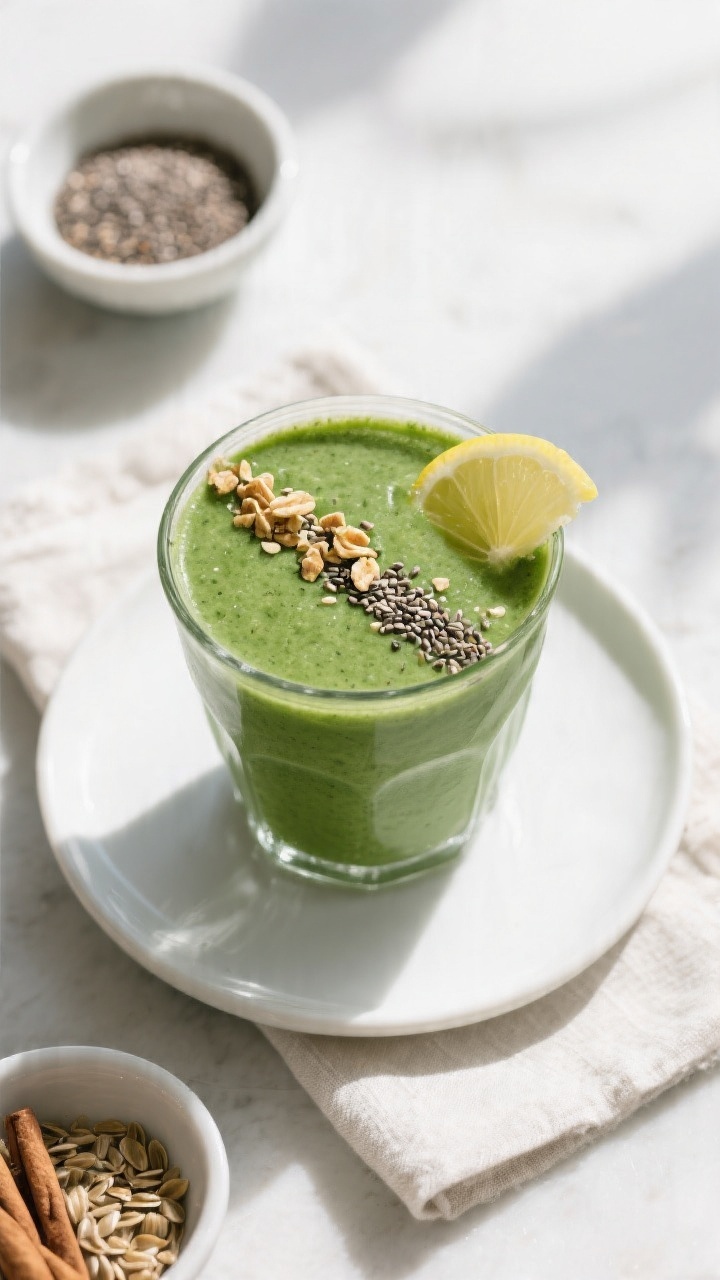
- Serve immediately. Pour into a chilled glass. For a little crunch, sprinkle chia seeds or granola on top.
Storage Instructions
- Short-term: Store in a sealed jar in the fridge for up to 24 hours.Give it a shake before drinking; separation is normal.
- Freeze as smoothie packs: Portion kale, banana, and pineapple into freezer bags. In the morning, just add liquid, yogurt, and extras, then blend.
- Freeze the blended smoothie: Pour into freezer-safe containers and freeze up to 2 months. Thaw overnight in the fridge, then re-blend with a splash of milk.
- Avoid long fridge storage: The color can dull and flavor fades after a day.Fresh is best when possible.
Health Benefits
- Nutrient-dense greens: Kale is packed with vitamins A, C, and K, plus minerals like calcium and potassium. It also offers antioxidants that support overall wellness.
- Fiber for fullness: The combo of kale, banana, and pineapple provides fiber to support digestion and help keep you satisfied.
- Protein and healthy fats: Greek yogurt and nut butter add protein and fats that steady energy and support muscle recovery.
- Hydration and electrolytes: The fruit and almond milk contribute fluid and electrolytes, making this smoothie a smart post-workout option.
- Natural sweetness: Using fruit as the main sweetener cuts down on added sugars while keeping the flavor bright and friendly.
Pitfalls to Watch Out For
- Overloading the blender: Too much kale at once can clog the blades and leave stringy bits. Layer liquids first and blend in stages if needed.
- Skipping acidity: Without lemon or a tart fruit, the smoothie can taste flat or overly “green.” A small splash of lemon changes everything.
- Too much sweetener: It’s easy to overdo honey or syrup.Start with none, taste, then add the smallest amount you need.
- Wrong texture: If it’s slushy or watery, add yogurt or frozen fruit. If it’s too dense, thin with more milk a little at a time.
- Using tough stems: Kale stems can be fibrous and bitter. Remove them for a smoother, better-tasting drink.
Variations You Can Try
- Tropical Green: Swap pineapple for mango and add coconut milk instead of almond milk.Finish with a squeeze of lime.
- Berry Boost: Add 1/2 cup frozen blueberries or strawberries. You may not need any added sweetener.
- Apple Ginger: Use half a chopped apple (peeled if you like), a small knob of fresh ginger, and a pinch of cinnamon.
- Protein Power: Add a scoop of vanilla or unflavored protein powder and a tablespoon of chia seeds. Increase milk as needed.
- Chocolate Kale: Blend in 1 tablespoon unsweetened cocoa powder and a bit more banana.A dash of vanilla extract is great here.
- Creamy Avocado: Replace the nut butter with 1/4 ripe avocado for silky texture and extra healthy fats.
- Citrus Twist: Use orange segments instead of banana, and reduce almond milk slightly to keep it thick.
FAQ
Can I use spinach instead of kale?
Yes. Spinach has a milder flavor and blends very smoothly. You might need less sweetener because spinach is less bitter than kale.
Do I need a high-speed blender?
A high-speed blender gives the smoothest texture, but a regular blender works.
Add liquids first, blend in stages, and give it extra time to fully break down the greens.
How can I make this vegan?
Use a dairy-free yogurt (such as coconut or almond) and skip honey in favor of maple syrup or no sweetener at all. Choose a plant-based protein if you’re adding one.
What if I don’t like bananas?
Use mango or frozen peach slices for sweetness and body. You can also add a few soaked dates for sweetness and increase the yogurt slightly for creaminess.
Is raw kale safe to eat?
For most people, yes.
If you have thyroid concerns or are sensitive to cruciferous vegetables, consider lightly steaming the kale first and cooling it, which can make it gentler on digestion.
Can I add oats?
Absolutely. Add 2–3 tablespoons of rolled oats for extra fiber and creaminess. Blend a bit longer to ensure a smooth texture.
How do I reduce the bitterness?
Use ripe banana, sweet pineapple, and a squeeze of lemon.
Removing tough stems and blending well also helps. A small pinch of salt can subtly round out flavors.
What’s the best time to drink this smoothie?
Anytime you want a quick, nutrient-rich meal or snack. It’s especially handy in the morning or after a workout when you want fast fuel that doesn’t feel heavy.
How can I meal-prep this smoothie?
Make freezer packs with kale, banana, and pineapple in single-serve bags.
In the morning, dump into the blender with milk, yogurt, and extras. Blend and go.
Can I add ice?
Yes. If you use mostly fresh fruit, a handful of ice will chill and thicken the smoothie.
If your fruit is frozen, you may not need ice at all.
In Conclusion
This kale smoothie recipe balances greens, fruit, and creaminess for a bright, easy drink you’ll actually want to make again. It’s flexible enough to match what you have on hand and strong on nutrition without tasting “too healthy.” Keep the basics—liquid first, stems off, lemon for lift—and adjust sweetness and texture to your taste. With a few simple steps, you’ll have a fresh, energizing smoothie in minutes.